

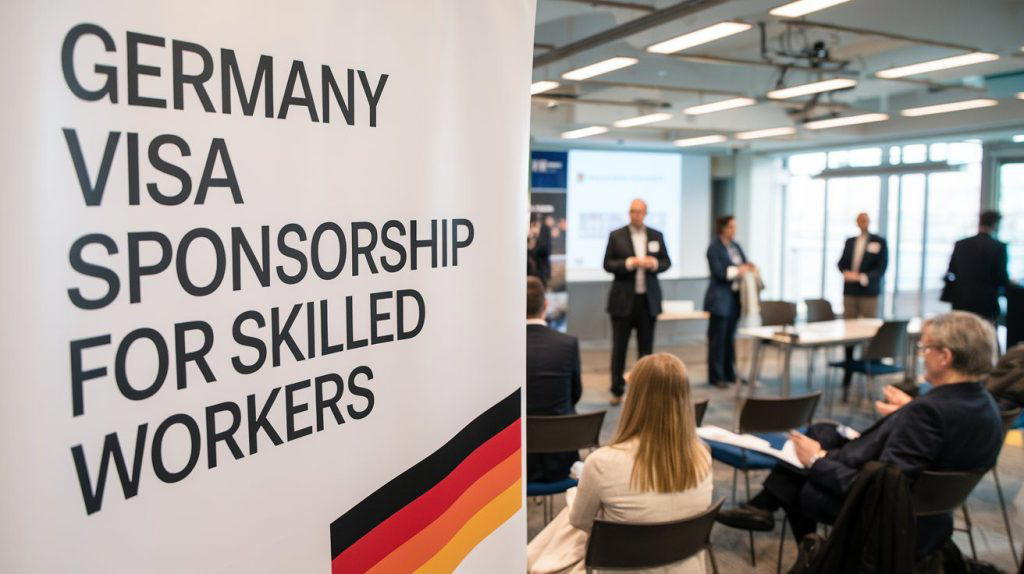
Germany has become an attractive destination for skilled professionals seeking work visas and opportunities to build careers abroad, with jobs available in sectors including technology, engineering, healthcare, manufacturing, finance and logistics.
The country continues to face shortages of skilled workers in several industries, creating opportunities for qualified professionals from Nigeria and other countries outside the European Union.
Unlike the UK, Germany does not operate a formal register of licensed visa sponsors. Instead, companies can hire non-EU workers when the position and applicant meet the requirements for the relevant immigration route. Large companies and multinational firms are often familiar with international recruitment and the visa process.
Foreign professionals commonly use Germany’s Skilled Worker visa or EU Blue Card to take up employment in the country. The Skilled Worker route generally requires a recognised qualification and a suitable job offer, while the EU Blue Card is aimed at highly qualified professionals whose employment meets the applicable salary requirement.
For professionals looking for opportunities, here are 10 major companies in Germany known to recruit international talent and support eligible workers through the relevant work visa or EU Blue Card process.
1. Siemens
Siemens is one of Germany’s major engineering and technology companies and recruits professionals for a range of technical positions.
Potential opportunities for international applicants include electrical engineering, software development and project management.
2. Bosch
Bosch, a major engineering and automotive company, is another employer that recruits skilled professionals internationally.
Roles that may appeal to foreign workers include mechanical engineering and embedded software development.
3. BMW Group
The BMW Group offers career opportunities in Germany’s automotive industry and recruits professionals with expertise in engineering and technology.
International applicants may find opportunities in engineering, IT and data science.
4. Mercedes-Benz
Mercedes-Benz is another major German automotive employer with opportunities for skilled professionals from outside the EU.
Potential roles include engineering, software development and design.
5. SAP
SAP is one of Germany’s best-known technology companies and offers opportunities for professionals in the information technology sector.
Foreign workers may find openings in software engineering, consulting and data science.
6. Deutsche Telekom
Deutsche Telekom, including its T-Systems business, operates across telecommunications and IT and recruits skilled technology professionals.
Potential roles include cloud architecture, software development and network engineering.
7. Airbus
Airbus has operations in Germany and recruits professionals in the aerospace and technology sectors.
Among the positions that may be available to international professionals are aerospace engineering, software development and systems engineering.
8. Fresenius
Fresenius operates in the healthcare sector and is among the employers offering opportunities in an industry facing demand for skilled workers.
Potential international roles include nursing, medical device engineering and pharmaceutical science.
9. Deutsche Bank
For professionals in finance and technology, Deutsche Bank offers opportunities in Germany’s banking sector.
International applicants may find roles in financial analysis, technology and risk management.
10. DHL
DHL, part of Deutsche Post DHL, operates extensively in logistics and offers opportunities for skilled professionals.
Potential positions include engineering, IT and operations management.
Which jobs are most likely to attract visa sponsorship?
Germany has particular demand for professionals in IT and software, engineering, healthcare, manufacturing and production.
Technology professionals such as software engineers, data scientists, cloud architects and cybersecurity specialists are among those who may find opportunities.
Engineers, including mechanical, electrical, civil and aerospace engineers, are also in demand. Healthcare workers such as doctors, nurses, dentists and physiotherapists can find opportunities, although regulated healthcare professions generally require additional recognition and clinical roles often require German-language proficiency.
How to apply for a German job with visa support
Foreign professionals should first check whether their degree or vocational qualification is recognised in Germany. The source recommends using the ANABIN database or the Recognition in Germany portal to check qualifications. Regulated professions such as medicine, nursing, pharmacy and teaching can require additional recognition.
Applicants can search for vacancies through platforms including LinkedIn Jobs, StepStone Germany, Indeed Germany, the Make it in Germany Job Exchange and individual company career pages. Candidates should look for vacancies that mention international applicants, sponsorship or relocation support.
Once a candidate secures a suitable job offer, the employer provides a formal employment contract. The applicant can then proceed with the appropriate visa application, submitting documents such as a valid passport, employment contract and qualification recognition documents, alongside other documents required by the German authorities.
However, getting a job with one of these companies does not automatically guarantee visa sponsorship. Sponsorship depends on the specific vacancy, the applicant’s qualifications and experience, and the employer’s current recruitment needs.
Applicants should therefore check the company’s current vacancy and confirm whether the employer supports international applicants and the relevant German work visa or EU Blue Card route before applying.
Vanguard News
The post 10 companies in Germany that sponsor work visa; how to apply appeared first on Vanguard News.