

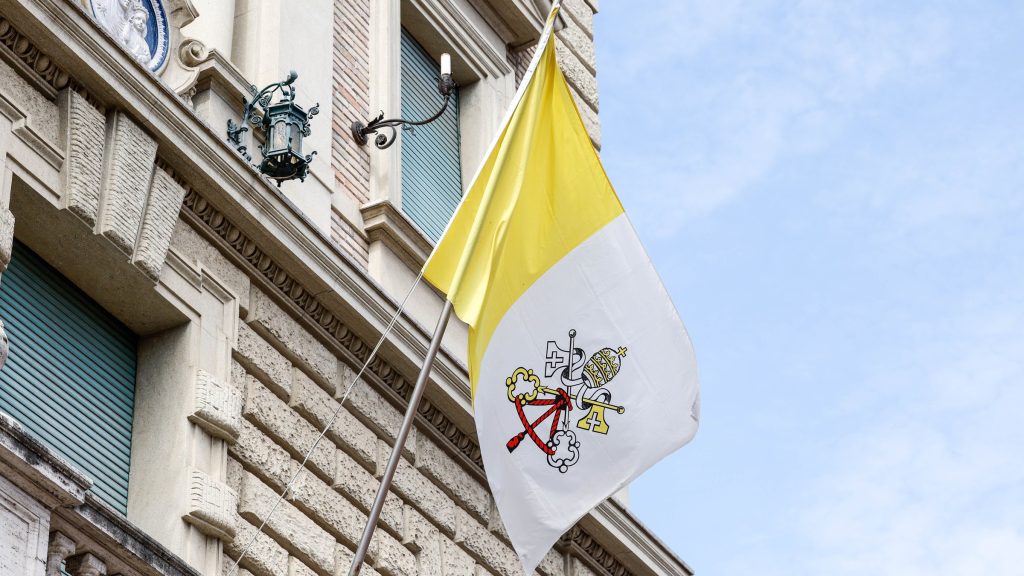
Vatican City, Monaco and Nauru are among the world’s smallest countries by geographical area, with the top 10 including European microstates, Pacific island nations and Caribbean destinations.
Although these countries occupy relatively little land, they differ widely in population, geography, political systems and economic activities.
Based on published geographical measurements, Vatican City ranks first with an area of about 0.44 square kilometres, while Malta rounds out the list at approximately 315 square kilometres. The ranking considers sovereign countries by area, rather than population.
Here are the 10 smallest countries in the world by land area.
1. Vatican City — 0.44 square kilometres
Vatican City is the world’s smallest independent state by area. Located entirely within Rome, Italy, it covers approximately 0.44 square kilometres, or 44 hectares.
The city-state is the headquarters of the Roman Catholic Church and the residence of the Pope. Despite its small size, it contains major religious and cultural landmarks, including St Peter’s Basilica, St Peter’s Square and the Vatican Museums.
Vatican City became an independent state in 1929 following the signing of the Lateran Treaty between the Holy See and Italy. Its official geographical information confirms its area of 0.44 square kilometres.
2. Monaco — 2.08 square kilometres
Monaco is the world’s second-smallest country, occupying approximately 2.08 square kilometres along the Mediterranean coast of Western Europe.
Surrounded by France and close to the Italian border, the principality is known for luxury tourism, its casino in Monte Carlo, the Monaco Grand Prix and its concentration of high-end property.
Despite its limited territory, Monaco has an international profile in finance, tourism and motorsport. Its land area has expanded over time through land reclamation projects along the coast.
3. Nauru — 21 square kilometres
Nauru is a small island country in the Pacific Ocean, with a land area of approximately 21 square kilometres.
The country is among the world’s smallest island states and has a history closely associated with phosphate mining, which significantly shaped its economy and landscape.
Unlike many countries, Nauru does not have a formally designated capital city. Government offices are located in the Yaren district, which is commonly treated as the country’s administrative centre.
Nauru’s small land area contrasts with the much larger maritime zone associated with its position in the Pacific.
4. Tuvalu — 26 square kilometres
Tuvalu is a Pacific island nation made up of low-lying islands and atolls covering approximately 26 square kilometres.
Its small land area and low elevation make it particularly vulnerable to coastal flooding, rising sea levels and other climate-related threats. The country’s geography also creates challenges for infrastructure, transport and access to services across its dispersed islands.
Despite its limited territory, Tuvalu is a sovereign state and a member of international organisations, including the United Nations.
The World Bank identifies Tuvalu as the smallest country by land area among the Pacific island countries it discusses.
5. San Marino — 61 square kilometres
San Marino is a landlocked microstate surrounded by Italy, with an area of approximately 61 square kilometres.
Located in the Apennine Mountains, it is known for its historic architecture, medieval fortifications and mountainous landscape. Its capital, also called San Marino, sits on Mount Titano.
The country is widely regarded as one of the world’s oldest surviving republics, with a political tradition dating back to the early fourth century, according to its historical account.
Although small in size, San Marino maintains its own government, institutions and international relations.
6. Liechtenstein — 160 square kilometres
Liechtenstein is a small landlocked country in Central Europe, situated between Switzerland and Austria. It covers approximately 160 square kilometres.
Much of the country lies in the Rhine Valley, while its eastern areas extend into the Alps. The capital is Vaduz, which is also an important administrative and cultural centre.
Liechtenstein is known for its financial services sector, industrial businesses and high standard of living. It is a constitutional monarchy headed by a prince.
Its position between two larger European countries has helped shape its economic and political relationships with neighbouring states.
7. Marshall Islands — 181 square kilometres
The Marshall Islands is a Pacific island country consisting of numerous atolls and islands spread across a large area of ocean.
Its total land area is approximately 181 square kilometres, although its maritime territory extends far beyond its physical landmass.
The country’s capital and largest urban centre is Majuro, situated on an atoll. Its economy relies on activities including government services, fishing, external assistance and other services.
Like Tuvalu, the Marshall Islands faces significant environmental challenges associated with its low-lying geography, including rising sea levels and coastal erosion.
8. Saint Kitts and Nevis — 261 square kilometres
Saint Kitts and Nevis is a Caribbean country made up of two main islands: Saint Kitts and Nevis. Together, they cover approximately 261 square kilometres.
The country is known for its tropical landscape, beaches, volcanic mountains and tourism industry. Its capital, Basseterre, is located on Saint Kitts, while Charlestown is the main town on Nevis.
The federation became independent from the United Kingdom in 1983. Its government identifies the country as a two-island nation, with both islands retaining distinct local identities.
9. Maldives — approximately 300 square kilometres
The Maldives is an island country in the Indian Ocean, southwest of Sri Lanka and India. Its land area is approximately 300 square kilometres, spread across a chain of coral islands and atolls.
The country is internationally known for its beaches, clear waters, coral reefs and luxury tourism resorts. Its capital, Malé, is one of the most densely populated urban centres in the region.
Despite its relatively small land area, the Maldives has a large maritime zone and a tourism-dependent economy. Its low-lying islands are also vulnerable to sea-level rise, coastal flooding and damage to coral ecosystems.
10. Malta — approximately 315 square kilometres
Malta is an island country in the central Mediterranean Sea, south of Sicily, Italy. It covers approximately 315 square kilometres and consists principally of Malta, Gozo and smaller islands.
Its capital, Valletta, is known for its historic buildings and fortifications. Malta’s location has made it strategically important throughout history, with influences from several Mediterranean and European powers.
Today, the country has a developed services economy, with tourism, financial services, gaming and maritime activities playing important roles.
Malta is a member of the European Union and uses the euro as its currency.
The post 10 smallest countries in the world appeared first on Vanguard News.