

By Ikechukwu Nnochiri
With the 2027 general elections just 65 days away, all eyes are on the Independent National Electoral Commission (INEC) to conduct a smooth, free, fair, and credible poll.
Meanwhile, preparations for the aftermath are already under way.
A total of 375 judges have been nominated to serve on election petition tribunals, where they will adjudicate disputes brought by candidates and parties dissatisfied with the results.
The judges, drawn from courts across the federation, were inaugurated on Monday, November 9, at a ceremony held at the Body of Benchers Complex in Abuja.
Section 285(1) and (2) of the 1999 Constitution, as amended, vests in the President of the Court of Appeal the responsibility for constituting election petition tribunals to adjudicate disputes arising from National and State Houses of Assembly and governorship elections.
Similarly, section 134(3)(a) and (b) of the Electoral Act, 2026, prescribes the timelines for constituting the tribunals and opening their registries.
The swearing-in, organised by the President of the Court of Appeal, Justice Monica Dongban-Mensem, marked the formal assumption of a responsibility with considerable constitutional, professional and public significance.
A three-day intensive workshop followed immediately.
It was designed to deepen the judges’ knowledge of the Electoral Act 2026, familiarise them with applicable practice directions and the evolving jurisprudence of the courts on election-related cases, and sharpen the practical skills needed for case management, evaluation of evidence, control of proceedings, and the delivery of clear, well-reasoned judgments within the prescribed timelines.
The CJN also used the occasion to launch the second edition of the Judicial Electoral Manual (JEM), which she said will help judicial officers locate relevant authorities, appreciate the development of the law and approach recurring issues with greater clarity.
According to the CJN, by bringing together the relevant constitutional provisions, the Electoral Act 2026, applicable practice directions and judicial decisions, the Manual provides a useful resource for judicial officers and other stakeholders in the electoral adjudicatory process.
She was quick to warn, however, that it should serve only as a guide and a reference tool.
It does not replace independent judicial reasoning or relieve any judicial officer of the duty to consider each case on its own facts, the arguments of counsel and the applicable law.
The Attorney-General of the Federation and Minister of Justice, Prince Lateef Fagbemi, SAN, said the early swearing-in of the tribunal judges was a clear demonstration of the judiciary’s commitment to ensuring that electoral disputes are handled promptly, competently and in accordance with the law.
Fagbemi noted that election petition tribunals occupy a unique position in Nigeria’s democratic architecture, which is why the adjudication of electoral disputes continues to attract intense public attention and scrutiny.
By providing the constitutional mechanism through which electoral grievances are peacefully resolved, he said, the tribunals are indispensable to political stability and public trust in the electoral process.
The AGF drew attention to the far-reaching reforms introduced by the Electoral Act 2026, which he said aim to strengthen electoral transparency, promote internal party democracy, modernise electoral administration and redefine the framework for electoral disputes.
The Act restricts judicial intervention in internal party affairs.
Section 83(5) ousts the jurisdiction of the courts over disputes concerning the internal affairs of political parties, while Section 83(6) stipulates sanctions for intra-party litigation.
The Act restricts interim and interlocutory injunctions in prohibited intra-party proceedings, provides for accelerated hearings, and prescribes minimum costs of N10 million each against the litigant and counsel.
Likewise, Section 138(1) limits the grounds for election petitions.
The amended law confines election petitions to corrupt practices, substantial non-compliance with electoral law, and failure to secure a majority of lawful votes.
Significantly, it omits candidate disqualification as an express post-election ground, potentially shifting qualification disputes to pre-election proceedings.
The AGF argued that the innovations in the amended Act represent a significant recalibration of Nigeria’s electoral framework ahead of the general elections.
“Their ultimate transformative impact will depend on effective enforcement by INEC, compliance by political parties and judicial interpretation,” he added.
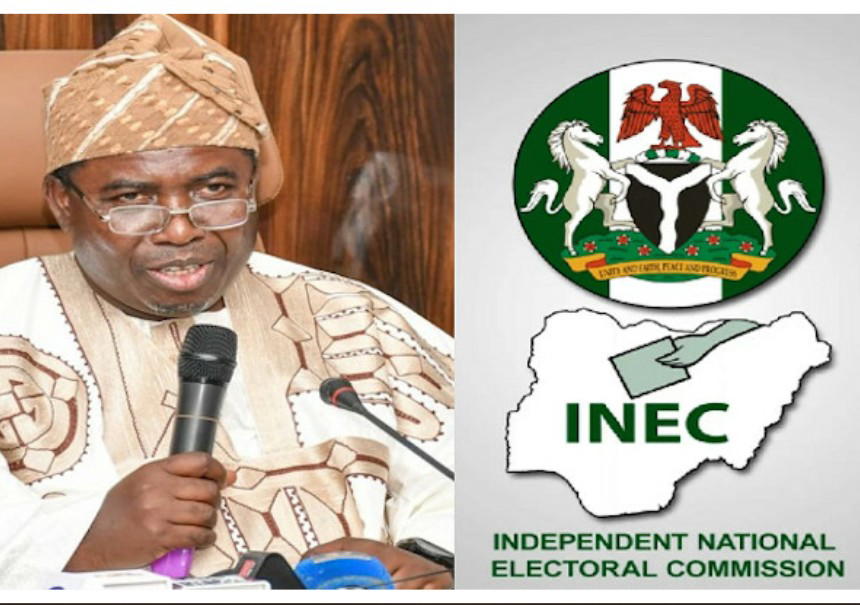
For the INEC Chairman, Prof. Joash Amupitan, SAN, electoral litigation has become increasingly complex.
He observed that, beyond the familiar questions of voting, counting and collation, disputes now concern voter accreditation, electronic transmission of results, technological failures, the integrity of digital records, party primaries, candidate nominations and the conduct of election officials.
He said the Electoral Act 2026 has provided the legislative framework for the forthcoming general elections.
“Of particular relevance is Section 60(3), which addresses electronic transmission of polling-unit results and the legal implications of communication failures.
“Its interpretation, alongside other provisions of the new Act, may feature prominently in future petitions.
“The deployment of the BVAS and the INEC Result Viewing Portal (IReV) has brought greater technological sophistication to election administration and public access to electoral information.
“At the same time, these systems raise questions about the authenticity, admissibility and probative value of electronic records, their relationship with physical documents, and the consequences of technical disruptions.
“A clear distinction must be maintained between the generation of technological information, the statutory purpose it serves and the legal standard required to prove a case before a tribunal.
“The distinction between pre-election matters and post-election petitions must be carefully observed,” the INEC Chairman added.
Although INEC and the judiciary perform distinct but complementary constitutional functions, the credibility of the elections cannot be judged solely by the conduct of voting or the declaration of results.
It will also depend on public confidence that electoral disputes will be determined independently, fairly and in accordance with the law.
As the CJN pointed out, the 2027 elections will be a defining moment in the nation’s democratic journey.
She warned that the courtroom must not become an extension of the political arena, stressing that disputes must be resolved on the basis of the pleadings, evidence and applicable law.
Of the 375 judges nominated, 138 have previous tribunal experience, while 237 are new to such proceedings.
The workshop is expected to have equipped them with the skills and knowledge to navigate the murky waters of election litigation and arrive at legally sound decisions. By fairly determining any disputes arising from the 2027 elections, the judiciary stands to safeguard the people’s mandate, uphold constitutional supremacy and sustain public confidence in democratic governance.
The post 2027 Elections: Beyond INEC, 375 Judges’ integrity under trial appeared first on Vanguard News.