

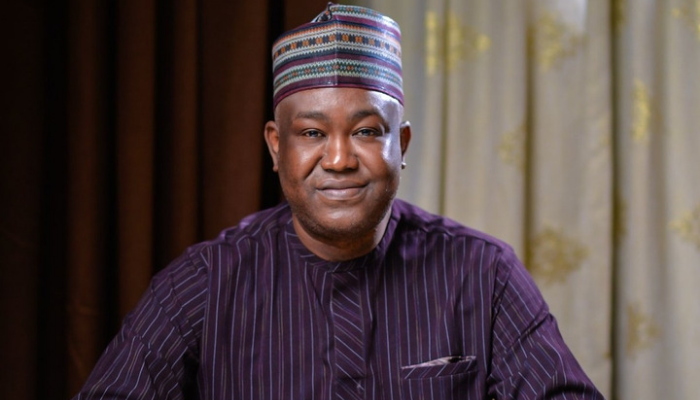
The presidential candidate of the Accord Party, Dr. Gbenga Olawepo-Hashim, has pledged to protect Christians, Muslims and adherents of other faiths in Nigeria, saying religious freedom must become a central pillar of the country’s security and conflict prevention strategy.
Hashim made the pledge in a policy brief submitted to the United States Congress and the United States Commission on International Religious Freedom (USCIRF), ahead of a US House hearing on Nigeria.
He acknowledged the persecution of Christians in parts of the country, including attacks on churches, killings of pastors and destruction of communities, but cautioned against portraying Nigeria’s religious crisis exclusively as a conflict between Christians and Muslims.
He said members of other religious and ethnic communities, including Shia Muslims, minority sects and Hausa Muslim communities, also faced persecution and discrimination.
“Christians in northern and central Nigeria face persecution. Churches have been burned, villages destroyed, and pastors killed. This is real.
“But Shia Muslims, minority sects, and Hausa Muslim communities also face persecution and discrimination. Framing Nigeria as Christians versus Muslims divides Nigeria. Framing it as all victims versus violent extremism unites Nigeria,” he said.
The Accord candidate argued that religious freedom should be treated not merely as a human rights issue but also as an essential instrument for preventing conflicts and strengthening national security.
“When people cannot worship freely, they feel excluded. When killers are not punished, impunity grows. When impunity grows, communities form militias. When militias grow, extremists recruit from them,” he said.
Hashim added that protecting churches, mosques and cultural centres across the country was necessary to prevent extremism from taking root.
He pledged that, if elected in 2027, his administration would develop and implement a National Policy Framework on Religious Freedom for Conflict Prevention and Countering Violent Extremism.
As part of the proposed measures, he said his administration would convene a National Summit within its first 90 days, bringing together victims, the Christian Association of Nigeria (CAN), the Nigeria Supreme Council for Islamic Affairs (NSCIA), Shia leaders, Hausa cultural representatives, women, young people and internally displaced persons.
He also proposed a National Religious Freedom for Conflict Prevention and Countering Violent Extremism Act within 180 days of assuming office.
According to him, the proposed legislation would criminalise religious persecution, hate incitement and forced displacement.
Hashim further proposed the establishment of an independent national commission, with offices in all 36 states and the Federal Capital Territory, to report to the National Assembly.
Under the proposed arrangement, attacks would be investigated within 30 days, findings made public and victims compensated.
He also proposed establishing a National Guard to protect vulnerable communities, farms, schools and places of worship.
The broader security programme, he said, would support the return of displaced persons and the rebuilding of destroyed communities, including those in Shanga, Plateau, Benue, Kaduna and Borno states.
“This is a Nigerian solution for Nigeria and a model for West Africa and Africa,” he said.
The presidential candidate also called on the United States to partner with Nigeria in convening an International Conference on Security in Nigeria and the Sahel within the first 100 days of his presidency, if elected.
He said the proposed conference would bring together the Economic Community of West African States (ECOWAS), the African Union, the United States and other international partners to develop a coordinated strategy on religious freedom, conflict prevention, intelligence sharing, border security and countering violent extremism.
“Nigeria should lead, with the United States as partner. If Nigeria gets this right, West Africa and Africa will follow,” he said.
On the 2027 general elections, Hashim linked religious freedom and national security to the credibility of the electoral process, warning that political intimidation, incitement and electoral malpractice could deepen existing divisions.
“Free, fair, transparent and credible elections mean no religious violence, no intimidation, no incitement and no rigging,” he said.
Referring to the recent attack on activist and political figure, Omoyele Sowore, in Ekiti State, he warned against allowing political violence to compound the country’s security challenges.
“Election rigging is itself a threat to religious freedom, conflict prevention and human rights. A rigged election does not just steal votes; it steals peace,” he said.
He urged the United States to support Nigeria’s electoral process through sustained engagement, international observation, technical assistance to the Independent National Electoral Commission (INEC) and support for civil society organisations.
Hashim, however, stressed that such support should not amount to interference in Nigeria’s choice of leadership.
“This is not a request for America to choose Nigeria’s leader. It is a request for America to help Nigerians choose their own leader, free from religious and political violence, intimidation and rigging,” he said.
He maintained that Nigeria must lead efforts to demonstrate that religious freedom was not a foreign concept but an African value.
“Religious freedom cannot be protected while Boko Haram, ISWAP, Ansaru and bandit terror networks operate with impunity. Countering violent extremism is religious freedom protection,” he added.
The post 2027: I’ll protect Christians, Muslims, other faiths — Gbenga Olawepo-Hashim appeared first on Vanguard News.