

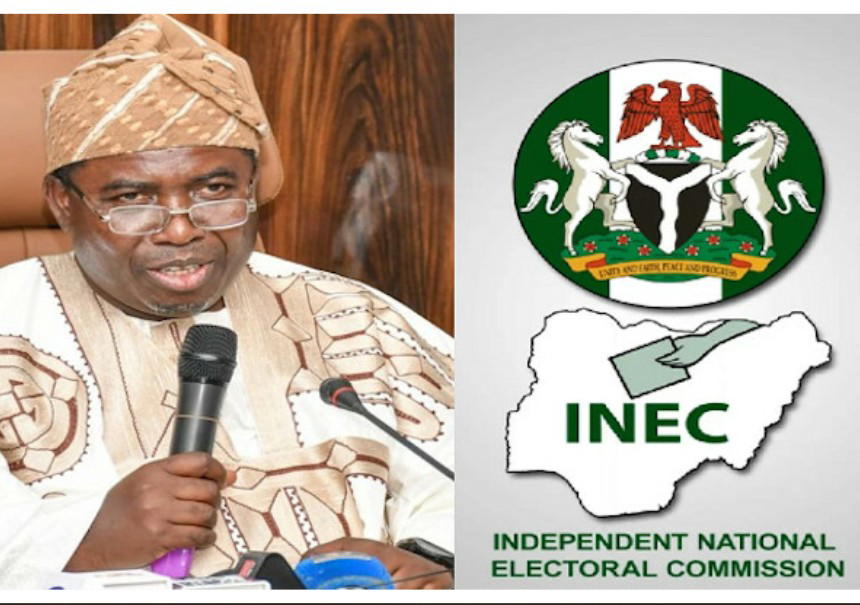
***Payment for new PVCs, sensitive materials, contractors affected
***N500bn of N873.78bn election budget released
By Clifford Ndujihe & Omeiza Ajayi
ABUJA — With 111 days to the January 16, 2027 presidential and National Assembly elections, concerns are mounting over the non-release of the balance of about N371 billion of the N873.78 billion budget projected for the polls, with the Independent National Electoral Commission, INEC, warning that sustained funding is critical to effective planning, logistics and security.
Although INEC received about N500 billion, representing more than half of its election budget, in June, the commission still requires the outstanding funds to complete procurement and other critical preparations for the elections.
The funding gap has assumed greater significance because several activities, including the production and collection of Permanent Voter Cards, PVCs, procurement of electoral materials, deployment of technology, payment of contractors and nationwide logistics, require timely financial commitments.
Budget breakdown
The commission had proposed N873.78 billion for the 2027 general elections, comprising about N379.75 billion for election operations, N92.31 billion for administration, N209.21 billion for technology, N154.91 billion for election capital expenditure and about N42.61 billion for miscellaneous expenses.
The issue of funding has, therefore, moved beyond the question of whether money has been released to INEC to how quickly the remaining funds will be made available and how the commission is deploying or deployed the N500 billion already released.
This is because the January 16 presidential and National Assembly elections are the first leg of the 2027 general elections, with the governorship and state House of Assembly elections scheduled for February 6.
Questions over N500bn utilisation
While the release of more than N500 billion has eased some of INEC’s earlier funding concerns, it has also raised questions among stakeholders about the utilisation of the money and the extent to which the expenditure has translated into completed electoral preparations.
Among the issues requiring clarification are the amounts already committed to procurement; payments made to contractors; funds earmarked for PVC production and distribution; expenditure on BVAS and other technology; logistics and transportation; staff training; voter education; and other election-related commitments.
The questions do not, in themselves, establish any wrongdoing. Rather, they underline the need for INEC to provide stakeholders with a clear picture of how the first tranche has been deployed, what obligations remain outstanding and what activities are awaiting the release of the balance.
INEC National Commissioner and Chairman of its Information and Voter Education Committee, Mohammed Haruna, had disclosed that the commission had late June received more than N500 billion, representing over half of the funds required for the 2027 elections.
Haruna, while acknowledging outstanding financial obligations, said INEC still had debts from previous elections, including about N6 billion owed contractors and more than N140 billion outstanding from its statutory allocation for the previous election cycle.
He also said the commission was already undertaking preparatory activities, including efforts to procure additional Bimodal Voter Accreditation System, BVAS, devices.
According to him, INEC’s ICT officials had travelled to China to finalise arrangements for the importation of BVAS equipment considered crucial to the electoral process.
“Certainly, we are concerned. Everyone shares this concern. Ultimately, the funds must be available. Therefore, it is encouraging news that more than half has been released,” Haruna said.
The disclosure has made the release of the outstanding N371 billion particularly important because several election preparations have long lead times.
INEC lists progress
Meanwhile, INEC said it had made significant progress in implementing its 14-point timetable for the 2027 elections.
The commission stated this, last Thursday, at a Democracy and Governance Forum in Abuja organised by West Africa Democracy Radio, WADR, under its “Voices for Democracy and Freedoms in West Africa” initiative.
Presenting the paper, “INEC Preparedness for 2027 General Elections,” Director of Planning and Monitoring at INEC, Mrs Helen Ajayi, who represented the commission’s chairman, Prof. Joash Amupitan, said the revised timetable was released on February 26, 2026.
She said the timetable covered 14 critical activities and had been translated into a coordinated programme involving INEC’s 23 departments and directorates, 36 state offices, the Federal Capital Territory and the 774 local government areas.
According to her, the Continuous Voter Registration, CVR, exercise and display of the preliminary register of voters for claims and objections had been concluded.
She added that generation of the nationwide PDF register and synchronisation of CVR data were ongoing.
Ajayi said preparations for the collection of PVCs had commenced, while procurement and distribution of non-sensitive electoral materials to state offices were underway.
She also disclosed that INEC had trained Grade Level 8 to 16 personnel at the state level and was preparing intensified voter education on voting procedures, accreditation, BVAS, PVC collection and election-day processes.
On technology, she said improvements in BVAS and deployment of the EC8A result form were aimed at strengthening result visibility and reducing opportunities for manual interference.
The progress reported by INEC, however, comes against the background of concerns by civil society groups and other stakeholders that delays in funding could affect the pace and quality of implementation.
Experts flag funding, trust deficit
A board member of WADR, Dr Abubakar Muhammad Kudu, identified funding, communication and public trust as major gaps requiring attention before the elections.
He urged INEC to communicate more frequently with stakeholders, ensure greater transparency and ensure that funds are released down the implementation chain.
Kudu also described BVAS and the INEC Result Viewing Portal, IReV, as critical to electoral credibility, particularly among young Nigerians.
Pro-democracy activist, Mrs Ene Obi, urged Nigerians to participate actively in the 2027 elections, while public policy analyst, Jide Ojo, and veteran journalist, Topsy Gimba, tasked the media with holding political actors accountable.
WADR Managing Director, Agnes John-Thomasi, said the forum, supported by the National Endowment for Democracy, NED, was designed to strengthen democratic resilience, accountability and credible information ahead of the elections.
Funding critical to logistics, security — Amupitan
Earlier, INEC chairman, Amupitan, had stressed that adequate funding was indispensable to the successful conduct of the 2027 elections, particularly the provision of logistics and security.
Amupitan spoke in Owerri, Imo State, at the sixth Conference and Retreat for Senior Police Officers, themed: “Developing a Nigeria Police Roadmap for Effective Management of Security During Elections.”
He said although INEC’s funding was constitutionally a first-line charge on the Consolidated Revenue Fund, the scale of its responsibilities required sustained financial support.
According to him, INEC conducts presidential, National Assembly, governorship and state House of Assembly elections, in addition to voter registration and registration of political parties.
He said: “Sometimes, it is not what you would like to do that you are able to do because of financial constraints. The system does make allocations of what is available and what is affordable at a particular time for the expenses and appropriation of the agencies, including the police and also including INEC.”
The INEC chairman said adequate funding was required for the deployment of personnel and electoral materials to local government areas, wards, registration areas and polling units.
He warned that even where security agencies succeeded in maintaining peace, inadequate logistics could undermine an election.
Amupitan said voter registration remained the foundation of credible elections, warning that an inaccurate or outdated voters’ register could affect the inclusiveness of the electoral process.
He said election expenditure, including security-related costs, should be regarded as a collective national responsibility.
“In Nigeria, we want the best. We want our electoral system to be 100 per cent. But sometimes we don’t ask ourselves the question: if we want the nation to be perfect, there must be a cost for it,” he said.
INEC’s original 2027 budget proposal was N873.78 billion, separate from its 2026 operational budget. Amupitan had told the National Assembly that early appropriation was necessary because election preparations required substantial lead time.
Amupitan tasks police on neutrality
The INEC chairman also charged the Nigeria Police Force and other security agencies to maintain professional neutrality and strengthen intelligence gathering ahead of the polls.
He said the success of the elections would depend largely on the ability of security agencies to protect voters, electoral officials and materials while remaining neutral among competing political interests.
Amupitan urged the police to adopt intelligence-led and proactive strategies to identify threats, flashpoints and perpetrators before election day.
“Intelligence, we even need to be abreast of some of those perpetrators before the election. Because most of the time, a lot of money is involved,” he said.
He warned that insecurity could prevent voting in some areas, render elections inconclusive and undermine public confidence in the electoral process.
The INEC boss reaffirmed the importance of the Inter-Agency Consultative Committee on Election Security, ICCES, as a platform for coordinating the activities of INEC, security agencies and other stakeholders.
According to him, ICCES operates at the federal, state and local government levels, with the Inspector-General of Police at the national level, commissioners of police at the state level and divisional police leadership at the local level.
He said stronger inter-agency coordination, intelligence gathering and professionalism would be necessary ahead of 2027, stressing that the police remained the lead security agency during elections.
Amupitan urged the government to provide INEC and the security agencies with the resources required to discharge their constitutional responsibilities.
With the presidential and National Assembly elections now just 111 days away, the immediate challenge is no longer merely the size of INEC’s proposed election budget but the timely availability, transparent deployment and effective monitoring of the funds needed to translate its timetable into completed preparations.
The outstanding N371 billion, therefore, remains a significant issue for the electoral process, just as the utilisation of the N500 billion already released will increasingly come under scrutiny as stakeholders seek assurances that funding will not become a last-minute obstacle to the 2027 polls.
The post 2027: Non-release of N371bn to INEC threatens polls appeared first on Vanguard News.