

By Luminous Jannamike, ABUJA
Security operatives fired tear gas at Democracy Day protesters in Abuja on Friday, triggering chaotic scenes around the Federal Secretariat where activist and former presidential candidate Omoyele Sowore collapsed during a march against insecurity, economic hardship and governance failures.
Read Also: Video: Sowore collapses after police tear-gassed Abuja protesters
Coming 33 years after the annulled June 12, 1993 presidential election that has come to symbolise Nigeria’s democratic struggle, the protest turned the nation’s annual Democracy Day commemoration into a fresh test of public confidence in democratic governance.
Demonstrators used the occasion to voice frustration over soaring living costs, worsening insecurity, kidnappings and unemployment while questioning the direction of the Tinubu administration.
Sowore, who led the protest under the banner of the Take It Back Movement and allied civil society groups, addressed supporters shortly before the march began.
Separate demonstrations were also staged in parts of the nation’s capital by social media activist, Martins Vincent Otse, also known as VeryDarkMan, and members of the Ratel Movement.
“We are out today to return Nigeria to the path of real democracy,” Sowore told journalists.
Long before protesters arrived, security agencies had flooded strategic parts of the capital with heavily armed personnel, erecting roadblocks around the Three Arms Zone, the Presidential Villa, the National Assembly and the Supreme Court.
Access roads leading to Eagle Square and parts of the Central Business District were effectively sealed off as authorities sought to prevent demonstrators from reaching designated gathering points.
Despite the restrictions, protesters gathered at locations including Wuse, Unity Fountain and the Federal Secretariat, waving placards, chanting solidarity songs and demanding government action on inflation, hunger and insecurity.
Tensions escalated when police fired tear gas canisters at demonstrators and journalists around the Federal Secretariat in an effort to disperse the crowd.
Amid the confusion, Sowore collapsed after inhaling tear gas and was helped away from the protest ground by supporters.
“We have lost our democratic way, and Nigerians are tired of these masquerades who call themselves democrats, led by Bola Ahmed Tinubu, who has obviously lost complete control of the Nigerian nation and has left the Nigerian people in misery, either through negligence or by his own conspiracy,” Sowore said.
A recurring demand among demonstrators was the rescue of abducted citizens and stronger action against the kidnapping crisis that continues to affect communities across the country.
“As we speak, many schoolchildren are in kidnappers’ dens. Their parents are in kidnappers’ dens. Their teachers are in kidnappers’ dens. Policemen are in kidnappers’ dens. Soldiers are in kidnappers’ dens. Army generals, whether serving or retired, are in kidnappers’ dens. Yet nothing is being done,” Sowore argued.
The protest leaders maintained that worsening insecurity and economic hardship had eroded public confidence in the ability of government to deliver the benefits many Nigerians associate with democratic rule.
Linking the demonstration to the legacy of June 12, Sowore said: “That is why we are back on the streets on 12 June 2026, some 33 years after a watershed election was held by Nigerians and subsequently truncated by the military.”
The activist also took aim at the government’s response to the country’s economic difficulties.
“We woke up this morning only to be insulted with another speech. Will speeches put food on our tables?” he asked.
The Abuja demonstrations formed part of wider protests organised in several cities by civil society groups and activists who accused the government of failing to address worsening economic conditions and insecurity.
While the Take It Back Movement mobilised supporters around the city centre and key government districts, VeryDarkMan and members of the Ratel Movement continued separate demonstrations around Airport Road and other strategic locations, pressing for sweeping changes to the country’s security and governance systems.
In a development that drew attention, members of the ‘Babalawo Association’ also staged an independent protest march towards the Presidential Villa, adding an unusual dimension to the Democracy Day demonstrations.
Across several flashpoints in the city, including major roundabouts and roads leading to government institutions, security personnel maintained a strong presence while traffic diversions and roadblocks disrupted movement for commuters.
Earlier, the U.S. Embassy in Nigeria had advised citizens to avoid the city centre, Eagle Square and surrounding districts because of anticipated disruptions linked to the protests.
As of press time, there was no official statement from the police on the use of tear gas against demonstrators, while the Presidency had yet to respond to the protesters’ demands.
Declaring that the demonstrations would continue, Sowore insisted: “As we have said, this march is to show that Nigerians are willing to risk their lives to make it clear that either we have a democracy or we do not.”
On the protesters’ immediate demands, he said: “Primarily, we want to see an end to the kidnapping of our children and for the government to immediately ensure that everyone in kidnappers’ dens is released and reunited with their families.
“Our goal is to march through Abuja. Our march will hopefully end at Aso Rock Villa this morning. We know they will bring in soldiers, but one day, if we keep marching, we will find ourselves in the living rooms of everybody in power because Nigerians must keep pushing until we win.”
Falana, Falz lead protest in Lagos
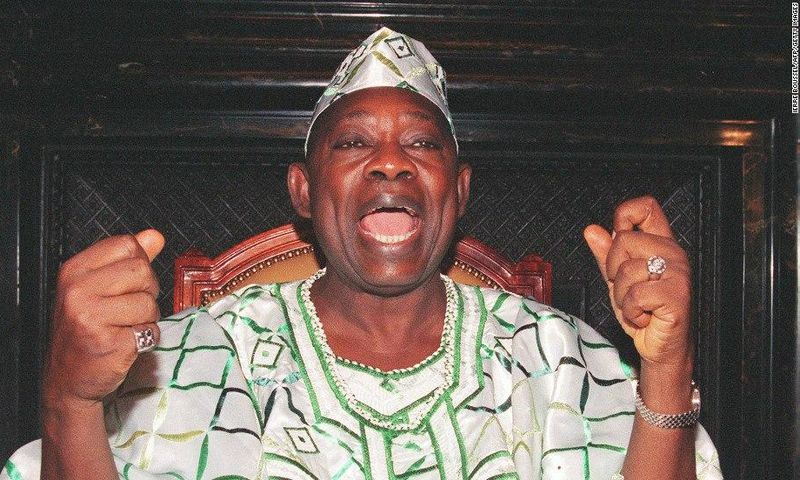
Prominent lawyer, Mr Femi Falana (SAN), his son – afrobeats singer, Mr Folarin Falana, popularly known as Falz, alongside civil society organisations, youth groups, among others, on Friday staged a protest in Lagos. They demanded urgent action to address worsening insecurity and economic hardship in the country. The protest came as Nigeria marked Democracy Day, set aside in remembrance of the June 12, 1993 presidential election, widely acclaimed to have been won by late Chief MKO Abiola.
The election, though regarded as the freest and fairest in the nation’s history, was annuled by the then military government.
Chanting, the protesters converged on the Ikeja Under Bridge, carrying placards with inscriptions such as “No Democracy Without Security,” End Bad Governance,” and “End Insecurity and Kidnapping.” Others include, “End Hunger,” “Free All Captives Now,”End all anti-people policies now,” The demonstration was aimed at drawing attention to rising insecurity, economic hardship and policies affecting ordinary Nigerians. Speaking during the protest, Falana called for the immediate release of abducted pupils and teachers in Oyo State, expressing concern over their welfare in captivity. According to him, the protest is not only about demanding the rescue of the abducted victims but also about highlighting broader issues of injustice, insecurity and poverty confronting Nigerians. “We are protesting the kidnapping of our children in Oyo State. We are also protesting injustice in our country, a situation whereby innocent school children in Oyo and Borno states have been in the custody of criminals for several weeks now. “We are also protesting injustice meted out to young people who are regularly arrested on the highways by the police.
“We are protesting hunger and poverty in the land, and we are calling on the government to address these challenges,” he said. Falana, a human rights advocate, lamented the condition of the abducted children and teachers, and regretted the killing of one of the latter. He called on the authorities to intensify efforts to secure the release of the remaining victims.
Also addressing the protesters, Falz bemoaned what he described as worsening insecurity and economic hardship across the country. The entertainer and activist said Nigeria was grappling with increasing cases of kidnappings and killings, urging the government to do more in its responsibility of protecting the citizens. “Everybody can see the worsening insecurity. It is becoming unbearable,” he said. Falz cited recent abductions in different parts of the country, including the kidnapping of students and the abduction of a relative of a former minister in Oyo State.
“Every Nigerian life matters and must be protected at all costs,” he stated. He said that the repeated abduction of students had heightened public frustration and anxiety.
Also speaking, human rights activist, Mr Olumide Ogunsanwo, popularly known as Seaking, called for stronger government action to tackle insecurity across the country.
He said Nigerians were demanding better governance and an end to the growing wave of killings, kidnappings and other violent crimes.
“We say no to insecurity. Insecurity has to end,” he said. Ogunsanwo urged the Federal Government to intensify efforts against bandits, insisting that decisive action, rather than rhetoric, was needed to end the insecurity. Security operatives maintained presence around the protest venue and monitored activities throughout the demonstration.
The post 33 years after June 12, protests mark Democracy Day in Abuja appeared first on Vanguard News.

 Bella Naija
 Mwananchi
 Daily Post
 Punch Nigeria
 Modern Ghana
 Premium TImes
 The Standard Gambia
 This Day
 Vanguard Nigeria
 Complete Sports
 Business Day