

TRENDING
NCAA urges Reps to restore 65% TSC share to strengthen aviation safety • Gombe IRS generated N20.7bn in six months – Official • Dutch national, two Ghanaians arrested over suspected cocaine shipment at Tema Port • Tema Police seize cocaine worth US$6.9m, arrest four suspects in anti-drug operations • Democracy Under Attack demo: NPP vows to defend members against alleged political persecution • ABUAD, ISN partner to boost neuroscience research in Africa • Tinubu approves recruitment of 3,252 PTA teachers into civil service • Ogoniland: 51 civil society groups oppose planned resumption of oil production • How woman allegedly sold newborn for ₦2.5 million, handed stranded mother ₦300,000 – Official • Canada lists 10 things that could delay your visa, immigration application • Pressure mounts on Education Ministry as private schools prepare showdown over controversial 2026 BECE results • Civil servants embark on clean-up exercise to promote environmental sanitation • Otti unveils capacity-building training for Abia monarchs • Democracy under Attack demo: 'Mobilize lawyers, not protesters' - Dr. Belley tells NPP • Funding Safe Schools Initiative: Will FME’s full control make any difference? • Saudi Arabia has not blacklisted Ghana for tourist E-Visa - Foreign Affairs Ministry • Uefa maintains World Cup boycott still stands despite Fifa’s backing for Infantino • 'Sustainable educational development is best achieved through collaboration' — GETFund Administrator • Democracy Under Attack demo: We must end the 'you do me, I do you' politics — Afenyo-Markin • 'Democracy Under Attack' protest: NPP demands end to alleged criminalisation of free speech • NCAA urges Reps to restore 65% TSC share to strengthen aviation safety • Gombe IRS generated N20.7bn in six months – Official • Dutch national, two Ghanaians arrested over suspected cocaine shipment at Tema Port • Tema Police seize cocaine worth US$6.9m, arrest four suspects in anti-drug operations • Democracy Under Attack demo: NPP vows to defend members against alleged political persecution • ABUAD, ISN partner to boost neuroscience research in Africa • Tinubu approves recruitment of 3,252 PTA teachers into civil service • Ogoniland: 51 civil society groups oppose planned resumption of oil production • How woman allegedly sold newborn for ₦2.5 million, handed stranded mother ₦300,000 – Official • Canada lists 10 things that could delay your visa, immigration application • Pressure mounts on Education Ministry as private schools prepare showdown over controversial 2026 BECE results • Civil servants embark on clean-up exercise to promote environmental sanitation • Otti unveils capacity-building training for Abia monarchs • Democracy under Attack demo: 'Mobilize lawyers, not protesters' - Dr. Belley tells NPP • Funding Safe Schools Initiative: Will FME’s full control make any difference? • Saudi Arabia has not blacklisted Ghana for tourist E-Visa - Foreign Affairs Ministry • Uefa maintains World Cup boycott still stands despite Fifa’s backing for Infantino • 'Sustainable educational development is best achieved through collaboration' — GETFund Administrator • Democracy Under Attack demo: We must end the 'you do me, I do you' politics — Afenyo-Markin • 'Democracy Under Attack' protest: NPP demands end to alleged criminalisation of free speech
5 countries that recently changed their currencies
Back to Home

5 countries that recently changed their currencies

Vanguard Nigeria about 3 hours 3 mins read
5 countries that recently changed their currencies

Several countries have changed, replaced or redenominated their currencies in recent years as governments sought to simplify transactions, tackle economic challenges or align their monetary systems with broader economic reforms.

Currency changes can have major effects on businesses, consumers, travelers and investors, particularly when old notes are withdrawn or large denominations are removed.

Here are five countries that have recently changed their currencies.

1. Syria

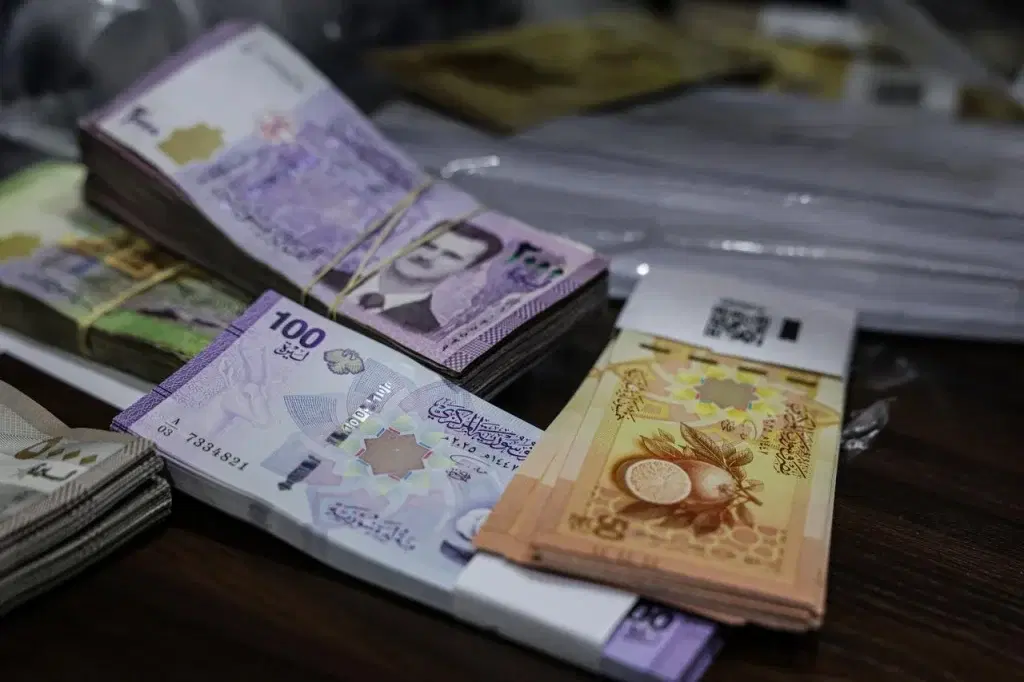
Syria introduced a new version of its national currency on January 1, 2026, as part of a major monetary reform.

The reform removed two zeros from the Syrian pound, meaning 100 old Syrian pounds became one new pound.

The new banknotes also feature redesigned imagery, replacing symbols associated with the former government with designs highlighting Syria’s agricultural and cultural heritage.

The currency reform was introduced as the country sought to simplify cash transactions and modernise its monetary system.

2. Bulgaria

Bulgaria changed its currency in January 2026, when it adopted the euro, replacing the Bulgarian lev.

The country became the 21st member of the euro area, bringing its monetary system in line with other eurozone economies.

The conversion rate was fixed at €1 to 1.95583 Bulgarian lev.

The move means that businesses and consumers in Bulgaria now conduct transactions using the euro, while the change also eliminates the need for currency conversion for trade and travel within the euro area.

3. Zimbabwe

Zimbabwe introduced a new currency known as the Zimbabwe Gold (ZiG) in April 2024, replacing the Zimbabwe dollar.

The new currency was introduced after years of economic instability and weakness in the country’s previous currency.

The ZiG is supported by a reserve basket that includes foreign-currency assets and precious metals, including gold.

The government said the currency reform was designed to improve monetary stability and restore confidence in the country’s financial system.

4. Venezuela

Venezuela introduced a new version of its currency, the digital bolívar, in October 2021.

As part of the monetary reform, the government removed six zeros from the previous bolívar.

Under the redenomination, 1 million old bolívars became 1 new bolívar.

The reform was introduced after years of severe inflation had made everyday transactions increasingly difficult and had resulted in extremely large numbers being used for prices and payments.

5. Sierra Leone

Sierra Leone also redenominated its currency in 2022, removing three zeros from the leone.

Under the reform, 1 new leone became equivalent to 1,000 old leones.

The government said the move was intended to simplify accounting, pricing and everyday financial transactions.

The redenomination did not mean that the underlying value of people’s money suddenly increased. Instead, it changed the numerical denominations used for prices and payments.

Vanguard News

The post 5 countries that recently changed their currencies appeared first on Vanguard News.

This article was sourced from an external publication.

Share this article
OneClick Africa Logo

Africa's premier digital hub for impactful news, entertainment, and business insights.

© 2026 OneClick Africa. All rights reserved.