

Smartphone cameras have become increasingly sophisticated in 2026, with manufacturers competing to deliver sharper photographs, improved low-light performance and, particularly, better zoom capabilities.
One of the biggest developments has been the introduction of more advanced periscope telephoto cameras, larger image sensors and optical zoom systems capable of capturing distant subjects without relying entirely on digital enlargement.
These improvements have made it possible to photograph wildlife, sporting events, concerts, buildings and other distant subjects with a level of detail that was previously difficult to achieve with a smartphone.
While several manufacturers advertise zoom capabilities of up to 100x or 120x, the actual quality of photographs at those magnifications varies considerably. Optical zoom, sensor size, optical image stabilisation and image processing are therefore more
important considerations than the maximum zoom figure alone.
Here are five smartphones with some of the best zoom camera systems available in 2026, based on their camera hardware and independent reviews.
1. Oppo Find X9 Ultra
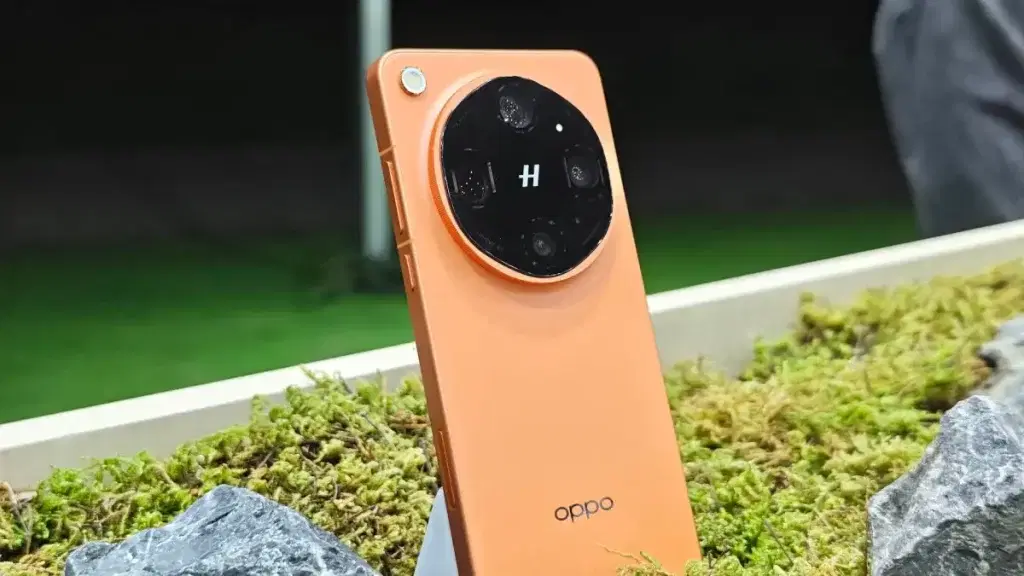
The Oppo Find X9 Ultra stands out as one of the most capable zoom smartphones of 2026, particularly because it features two dedicated telephoto cameras rather than relying on a single zoom lens.
The smartphone comes with a 200-megapixel primary telephoto camera offering 3x optical zoom and a separate 50-megapixel periscope telephoto camera capable of 10x optical zoom.
The combination gives users greater flexibility when photographing subjects at different distances, from portraits and street photography to distant buildings, wildlife and performers at concerts.
Its 10x optical zoom is particularly important because it allows the camera to magnify distant subjects using its dedicated optical hardware rather than simply enlarging pixels digitally.
According to Digital Trends, the phone can extend its zoom capabilities to 120x digitally. Its 200-megapixel telephoto camera also provides additional room for cropping images while retaining useful detail.
The publication highlights the phone’s impressive telephoto sharpness, autofocus performance and ability to capture distant subjects.
For people who regularly photograph sporting events, wildlife or concerts, the Find X9 Ultra is a particularly compelling option.
2. Huawei Pura 80 Ultra
The Huawei Pura 80 Ultra is another smartphone that deserves recognition for its unusual approach to long-range photography.
Its biggest attraction is a switchable dual-telephoto camera system that offers 3.7x and 9.4x optical zoom.
Unlike conventional smartphones that use separate telephoto sensors for different magnification levels, Huawei developed a system in which two telephoto lenses share a large 50-megapixel, 1/1.28-inch sensor.
A moving optical mechanism switches between the two lenses, allowing users to photograph subjects at different distances while maintaining the benefits of optical magnification.
The 9.4x telephoto camera has a 212mm equivalent focal length, making it particularly useful for photographing distant subjects.
Huawei also includes optical image stabilisation on both telephoto configurations, helping to reduce camera shake when taking photographs at high magnification.
According to DXOMARK’s camera assessment, the Pura 80 Ultra achieved outstanding telephoto performance, with impressive detail preservation, low noise and accurate colour reproduction.
Its digital zoom extends to 100x.
However, the phone comes with an important consideration for international buyers: Huawei devices do not offer native Google Mobile Services support, which may affect access to familiar Android applications.
3. Vivo X300 Ultra
Vivo has continued to push the boundaries of smartphone photography with the X300 Ultra, particularly through its advanced telephoto camera and optional external zoom accessories.
The smartphone features a 200-megapixel periscope telephoto camera with a 3.7x optical zoom capability, supported by optical image stabilisation.
Its large telephoto sensor helps preserve details when photographing distant subjects, making it suitable for wildlife photography, portraits and outdoor events.
However, one of its most interesting features is its compatibility with an optional telephoto extender.
According to Android Authority, Vivo offers a second-generation external telephoto lens that extends the camera’s reach to approximately 400mm equivalent, or around 17x magnification.
This accessory allows users to photograph subjects much farther away than they ordinarily could with a conventional smartphone camera.
DXOMARK also praised the X300 Ultra’s telephoto performance, highlighting its ability to preserve details across different zoom ranges, including at longer distances.
There are limitations, however. The external lens adds bulk, and image quality can deteriorate in challenging lighting conditions, particularly when AI processing becomes more aggressive.
Nevertheless, for photography enthusiasts who want to experiment with extreme-distance smartphone photography, the X300 Ultra is among the most interesting options in 2026.
4. Xiaomi 17 Ultra
The Xiaomi 17 Ultra takes a different approach to smartphone zoom photography by introducing a mechanically variable telephoto lens.
Rather than depending entirely on fixed optical zoom levels, the smartphone uses a 200-megapixel telephoto camera with a variable focal length covering approximately 75mm to 100mm, equivalent to 3.2x to 4.3x optical zoom.
This allows users to adjust their framing within that range without relying on digital cropping between fixed magnification levels.
The telephoto camera also features optical image stabilisation and a large 1/1.4-inch sensor, helping it capture detailed photographs in different lighting conditions.
Its Leica camera partnership further contributes to its photography capabilities, with colour profiles and processing options designed to give users greater creative control.
According to Digital Trends, the Xiaomi 17 Ultra can extend its zoom capabilities to 120x digitally, while its large telephoto sensor provides additional flexibility for cropping images.
The device also supports advanced video recording features, including 8K recording and 4K at up to 120 frames per second.
Although its native optical zoom range is shorter than that of the Oppo Find X9 Ultra and Huawei Pura 80 Ultra, its mechanically adjustable telephoto lens makes it an interesting choice for photographers who value flexibility and image quality.
5. Samsung Galaxy S26 Ultra
Samsung remains a major competitor in smartphone zoom photography with the Galaxy S26 Ultra.
The device features a 200-megapixel primary camera alongside two dedicated telephoto cameras: a 10-megapixel camera with 3x optical zoom and a 50-megapixel periscope camera with 5x optical zoom.
The two telephoto cameras give users different magnification options for photographing subjects at varying distances.
Its 5x optical zoom is particularly useful for portraits, travel photography and capturing distant objects, while the 3x camera provides a shorter telephoto option for everyday photography.
Samsung also offers up to 10x optical-quality zoom and 100x Space Zoom, combining optical hardware with computational photography to extend its reach.
The Galaxy S26 Ultra benefits from optical image stabilisation and Samsung’s image-processing technology, which help improve sharpness and reduce camera shake when photographing distant subjects.
One of its biggest advantages over some of the other smartphones on this list is its established global retail and software ecosystem.
However, its 5x optical zoom means it does not offer the same native long-range reach as the Oppo Find X9 Ultra or Huawei Pura 80 Ultra.
The post 5 smartphones with the best zoom cameras in 2026 appeared first on Vanguard News.