

(suleimansuleiman@dailytrust.com; 07066451983 SMS)
It has been just over a month since the 2027 election campaign season officially kicked off. So far, the campaign has been dominated by debates on competing economic policies, particularly the fuel subsidy removal policy. However, it is also becoming increasingly clear that the election will not be fought on policy debates alone. Religion, ethnicity, and age-old political whispers, rumours, and wild accusations, often borne of personal interest, are all still very much in the campaign mix. At least three accusations so far merit consideration.
What does DrDatti Baba-Ahmed want?
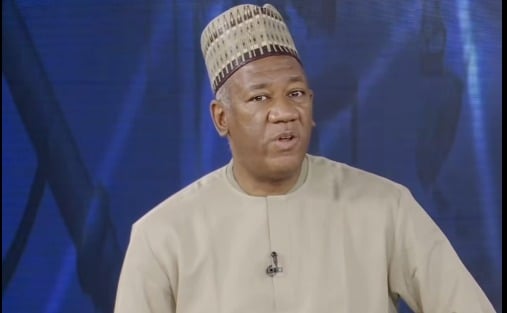
Speaking last week on SeunOkinbaloye’s ‘Mic On’ podcast, former Labour Party presidential candidate DrDatti Baba-Ahmed observed that, unlike other members of the APC leadership, Vice-President Kashim Shettima does not wear President Bola Tinubu’s ‘Infinity’ caps. He then suggested that the reason might be that marabouts had advised the Vice-President against wearing them, and so on. In Nigerian political English, DrDatti Baba-Ahmed is accusing Vice-President Shettima of being disloyal to President Tinubu, which is serious enough, but even more insidiously, he is accusing Shettima of relying on marabouts to advance his political ambitions. This is the most politically damaging of the three accusations under analysis today.
Nigerian political leaders like presidents and governors tend to associate themselves with distinctive fashion items, which then become popular among their appointees and supporters. Over time, the distinctive fashion items acquire a powerful symbolism as evidence of loyalty or disloyalty to the leader. Therefore, in a highly superstitious society like ours, telling a sitting president that his deputy is disloyal and then linking that to marabouts is to put a burning chain around the neck of the deputy in order to set them up against their principal.
I once gave a lecture to a group of students where I said that the two most dangerous characters in Nigerian politics are delegates who vote in party primary elections and “political merchants” who trade in political whispers. These two, I told the students, are the most unconscionable characters in Nigerian politics, who can do just about anything to advance their own personal interests. Delegates in party primaries, we know well enough, would collect money from all candidates and then vote for the highest bidder.
But the political whisperers are in a different league altogether. They specialise in rumours and unfounded claims to advance their own interests, so they can rise by bringing others down. They tell presidents and governors all sorts of things about their deputies, not to help the principals, but merely to gain personal advantage or access. I told my audience of university students that the political whisperers are the people they must fear the most when they ever go into politics. Reading DrDatti’s claims against Vice-President Shettima, it was difficult not to think of them as yet another instance of political whispering for personal benefit.
Muslim-Muslim Ticket and Money
Sheikh SaniYahayaJingir is one of Nigeria’s most prominent Islamic clerics. He is also perhaps the most outspoken advocate of the Muslim-Muslim ticket of Tinubu/Shettima, both during the 2023 presidential election four years ago and now. At a recent JIBWIS national symposium in Jos, where the organisation openly endorsed the Tinubu-Shettima ticket yet again, two prominent ruling-party politicians, President Tinubu’s Special Adviser on Political Affairs, Ibrahim KabirMasari, and Yobe State Governor Mai Mala Buni, each pledged N300 million in donations to a university project associated with Sheikh Jingir.
As was to be expected, many Nigerians cried foul, not just over the endorsement of the Muslim-Muslim ticket, but also over the donations and their direct association with politics and the political campaign. In reply, the Sheikh emphasised that not a single kobo of the donations was going into his personal account and that Christian leaders, churches, and Christian-owned organisations in Nigeria frequently receive millions or billions of naira in donations from politicians, state governments, and public figures. That is another interesting accusation.
I agree with all that the Sheikh said in his own defence. However, none of it resolves the serious conflict of interest in this case. First, as far as matters of accountability are concerned, the appearance of impropriety is as serious and as important as the act itself. For clerics to take hundreds of millions in donations from politicians they endorse during an election season is wholly improper, even if a single kobo would not go into the personal account of the clerics involved. It leaves a morally sour taste in the mouth that is difficult to ignore, regardless of what other clerics are doing. A wrong cannot become right just because others are doing it.
Secondly, benefits do not have to be directly personal to constitute a conflict of interest. If the university is a personal initiative of a cleric, and the cleric takes donations directly from politicians during an election campaign season, then it is still a benefit and conflicts with the obligation of religious leaders to speak truth to power on behalf of ordinary people. It cannot be right that religious leaders are openly receiving monetary donations from politicians during an election, regardless of what the money is meant for.
General Chris Musa: The media failed Nigeria yet again
By far the most troubling of the allegations last week came from the Minister of Defence, General Christopher Musa. During an interview with SeunOkinbaloye, again, General Musa accused former Governor of Kaduna State MalamNasir El-Rufai of being personally involved in “deliberately planning the killing of my people”. El-Rufai’s family has since threatened court action if General Musa does not present evidence or retract his statement and apologise.
But this issue is fundamentally about getting to the truth of what actually happened in Southern Kaduna when El-Rufai was governor, and hard evidence is the only thing required. General Chris Musa is a four-star general, a former Chief of Defence Staff, and the current Minister of Defence. These are important markers of authority. But they do not constitute evidence of the allegations made. The General must present evidence of his allegations to Nigerians so that, among other things, we can take an important step towards getting justice for victims. In the absence of evidence, he must apologise to the families of the victims and Nigerians. Allegations of mass murder cannot be taken as presented without evidence, regardless of who makes them.
Secondly, what does the Minister of Defence mean by “my people”? That is discriminatory language that cannot come from a sitting federal Minister of Defence in a diverse country like ours.
Does the Defence Minister mean all Nigerians or only some Nigerians? We must know.
Finally, the whole episode reveals the shameful bias of Nigerian journalism that must not go unnoticed. From a journalistic standpoint, the only things that matter in this case are the truth and the evidence for it. And both the evidence for the allegations and the clarification of what “my people” means must come from General Chris Musa. The principle applies to any other official who makes similar statements, General Musa or anyone else. After all, he who alleges must provide proof, particularly on an issue that involves the killing of other Nigerians. The job of the media is to hold their feet to the fire until we know the truth.
Unfortunately, the media has taken an “us” versus “them” frame in this case. General Musa and his supporters say this; his critics say that. Instead of pressuring the General to provide evidence or clarify his statements, the legacy media has been busy amplifying the voices that support him, while ignoring those that condemn his statement or demand evidence. For example, a comment by one Ibrahim Bunu in support of Chris Musa was reported by almost all the newspapers and broadcast media in the country. But the statement by Barrister Solomon Dalung demanding that Chris Musa present evidence of his allegations was not equally amplified by the same Nigerian media. And once again, the media fails the country.
The post A campaign of accusations: Sheikh Jingir, General Chris Musa, and Dr Datti Baba-Ahmed, by Suleiman A. Suleiman appeared first on Vanguard News.