

ChatGPT and Claude are betting on Spain. Le Chat from France’s Mistral reckons Les Bleus will clinch it. And China’s DeepSeek and Qwen have a fondness for Argentina.
The 2026 World Cup is the first with widely available generative AI chatbots, and fans and researchers alike are turning to the systems in a bid to predict the final victors.
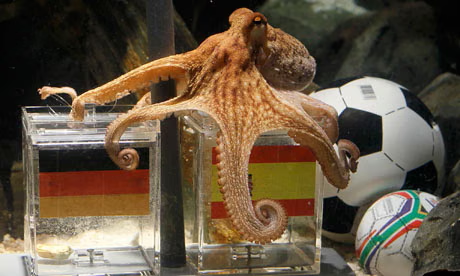
This year’s fad for non-human answers recalls Paul the Octopus, the cephalopod who divined winning teams by eating from food containers marked with their flags during the 2010 contest.
With OpenAI’s ChatGPT released to the public only on November 30, 2022 — in the midst of the last World Cup in Qatar — few outside Silicon Valley had generative AI on their radar during Argentina’s ascent to the title.
But institutions from banks to universities are today testing out generative AI systems’ football foresight.
Bank of America analysts found that their Microsoft CoPilot chatbot favoured Spain equally with France, who were tipped by around 40 percent of fans.
Meanwhile tech news site Tom’s Guide asked Google’s Gemini, ChatGPT and Perplexity — with Spain predicted as the winners each time, and France as the second pick in each case.
Another news site, Decrypt, received similar results from western chatbots like ChatGPT and Anthropic’s Claude — but found that Chinese competitors DeepSeek and Qwen both tipped Argentina.
And researchers at Germany’s Ludwig Maximilian University (LMU) are running a more scientific analysis, publishing how accurate each AI model was in game-by-game predictions on a public website, LLM SoccerArena.
“The question of whether language models can reliably support real decision-making situations is critical,” LMU management researcher Stefan Feuerriegel said in a statement.
“That’s why we need benchmarks that don’t only test abstract tasks, but how models deal with dynamic information, uncertainty and results that can be checked later” against the real outcome, he added.
The Munich researchers are testing both the AI’s forecasts based on their internal knowledge, as well as their ability to integrate information found online about factors like injuries, squad selections, and even betting markets into their predictions.
Beyond the fun of weighing up the final outcome, AI is also supporting coaches, medical staff, referees and even ticket scammers, researchers from Australia’s University of the Sunshine Coast wrote for online outlet The Conversation.
“We won’t see an AI agent scoring a goal, or a robot coach calling the shots (at least not yet) but there is no doubt the winner of the tournament will have relied on AI along the way,” they said.
The post AI replaces Paul the Octopus for 2026 World Cup tips appeared first on Vanguard News.

 Complete Sports
 Vanguard Nigeria
 Daily Post
 The Guardian Football
 Mwananchi
 InformationNG
 Punch Nigeria
 All Africa
 Business Day
 Modern Ghana
 The Standard Gambia
 Premium TImes