

…Education, security too
… after $3 bn in aid
…Experts: This is a diplomatic red alert
…Say HIV, TB, malaria programmes at risk
By Chioma Obinna
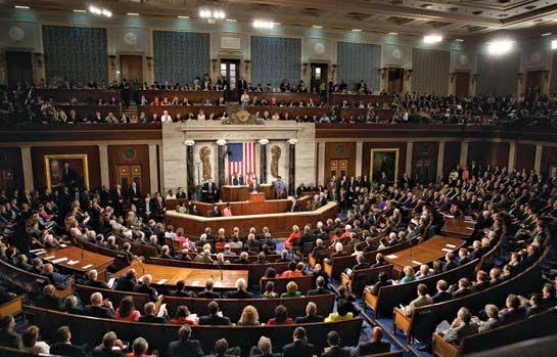
Nigeria could be staring at one of its biggest humanitarian crises in decades after the United States (U.S.) House of Representatives voted to withhold 100 per cent of American assistance to the country over concerns about alleged continued killing of Christians and worsening insecurity.
Although the measure is yet to become law, health experts and development stakeholders warned that if eventually approved by the U.S. Senate and signed by President Donald Trump, the decision could cripple life-saving health programmes, throw thousands of aid workers into unemployment, disrupt humanitarian interventions and reverse decades of gains against HIV/AIDS, tuberculosis, malaria, and maternal deaths.
They, however, described the development as a painful reminder that Nigeria’s heavy dependence on foreign donors has become a major national vulnerability.
The amendment, sponsored by Congressman Gregory Steube, was adopted by the House during consideration of the Fiscal Year 2027 State Department Appropriations Bill.
Steube announced after the vote: “American taxpayers should never bankroll governments that turn a blind eye while Christians are abducted, tortured, and murdered.”
Assistance
The legislation raises an earlier proposal to suspend 50 per cent of assistance to a complete freeze until the U.S. Secretary of State certifies that Nigeria has taken measurable steps to stop the violence and prosecute perpetrators.
However, the proposal must still pass the U.S. Senate and receive presidential assent before becoming law.
For more than two decades, Nigeria has remained one of America’s largest aid beneficiaries.
The United States provided $1.16 billion in assistance in 2022, about $1.02 billion in 2023, and approximately $767 million in 2024, with much of the funding channelled through USAID, PEPFAR and other agencies.
Over the years, Washington has invested more than $6 billion in Nigeria’s HIV response alone through the President’s Emergency Plan for AIDS Relief (PEPFAR), supporting treatment for over 1.5 million Nigerians, including more than one million women and children.
According to the U.S. Mission in Nigeria’s 2024 report, American assistance also provided malaria medicines to 2.2 million children, supported 13 million girls with HPV vaccinations, screened 19.8 million Nigerians for tuberculosis, strengthened disease surveillance for cholera and Lassa fever, financed agricultural programmes, education, water and sanitation projects, security reforms and private sector investments.
Diplomatic
Nigeria has consistently ranked among the eight largest recipients of U.S. foreign assistance. According to findings by Sunday Vanguard from a partly reported 2024 foreign assistance record, Nigeria received $370 million for health interventions, $310 million in humanitarian assistance, and $35 million for administrative costs. Education programmes attracted $24 million, while agriculture received $7.8 million. An additional $7.4 million was channelled into other areas.
The 2024 report of the U.S. Diplomatic Missions in Nigeria further highlighted the breadth of American support across key sectors of the economy.
In the health sector, the United States supported the vaccination of 13 million girls aged between nine and 14 against the Human Papillomavirus, HPV, as part of efforts to prevent cervical cancer. It also intensified the fight against HIV and tuberculosis by providing services to 1.57 million people living with HIV, screening 19.8 million Nigerians for tuberculosis, and training 55 public health emergency managers to tackle cholera and Lassa fever outbreaks.
Training
Economically, the U.S., through Prosper Africa, facilitated seven deals worth $1.5 billion, boosting investment and job creation. American assistance also enabled students to access scholarships worth $30 million, while more than 3.6 million teaching and learning materials were distributed to schools across the country.
On security, the United States provided $40 million in military assistance to Nigeria in 2024 and sponsored the training of 60 Nigerian military personnel at professional military institutions in America. In collaboration with the Institute for Peace and Conflict Resolution, it also deployed early warning software to help identify and address emerging conflicts.
In addition, more than $50 million was committed to criminal justice and civilian security reforms, leading to the expansion of legal aid services to over 5,000 Nigerians in courts and correctional facilities. American support also enabled farmers to access more than $55 million in agriculture-related financing.
Diplomatic
According to development experts, many of these programmes now face an uncertain future.
In a chat with Sunday Vanguard, the Chairman of the Public Health Sustainable Advocacy Initiative (PHSAI), Barrister Ayo Adebusoye, said although the House vote is yet to become law, the Federal Government must not dismiss it.
“Nigeria should see this as a serious diplomatic warning, not just another aid issue. The concern goes beyond money. It is about insecurity, accountability and the protection of human lives.”
Vulnerable
He said the decision reflects growing international concern over terrorism, kidnappings and attacks on vulnerable communities.
“The first thing Nigerians should understand is that this is not yet an automatic withdrawal of all U.S. assistance. The amendment still has to pass through the Senate and be signed by the President before it becomes law. But government must not dismiss it. It should treat it as a very serious diplomatic warning.”
“Whether one agrees completely with the allegations or not, Nigeria cannot ignore the fact that insecurity has become a major governance challenge attracting global attention.”
Adebusoye said the country must resist reducing the issue to a religious debate.
“The victims include Christians, Muslims, farmers, humanitarian workers and ordinary citizens. Government’s response must focus on protecting every Nigerian and ensuring perpetrators are prosecuted.”
Surveillance
He warned that the greatest casualty could be Nigeria’s health sector.
“Our HIV/AIDS, tuberculosis, malaria, immunisation, maternal and child health, nutrition and disease surveillance programmes depend substantially on U.S. support. Any prolonged disruption will affect medicines, diagnostics, vaccines and essential commodities.”
He described the development as exposing Nigeria’s longstanding structural weakness.
“A resilient country should never have its essential public services almost entirely dependent on foreign donors. This should wake Nigeria and indeed Africa up.”
Calling for urgent reforms, he added: “Banks, telecommunications companies and other profitable sectors are making trillions of naira. We must develop innovative domestic financing for health instead of depending almost entirely on USAID, the UK or other foreign governments.”
He urged the Federal Government to intensify diplomatic engagement with Washington while demonstrating measurable improvements in security.
“Development is no longer simply an aid issue. It is now about governance, national resilience and public trust. The greatest lesson here is that any nation whose essential services depend excessively on foreign aid will always remain vulnerable to geopolitical decisions.”
“Beyond the issue of money, there is genuine concern about insecurity. Terrorism, banditry, kidnappings and attacks on vulnerable communities have become matters of international concern. Whether one agrees entirely with the position of the U.S. lawmakers or not, Nigeria cannot ignore the message being sent.”
Africa
He recalled that Nigeria, in, the 60s, and 70s, was a donor to many of these countries. Infact, Nigeria were giving money, to people from, countries in the Caribbean, in Africa, even to the IMF and all of that. “this was Nigeria, you cannot be, a better nation, and be taking seriously, so we need to treat, Nigeria as a whole, we need to treat this, as an opportunity, to strengthen our governance, protect all citizens, without discrimination, and invest more, in domestic, assets for health, and development.
“We must resist turning this into a Christian-Muslim debate. Terrorism affects Christians, Muslims, farmers, humanitarian workers and ordinary Nigerians alike. Government’s responsibility is to protect every Nigerian and ensure those responsible for these crimes are brought to justice.”
Adebusoye said Nigeria’s heavy dependence on donor funding has exposed the country to external policy decisions.
“This has exposed one of our longstanding structural weaknesses. A resilient country should never have essential public services almost entirely dependent on foreign donors.”
He warned that several critical public health programmes remain heavily dependent on U.S. assistance.
“Our HIV/AIDS, tuberculosis, malaria, immunisation, maternal and child health, nutrition and disease surveillance programmes depend substantially on U.S. support. PEPFAR remains one of the world’s largest HIV programmes. We also rely on U.S. support for tuberculosis diagnosis, malaria commodities, vaccines, disease surveillance, laboratory systems and epidemic preparedness. Any prolonged interruption will affect medicines, diagnostics, vaccines and essential health commodities.”
Trillions
According to him, public health should never become collateral damage.
“Diseases do not respect religion, ethnicity or political boundaries. Protecting public health is in the interest of both Nigeria and the international community.”
He urged Abuja to immediately intensify diplomatic engagement with Washington while demonstrating measurable improvements in security.
“Nigeria should engage diplomatically with the United States, present verifiable evidence of reforms, improve intelligence gathering, strengthen the prosecution of terrorists and demonstrate concrete security improvements. The international community wants measurable action, not assurances.”
Adebusoye also called for urgent domestic reforms to reduce dependence on foreign assistance.
“Banks, telecommunications companies and other profitable sectors are making trillions of naira. We should be mobilising domestic resources to finance healthcare instead of depending almost entirely on USAID and other donors. The ultimate lesson is that any nation whose essential services depend excessively on foreign aid will always remain vulnerable to geopolitical decisions.”
‘It’s double jeopardy for Nigerians’
Also speaking with Sunday Vanguard, the National President of the Association of Medical Laboratory Scientists of Nigeria, Dr. Casmir Ifeanyi, described the proposed aid suspension as “double jeopardy” for ordinary Nigerians, saying innocent citizens would suffer both from insecurity and the loss of life-saving foreign assistance.
While acknowledging the worsening insecurity that prompted the U.S. action, he argued that innocent citizens would suffer the consequences far more than those responsible for governance failures.
“The killings across Nigeria have become a matter of international concern. The United States is justified in drawing attention to them. But withdrawing aid is like killing an ant with a sledgehammer.”
Speaking emotionally about the crisis, Ifeanyi said the violence has devastated his own community.
“As I speak, more than 11 communities around my hometown have been taken over by bandits. From the Benue State boundary through parts of Enugu State into my community in Amufu, these areas have become safe havens for kidnappers and killer herders.”
He revealed that the insecurity has also claimed members of his own family.
“My own community has been overrun. I am speaking as someone who is affected from both sides. The insecurity has displaced my people and even claimed the life of my mother. At the same time, the same country that has supported Nigeria’s healthcare, humanitarian programmes and development is threatening to withdraw that support. It is a double jeopardy for Nigerians.”
According to him, more than 70 per cent of international health assistance flowing into Nigeria comes from the United States.
“If America withdraws completely, the impact will be incalculable, not only on healthcare but also on humanitarian interventions, civil society, economic development and social welfare.”
He warned that HIV/AIDS treatment, tuberculosis control, malaria prevention, maternal and child healthcare, immunisation, reproductive health, cancer interventions and other essential services would all come under severe pressure.
“The people who will pay the highest price are poor women, children and vulnerable Nigerians who rely daily on these life-saving programmes, not those responsible for governance failures.”
Drawing lessons from the United States’ withdrawal of funding to the World Health Organisation, Ifeanyi warned Nigeria against continued dependence on external support.
Ifeanyi said the country was already witnessing the impact of reduced U.S. global health spending following Washington’s withdrawal from funding the World Health Organisation.
“What happened to the World Health Organisation after the United States reduced funding should teach us a lesson. Similar consequences await Nigeria if this aid eventually stops.”
Responsibilities
While criticising the proposed sanctions, he said Nigeria must also confront its own failures.
He maintained that Nigeria has enough resources to fund its own healthcare if corruption is tackled.
“Nigeria is one of the richest countries in terms of natural resources. We do not deserve to remain dependent on foreign aid. Our problem is not lack of resources but corruption and poor governance.”
He urged government to tackle insecurity decisively and block leakages in public finance.
“The primary responsibility of government is the protection of lives and property. This aid withdrawal is a direct consequence of governance failure. If we secure our people, fight corruption and invest our own resources in health, we will no longer be at the mercy of foreign political decisions.”
He disclosed that the violence has hit his family directly.
“I am speaking as someone who is affected from both sides. The insecurity has displaced my people and even claimed the lives of members of my family, including my mother. At the same time, the country that has supported Nigeria’s health and humanitarian programmes is now threatening to withdraw that support. It is double jeopardy for Nigerians.”
Despite agreeing that the killings deserve international attention, he argued that suspending assistance would punish innocent citizens rather than those responsible for the country’s security failures.
“The United States is right to be concerned about the killings in Nigeria. They have become a matter of international concern. But withdrawing aid is like killing an ant with a sledgehammer. Those who will suffer most are not the people responsible for governance failures, but poor women, children and vulnerable Nigerians who depend on HIV treatment, malaria control, immunisation, maternal healthcare and other life-saving interventions.”
He noted that rather than abandoning Nigeria, the international community should continue supporting efforts to combat insecurity while encouraging the government to fulfil its constitutional responsibility.
The experts say the House vote, though not yet final, should serve as a wake-up call for Nigeria to strengthen domestic funding for healthcare and development while urgently addressing the insecurity that has attracted growing international scrutiny.
The post ALLEGED CHRISTIAN GENOCIDE: U.S. Congress’ move threatens food, health, jobs in Nigeria appeared first on Vanguard News.