

By Luminous Jannamike
ABUJA — The inclusion of road projects, ambulances and other non-education items in the 2026 budget of the National Commission for Almajiri and Out-of-School Children’s Education (NCAOOSCE) has triggered fresh concerns over the use of funds meant to return millions of out-of-school children to the classroom.
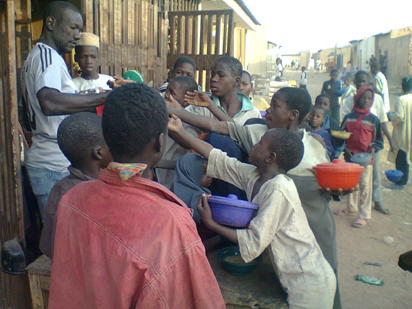
For millions of children still roaming the streets instead of attending school, the argument is far removed from budget jargon or accounting procedures. It comes down to one question: will money approved in their name build classrooms and learning centres, or pay for projects that have nothing to do with education?
The concern is contained in a statement signed by IA-Foundation founder, Ibironke Adeagbo, who acknowledged the Commission’s explanation that the projects were constituency interventions inserted into its budget by the National Assembly, but insisted that such spending weakens the country’s response to the out-of-school children crisis.
The 2026 Appropriation Act allocated N22.82 billion to the Commission. But budget details show that about N8.4 billion was earmarked for road construction in Ogun, Katsina and Ekiti states, alongside ambulances, dental equipment, solar streetlights and other projects unrelated to education.
The Commission has since defended the allocations, saying it neither conceived nor proposed the projects. According to its explanation, they were constituency projects inserted by the National Assembly and assigned to the agency for implementation in line with an established federal budgeting practice.
It also maintained that its mandate remains unchanged, pointing to the profiling of more than 700,000 out-of-school children and the establishment of 119 learning centres across the country.
According to Adeagbo, “Whether conceived by the Commission or inserted by lawmakers, every naira spent on roads, boreholes or ambulances through an education agency’s budget is a naira that does not reach a child who cannot read, write, or count.”
While acknowledging the Commission’s position, Adeagbo said the explanation did not answer the bigger question of whether money appropriated for vulnerable children’s education should be spent on projects outside the agency’s core mandate.
As the statement put it, “This is not a matter of accounting technicality. It is a matter of priorities. When an agency created to educate vulnerable children is instead turned, even in part, into a construction and procurement conduit, the children the agency exists to serve are the ones who pay the price, in the form of delayed learning centres, unrecruited teachers, and communities that continue to wait for the intervention they were promised.”
The foundation contrasted the development with what it described as prudent management of education funds by the Universal Basic Education Commission (UBEC), commending its Executive Secretary, Dr Aisha Garba, for facilitating the release of more than N100 billion in previously dormant matching grants owed to states and the Federal Capital Territory.
It said the intervention reduced unaccessed matching grants from more than N260 billion to N26 billion, enabling states to build and renovate classrooms, provide boreholes, toilets and furniture, and train teachers.
“This is what it looks like when an education budget is protected and put to work for the children it was meant for, and it is the standard IA-Foundation expects every agency entrusted with these children’s futures to meet,” Adeagbo said.
The statement also welcomed the Federal Ministry of Education’s decision to withdraw its proposed increase in WAEC and NECO registration fees for the 2027 examinations after public concern.
The proposed increase would have raised the examination fees from N27,500 to N50,000 before the ministry withdrew its June 18 letter, citing the need for wider consultation.
“For families already struggling with the cost of keeping children in school, that reversal matters. It is the kind of responsiveness IA-Foundation hopes to see applied just as swiftly to how the Almajiri budget itself is spent,” she said.
Adeagbo said the foundation has also introduced a digital stakeholder portal that allows donors and partners to track how funds committed to children’s education are spent, from sponsorship to school placement.
“We believe every institution, public or private, handling funds meant for vulnerable children owes the public no less,” the foundation said.
She urged the National Assembly and the Federal Ministry of Education to ring-fence the Almajiri Commission’s budget for education-related programmes, stop routing constituency projects through education agencies, publish detailed spending reports, and strengthen oversight of budget implementation.
The foundation said it would continue working with communities, donors and policymakers to advocate for a system where funds approved for vulnerable children’s education are spent on classrooms rather than projects outside the Commission’s statutory mandate.
“Nigeria cannot afford to keep treating the education of its most vulnerable children as negotiable. Every shortfall in the Almajiri budget is a child who stays out of school for another year,” Adeagbo said.
The post Almajiri: Every naira spent outside the classroom is one denied a child — Foundation appeared first on Vanguard News.

 Daily Post
 Punch Nigeria
 This Day
 Vanguard Nigeria
 Premium TImes
 Channels TV
 Business Day