

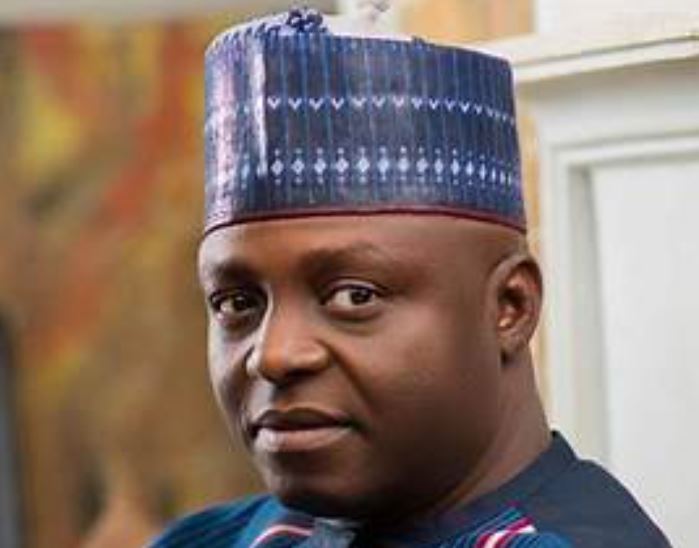
*We’ve no plan to make Nigeria one party state *Nigerians should choose leaders based on records, character, capacity to deliver *Says Tinubu’s reforms must translate into jobs, food, better incomes, security
By Soni Daniel, Northern Regional Editor
National Chairman of the All Progressives Congress, APC, Prof. Nentawe Goshwe Yilwatda, has said the ruling party has no ambition to turn Nigeria into a one-party state despite the influx of politicians from opposition parties into its fold. Yilwatda, who spoke on the 2027 general elections, governance and the APC’s preparations for the polls, said a strong ruling party and a competitive multiparty democracy could coexist. In an interview with Vanguard, the APC chairman also said the party had mechanisms to resolve differences between some APC governors and the Federal Capital Territory Minister, Nyesom Wike’s Rainbow Coalition, insisting that internal disagreements would not derail its preparations for the elections. He defended President Bola Tinubu’s economic reforms, saying the administration had established measures to reposition the economy but must now translate them into jobs, affordable food, better incomes and improved security. Yilwatda urged Nigerians to assess candidates on their records, character and capacity to deliver rather than allow political differences to dictate their choices.
As a democrat, are you not worried that the mass exodus of other politicians into the ruling APC can create a one-party state if the APC wins in January next year?
I am a democrat, and I believe that Nigeria’s democracy is stronger when political parties are vibrant, competitive and able to offer citizens credible alternatives. The APC does not seek to eliminate opposition, nor do we believe that a healthy democracy can be sustained without it. The movement of politicians from one party to another is a feature of democratic politics. Individuals make such decisions for different reasons, and every Nigerian has the constitutional right to freedom of association. What matters is that these movements are voluntary and conducted in accordance with the law. However, the responsibility for maintaining a competitive political environment does not rest with the APC alone. Opposition parties must also strengthen their internal structures, build public confidence, articulate credible policies and organise effectively.
Our ambition is not to turn Nigeria into a one-party state. Our ambition is to build a party that Nigerians freely choose because of its leadership, programmes and record of performance. A strong APC and a competitive multiparty democracy are not mutually exclusive. We will continue to respect the rights of other parties to organise, campaign and seek the people’s mandate.
How is the APC under your leadership helping to actualise the dream of progressive politics, which seeks to make life better for all and reduce authoritarianism?
Progressive politics must ultimately be measured by its impact on the lives of ordinary citizens. It is not enough to speak about progressive ideals; we must demonstrate them through policies, institutions and programmes that expand opportunities, protect citizens’ rights and improve living standards. Under my leadership, the APC is focused on strengthening internal democracy, promoting responsible leadership, expanding grassroots participation and ensuring that the party remains connected to the needs and aspirations of Nigerians.
Our structures must provide opportunities for women, young people, professionals and people from different communities to participate meaningfully in political decision-making. We also recognise that the party has a responsibility beyond winning elections. We must provide constructive feedback to the government, communicate its policies honestly and ensure that the concerns of Nigerians reach the appropriate authorities. Progressive politics also demands respect for the Constitution, the rule of law, freedom of expression and the independence of democratic institutions. These principles are essential to building a society where government serves the people and power is exercised responsibly. Ultimately, our objective is to ensure that the Renewed Hope Agenda translates into tangible improvements in people’s lives.
For the APC, progressive politics must mean better opportunities, greater inclusion, stronger institutions and a government that remains accountable to the people.
The progressive ideology of the APC drives the Renewed Hope Agenda of President Tinubu, which seeks to improve the economy and tackle insecurity, among others. As the chairman of the party, to what extent do you think these ideals have been actualised since 2023?
The Renewed Hope Agenda represents a broad programme of economic reform, infrastructure development, social investment, improved security and sustainable national development. Since 2023, the administration of President Bola Ahmed Tinubu has undertaken significant reforms intended to address longstanding structural challenges in the Nigerian economy. These include the removal of the petrol subsidy, foreign-exchange reforms, tax reforms, efforts to improve government revenue, investments in infrastructure and measures to support vulnerable households and productive sectors of the economy. As the governing party, our responsibility is to assess progress honestly, defend policies that are producing results and encourage improvements wherever implementation falls short of expectations.
My assessment is that the administration has established a reform direction and undertaken important measures to reposition the economy. The next critical task is to accelerate the translation of those measures into jobs, affordable food, better incomes, improved security and stronger public services. The Renewed Hope Agenda should be judged not only by the reforms initiated, but increasingly by the measurable improvements Nigerians experience in their daily lives. That is the standard we must continue to pursue.
One of the cardinal goals of this administration is poverty reduction. Do you think the administration has succeeded in reducing poverty in Nigeria?
Poverty reduction is one of the most important tests of any government’s performance, because the ultimate purpose of economic growth is to improve human welfare. The administration has introduced and pursued interventions intended to cushion the effects of economic adjustment, support vulnerable households, expand access to education and credit, promote agriculture and small businesses, and create opportunities for employment and enterprise. These measures are important because poverty cannot be sustainably reduced through cash assistance alone; it also requires productive jobs, stronger businesses, better education and access to essential services.
Our position as a party is that the government’s efforts must be judged by evidence of their reach, effectiveness and impact. Social interventions must get to the intended beneficiaries, agricultural production must improve, businesses must be able to grow, and workers must experience meaningful improvements in their purchasing power. We therefore recognise the progress being pursued while acknowledging that much more remains to be done. Poverty reduction is a continuing national responsibility, not a task that can be completed overnight. Our objective must be to move Nigerians beyond survival towards economic security, productive employment and a genuine opportunity to improve their standard of living.
How are you going to manage the conflict between some APC governors and the FCT Minister’s Rainbow Coalition in their efforts to win support for the President?
The overriding objective of every APC stakeholder should be the success of President Tinubu and the party in the 2027 elections. That objective requires cooperation, mutual respect and effective coordination among governors, ministers, party leaders, elected representatives and grassroots organisations. Where differences arise between individual stakeholders or mobilisation groups, our responsibility as party leadership is to provide a platform for dialogue and reconciliation. We will encourage all parties to focus on the common objective rather than allow differences over structures, influence or methods of mobilisation to become sources of division.
At the same time, we must recognise that political mobilisation can take different forms. Groups may emerge around particular constituencies, interests or initiatives, but their activities should complement the party’s established structures rather than create unnecessary rivalry. The APChas established organs and procedures for managing internal disagreements. We intend to use those mechanisms to promote consultation, clarify responsibilities and ensure that our collective campaign effort is properly coordinated. I would not want to characterise every difference of opinion as a crisis.
What matters is how we manage those differences and whether all stakeholders remain committed to the party’s objectives. Our approach is dialogue, reconciliation and coordination. No personal or group interest should be allowed to outweigh the collective interest of the APC and the national objective of delivering good governance.
Are you worried about the division?
As National Chairman, I take every concern about unity within the party seriously. The APC is a large political organisation with governors, ministers, legislators, party executives and millions of members across the country. With such diversity, differences of opinion are inevitable. What matters is that we do not allow those differences to become permanent divisions. We have established party structures, leadership channels and reconciliation mechanisms to address grievances and resolve disagreements in a constructive manner. I am encouraged by the fact that our members share a common objective: to strengthen the party, support the Renewed Hope Agenda and prepare effectively for the 2027 elections. That common purpose provides a strong foundation for resolving whatever differences may arise.
We are also conscious that Nigerians expect political leaders to demonstrate maturity, restraint and a willingness to work together. We must not allow individual disagreements to distract us from the responsibility of serving the people. I remain confident in our ability to manage our differences through consultation and responsible leadership. Unity does not mean that everyone must agree on everything. It means that, despite our differences, we remain committed to a common purpose and respect the procedures that bind us together.
What advice do you give to Mr. President and Nigerians as we prepare for the 2027 polls?
My advice to President Tinubu is to remain focused on governance, sustain the reform agenda, intensify efforts to improve security and ensure that the benefits of economic recovery reach Nigerians across all social groups and geographical regions. Above all, we must remember that our political differences do not diminish our shared identity as Nigerians. No election is worth the loss of innocent lives, the destruction of property or the weakening of our national unity.
My message to Nigerians is simple: let us make 2027 a contest of ideas, records and credible plans for the future, not a contest of bitterness or violence. The ultimate winner must be Nigeria and the Nigerian people.
How satisfied is your party with the programmes and timelines released by INEC for the coming elections?
The APC respects the constitutional mandate and operational independence of the Independent National Electoral Commission. INEC is responsible for organising elections in accordance with the Constitution and the Electoral Act, and we expect it to discharge that responsibility professionally, impartially and transparently. As a political party, we have a legitimate interest in the electoral timetable, because it guides our preparations, candidate selection processes, campaign activities and mobilisation of voters.
We therefore study the commission’s guidelines carefully and engage through the appropriate institutional channels whenever clarification or a legitimate concern arises. Our expectation is that the timetable should provide sufficient clarity for political parties, candidates and voters to prepare effectively, while allowing INEC to meet its legal obligations. Equally important is the timely publication of guidelines, transparent procedures, credible voter registration and accreditation processes, and the effective deployment of technology where appropriate. We believe that confidence in elections depends not only on the timetable but also on how consistently the rules are applied to all political parties. The APC will comply with the applicable electoral laws and INEC guidelines, and we expect every other political party to do the same.
Our interest is not merely in having elections conducted on schedule, but in having a process that is credible, transparent, peaceful and capable of earning the confidence of Nigerians.
How do you respond to the criticism that the APC-led government has caused more hardship than bringing renewed hope to Nigerians since coming to power in 2023?
The administration inherited longstanding economic and structural challenges, but it would not be responsible to suggest that this fact alone removes its obligation to address the difficulties Nigerians face today. President Tinubu’s administration has undertaken difficult reforms intended to stabilise the economy, improve public revenue, address distortions and create the conditions for sustainable growth. These reforms are intended to produce long-term benefits.
Our responsibility as the governing party is to explain the rationale for these policies while ensuring that the government remains responsive to their consequences. Economic reform must be accompanied by effective social protection, increased domestic production, improved infrastructure, job creation and measures that help households cope with rising living costs. We must also ensure that public resources are used responsibly and that relief programmes reach the people for whom they are intended. I would not claim that everything has been achieved or that every Nigerian is already experiencing the benefits of the reforms. There is still important work to be done, and the government must continue to improve implementation and delivery.
However, we believe that the reforms provide a foundation for a more resilient economy, and we will continue to support measures that deliver measurable improvements in the lives of Nigerians. Renewed Hope must be more than a slogan. It must become a daily experience reflected in affordable food, better incomes, secure communities, reliable infrastructure and expanding opportunities for ordinary Nigerians. That is the outcome we are working towards, and that is the standard by which we must be judged.
The post APC has mechanism to manage our govs, Rainbow Coalition’s feud — Yilwatda appeared first on Vanguard News.