

It was one of the largest gatherings of Africa’s best brains. The date was November 12, the Academic Staff Union of Universities (ASUU) 2026 Heroes Day. The academics came from all parts of the country, gathering at the University of Abuja. Amongst them were current and former vice-chancellors, current and past presidents of ASUU, and founding NLC President, Comrade Hassan Sunmonu. There was Alhaji Mahmud Yayale Ahmed, who has held three of the country’s highest public offices: Secretary to the Government of the Federation, Head of the Civil Service, and Minister of Defence. Former Bauchi State Governor AhmaduAdamuMu’azu, ex-Permanent Secretaries Professor GokeAdegoroye and Dr. TimiebiKoripamo-Agary, who, as serving Permanent Secretary, Ministry of Labour and Productivity, sued a Minister for conduct bordering on corruption.
Minister of State SuwaibaSa’idu Ahmad, a professor of Science Education, held herself up as a proud member of ASUU, identified the principle of good welfare for academics, and urged all to continuously help build bridges between Government and ASUU.
The occasion embodied three primary characteristics of the seventy-eight-year-old ASUU. First, ever analysing the past, which is why it annually marks its Heroes Day to honour those who have made sacrifices for the union, universities, and the country. The Day commemorates November 12, 2013, the date former ASUU President and noted novelist Festus Iyayi was killed in a car crash. He was travelling for an ASUU National Executive Council meeting in Kano to find a solution to a national strike triggered by Government’s intransigence and insistence on defunding education.
The second ASUU culture is ever interrogating the present, which is why this year’s theme focused on the electoral system. The third is the union’s tendency to probe into the future. This time, it looked at the ongoing attempts to create State Police and the possible impact it could have on the 2027 General Elections.
ASUU is also quite strategic in building alliances, which is why its awardees this year included a number of people who led the Government Negotiating Teams or played roles in ensuring the success of the decades-long ASUU-Government negotiations. These included Alhaji Ahmed, Professor MunzaliJibril, whose Negotiating Team in May 2021 broke through barriers and successfully produced a draft agreement, and Professor NimiDimkpa Briggs, who, on June 16, 2022, despite government reservations, followed through with a new draft agreement within ten weeks.
The Buhari government had been so displeased with the breakthrough the Briggs Team had made with ASUU that it made false accusations against the likeable professor. It accused him of excluding government agencies from the negotiations, inflating academics’ salaries by N1.1 trillion, and acting out of financial self-interest. In making the last two allegations, it escaped the government’s mind that Briggs had retired from service and, as such, would not be a beneficiary of the enhanced academics’ pay. When Briggs passed on ten months later, the same Buhari government praised him to high heavens for his dignity, truthfulness, and “historic contributions” to education.
Alhaji Ahmed, speaking on behalf of the awardees, joked about his experience with ASUU President Chris Piwuna, a professor of psychiatry whom he said tried to make him his patient, but he rejected such negotiation tactics. He dedicated his award to former ASUU President and current Trustee, Professor AsisiAsobie, whom he said introduced him to the union’s unique ways of negotiation. Asobie, he said, would refuse to even drink water in his office because they were negotiating.
Professor Piwuna, in analysing the situation in the country, said: “The Nigerian Universities and our members have suffered their share of violence and trauma. Some campuses were attacked; we have lost members across branches, and several students have been killed, staff displaced, and properties lost. Our universities have become theatres of ‘war’ and easy targets for insurgents, from Jos to Abuja, and campuses in North West Nigeria.”
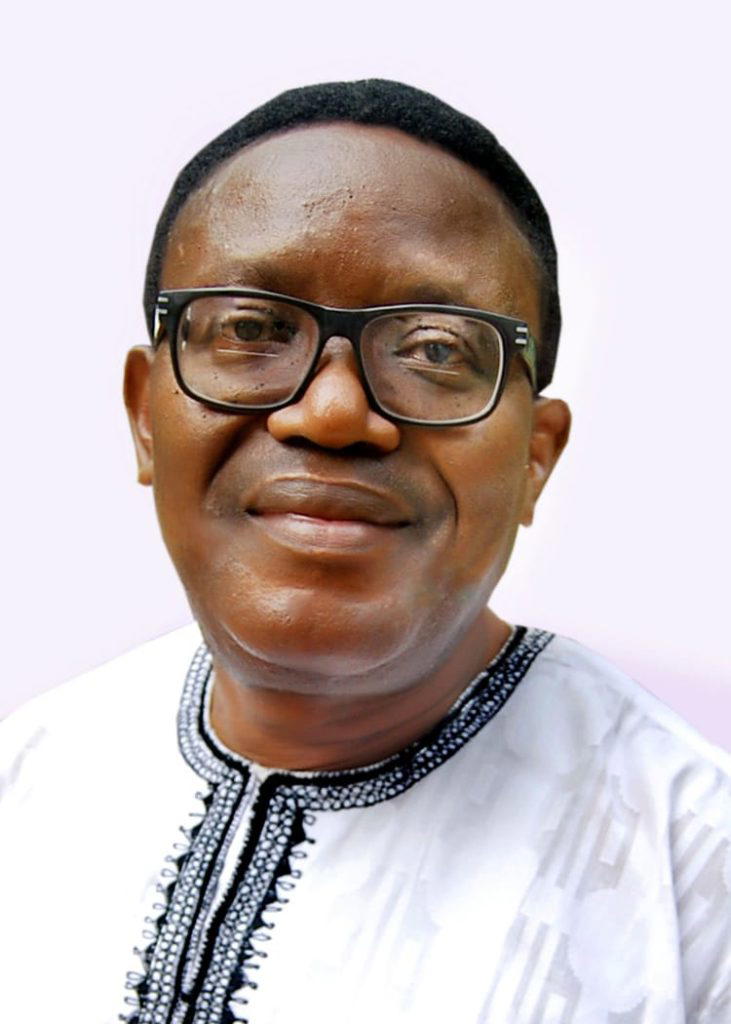
I had the honour of delivering the 2026 ASUU Annual Lecture titled: ‘Insecurity, Incumbency and Elections in Nigeria: The Role of State Police.’
I pointed out that in the past eleven years of the ruling All Progressives Congress (APC) administrations of Buhari and Tinubu, at least 97,111 persons have been killed in violent conflicts. Also, that Nigeria, in the 2026 Global Terrorism Index (GTI) Report, ranks fourth globally, trailing Pakistan, Burkina Faso, and Niger.
I therefore submitted that even with the assistance of the military, the police are not coping with insecurity. I listed challenges of the police as including their inability to wean themselves of their colonial origins of relying on force, repression, and suppression of Nigerians rather than being a civil agency and a friend of the people. Other problems I mentioned are very poor remuneration and welfare and job insecurity, particularly amongst its top echelons. One of the suggestions I made was that, career-wise, the police should be run like the public service, where the promotion of a few as Permanent Secretaries or Head of Service does not mean all the Directors senior to them are sacked. In the alternative, that a non-policeman, such as a judge or senior lawyer, be made the Inspector General of Police (IGP). If a non-soldier can be the Commander-in-Chief of the Armed Forces, a non-policeman can be the IGP.
These challenges, I posited, make the establishment of State Police necessary, especially when they will be recruited from locals familiar with the terrain and local culture. The fact that there will be multiple police agencies would not lead to administrative challenges, as the United States runs 17,985 police agencies and Canada, 160. The challenges I see include whether state governments that cannot pay workers’ salaries can afford State Police or whether governors who employ thugs would not recruit them into the State Police.
Again, can state governors that would not allow their State Electoral Commissions or Local Governments to run properly allow professionalism in their State Police?
Our politics itself, I submitted, is being transformed into a criminal enterprise in which true primaries are hardly held, opposition supporters are beaten and prevented from casting their ballots or threatened with death, and results are written sometimes before elections. I submitted that elections in the country, which should be as simple as the holder of the National Identity Card voting at any polling unit and their vote being automatically transmitted to central and local collation centres, have been made unnecessarily cumbersome with voter cards, ballot papers, card readers, BVAS, IREV, collation centres, etcetera.
My conclusion is that, with the Presidential Elections nine weeks away, it is unlikely the State Police will be in place before then. Even if it is, with 32 governors siding with the ruling party and an unreformed police, no fundamental changes to the usual partisan policing will take place
The post ASUU Heroes Day, 2027 elections and the futuristic State Police, by Owei Lakemfa appeared first on Vanguard News.