

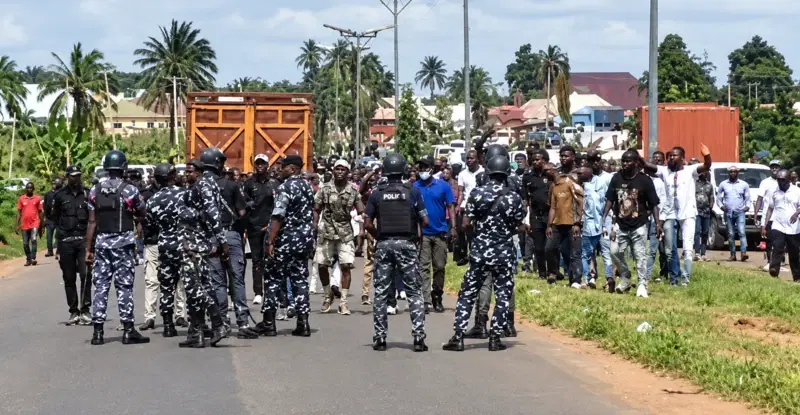
The September 8, 2026 blockade of Peter Obi’s convoy in Benue State, as he travelled to Yelwata to commiserate with families devastated by the June 2025 massacre, is a disturbing development that must not be dismissed as a mere quarrel between politicians. It raises a fundamental question about the health of Nigeria’s democracy, where an opposition presidential candidate can easily be obstructed and intimidated.
The circumstances surrounding the incident make it particularly troubling. Obi’s convoy was stopped by youths along the Makurdi–Gboko federal highway, with protesters chanting that he should leave. The Benue State Government denied sponsoring the action and said it had not been formally informed of Obi’s visit. Yet the state police command subsequently confirmed that it had been notified of Obi’s arrival and had deployed three police escort vehicles led by an Assistant Commissioner of Police. A notification letter dated 7th September 2026 and acknowledged by the police has also emerged.
This contradiction demands a transparent investigation. It should not be obfuscated with competing narratives. The police have already arrested 46 suspects and said more key actors are being traced. That is commendable. But the investigation must go beyond the immediate perpetrators to establish who might have organised, financed or directed the blockade. Those found culpable must face prosecution, regardless of political affiliation.
The incident is even more disturbing because it follows an earlier dispute between Obi and Governor Hyacinth Alia. In April 2025, Alia stopped a planned Obi visit to IDP facilities, citing security and protocol concerns and arguing that the former governor had not properly informed the state authorities. That episode was contentious but did not involve the kind of physical road blockade witnessed this week. Peter Obi’s entourage had also been attacked by gunmen in Benin earlier this year, in which the state government also denied complicity.
Nigeria’s Constitution guarantees citizens freedom of movement and association. These rights do not disappear because a citizen is an opposition politician. Nor should the legitimate security coordination required for visits by prominent political figures become a mechanism for political obstruction. A governor may reasonably demand proper security arrangements; he cannot stop political opponents from visiting peacefully and associating safely.
The timing is also ominous. With political activity gathering momentum ahead of the 2027 elections, tolerance among competing political camps will be crucial. Violence, intimidation and the use of organised youths to frustrate political opponents can quickly result in unpleasant and even tragic outcomes. Once that happens, no party or candidate can be safe outside areas they control.
President Bola Tinubu, the Independent National Electoral Commission, the police and all political parties must therefore ensure that Nigeria’s democratic space remains open to every lawful contender. Nigeria must draw that line firmly before the 2027 campaigns take an ugly shape.
The post Benue blockade of Peter Obi unacceptable appeared first on Vanguard News.