

Every election season in Nigeria revives a familiar hope: that the right leader, armed with courage, competence, and character, can rescue the country from its accumulated failures. Leadership matters. Yet Nigeria’s history offers a sobering lesson: no leader can sustainably outperform the institutions through which he or she governs. Good leaders operating within weak systems often disappoint. Poor leaders working within strong institutions are at least restrained by rules and accountability mechanisms that outlive them. Nations advance not because they occasionally produce exceptional individuals, but because they build systems capable of converting political intention into enduring public value. Nigeria’s deepest governance problem, therefore, is not merely electoral. It is institutional.
Public debate remains focused on personalities. Each election becomes a search for a political saviour, while the structures that frustrate successive governments receive far less attention. Administrations change, yet the same failures persist. That continuity should force a deeper question: are Nigeria’s institutions designed to produce the outcomes citizens expect? Too often, the answer is no. The United States influenced Nigeria’s presidential system, but constitutional arrangements cannot simply be transplanted with identical results. Institutions draw strength not only from written rules, but from political culture, administrative capacity, and credible enforcement. Where patronage is stronger than procedure, influence outweighs authority, and loyalty is rewarded above competence, even sound laws become fragile.
The budget process illustrates the problem. A national budget should direct scarce resources toward lasting development. Instead, it too often becomes an arena for bargaining, opaque insertions, and fragmented allocations. Projects lack scale, continuity, and coherence. Government appears busy without becoming effective.
Reform must go beyond appeals for prudence. Nigeria needs stronger legislative budget expertise, transparent project-selection criteria, and public disclosure of major amendments. An independent fiscal council should assess revenue projections, debt exposure, and long-term sustainability. Fiscal rules must carry consequences: breaches should be reported and corrective action triggered. Executive-legislative relations also require renewal. Separation of powers should produce scrutiny, restraint, and shared ownership of major reforms-not confrontation, transactional bargaining, or policies that disappear with each administration.
Nigeria’s federal structure presents another contradiction. Although a federation, fiscal and developmental authority remains concentrated at the centre. States and local governments, closer to citizens’ problems, often lack the autonomy or capacity to respond effectively. Dependence on federal allocations weakens initiative and permits sub-national leaders to blame distant institutions for local failures.
Devolution is necessary, but it must not become decentralised impunity. Greater responsibility for policing, education, infrastructure, and economic development must be matched by stronger audits, transparent standards, and measurable outcomes. Economic institutions also require credible independence. The Central Bank’s monetary mandate should be protected from political pressure, direct deficit financing constrained, and major decisions supported by public evidence. Independence should mean professional freedom within a clear legal mandate-not freedom from scrutiny. Nigeria’s anti-corruption struggle exposes the same gap between aspiration and institutional design. The existence of agencies does not automatically create an effective system. Their mandates, funding, investigative capacity, and prosecution outcomes require review. Arrests and accusations are not deterrence when weak case preparation, prolonged trials, and selective enforcement turn anti-corruption into spectacle.
Appointments must be insulated from partisan capture, funding made predictable, and cooperation between investigators, prosecutors, and courts improved. More importantly, corruption must be prevented before it occurs. Digitised procurement, open contracting, beneficial-ownership disclosure, and traceable public payments can reduce discretion and make abuse harder to conceal.
Institutional reform must also confront Nigeria’s social pressures. Insecurity, unemployment, urbanisation, and population growth strain fragile systems. Security reform needs constitutional safeguards and conflict prevention; skills policy must reflect labour-market demand; and cities must prepare for pressure on housing, transport, and public safety.
Ultimately, public trust is the decisive test. Citizens accept state authority, obey laws, and pay taxes in exchange for security, justice, opportunity, and services. When institutions repeatedly fail, confidence erodes. Trust cannot be manufactured through slogans. It is accumulated through encounters with institutions that act fairly, deliver competently, honour commitments, and treat citizens with dignity.
Institution-building is patient, difficult, and politically unrewarding. It demands continuity where novelty is attractive, restraint where discretion is convenient, and bipartisan commitment where partisan advantage is easier.
Yet this is the work on which Nigeria’s future depends.
The country will not be secured by the perpetual search for political messiahs. It will be secured by institutions strong enough to enable good leaders, restrain bad ones, preserve national memory, and survive changes of government.
The decisive struggle extends beyond the ballot box. It is taking place in the Constitution, legislature, budget process, courts, security agencies, regulatory bodies, civil service, and local governments. When Nigeria reforms these institutions, elections will cease to feel like desperate wagers on individual salvation. They will become a peaceful means of choosing leaders within a system designed to deliver good governance.
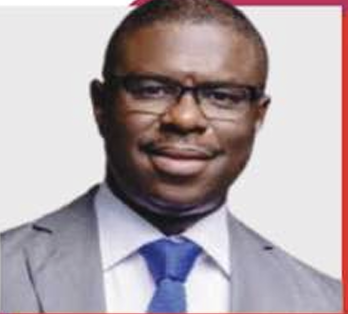
•Dr Peterside is the author of “Leading in a Storm” and “Beneath the Surface”.
The post Beyond the ballot: Why Nigeria must reform its institutions, by Dakuku Peterside appeared first on Vanguard News.