

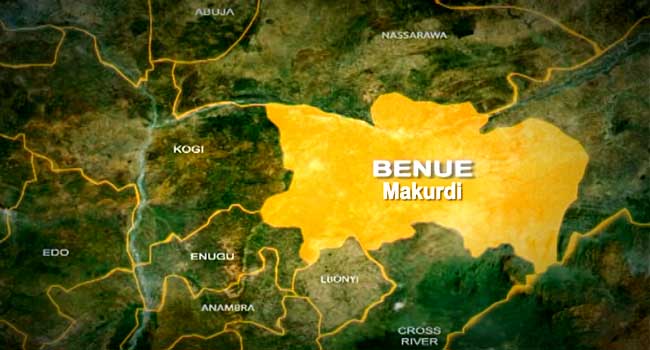
Attacks turn communities into fields of fear
By Peter Duru, Makurdi
For generations, the people of Benue South have been known for their resilience, rich cultural heritage and agricultural prowess.
Stretching across communities where farming is more than an occupation but a way of life, the district has long been regarded as one of the food-producing hubs of Nigeria.
Today, however, the songs of harvest have largely been replaced by the echoes of gunfire, cries of bereaved families and the silence of deserted villages.
In what residents describe as one of the darkest periods in the history of the zone, communities across Otukpo, Ohimini, Okpokwu LGAs, and neighbouring areas have come under relentless attacks by suspected armed herders.
Hardly a week passed without reports of fresh killings, kidnappings, cattle rustling or the displacement of entire communities.
Although attacks have plagued parts of Benue State for years, many residents believe the crisis assumed a more frightening dimension following the June 26, 2026, assassination of the Benue State Chairman of the Miyetti Allah Cattle Breeders Association of Nigeria (MACBAN), Ardo Risku Muhammad, and his associate, Yakubu Isah.
The two men were reportedly ambushed and killed at Okudu village in Otukpo LGA while returning from a peace mission at Idekpa in neighbouring Ohimini LG.
The murder of Ardo Risku which was widely condemned by leaders from within and outside the state appeared to usher in another cycle of bloodshed across the district.
Since that incident, Benue South has witnessed a disturbing succession of attacks, with victims ranging from farmers and traders to clerics, academics, women, children and travellers.
Communities that once bustled with commercial and farming activities now live under constant fear of the next attack.
In many of the affected villages, residents now sleep with one eye open. Some have abandoned their ancestral homes altogether, while others have restricted farming activities for fear of being ambushed on their way to the fields. For a region where agriculture sustains families and local economies, the consequences have been devastating.
Mood
A community leader in Otukpo, reflecting the mood across the district, lamented: “People no longer think about harvest. Every day is about survival. We don’t know who will be attacked next or which village will be invaded.”
The fear gripping Benue South has been reinforced by the frequency of attacks recorded within a few weeks. Hardly had one community begun mourning its dead before another was thrown into grief, creating an atmosphere of uncertainty that continues to spread across the district.
Among the incidents that deepened public anxiety was the reported killing of former Benue State Secretary to the State Government, Prof. David Salifu, who was allegedly ambushed by suspected armed men along the Wukari–Joota Road in Katsina-Ala LGA, a border community between Benue and Taraba states.
The wave of insecurity spared neither religious institutions nor their leaders. The abduction of Senior Pastor of the Universal Reformed Christian Church (NKST), Rev. Dr. Samuel Gbinde, alongside two members of his congregation at Andyar community in Guma LGA sent another chilling message that even places of worship had become vulnerable.
Residents said the incidents reinforced fears that no one was safe anymore. As the Secretary of the Campaign for Equal Rights and Opportunities for all Nigerians (CERON) Francis Odiir puts it, “When professors, pastors, farmers and ordinary villagers are all targets, it means nobody can truly say they are safe.”
The attacks intensified as July unfolded, with virtually every week bringing fresh reports of bloodshed.
Communities across Benue South and other parts of the state became theatres of violence, leaving behind a trail of deaths, injuries, displacement and shattered livelihoods.
On July 1, suspected armed herdsmen reportedly attacked Sai community in Mbajir Council Ward of Katsina-Ala Local Government Area, killing no fewer than 10 persons and injuring more than 15 others.
The attack, carried out in the early hours of the day, further heightened fears that rural communities had become easy targets for armed groups.
Barely 24 hours later, another tragedy struck in Okpokwu LGA. Armed cattle rustlers, believed to be herders, reportedly attacked Okpafie community in Oyilawu, killing a ranch owner and a member of the local vigilante before making away with nearly 50 cattle.
On July 4, suspected armed herders launched a two-day assault on communities in Kwande LGA. Four persons were reportedly killed while at least 10 others sustained injuries. Farmers working on their farmlands and travellers attempting to flee the attack were said to be among the victims.
The attacks reached another tragic milestone on July 9 when renowned historian and former Head of the Department of History at Benue State University, Professor Gabriel Nyityo, was reportedly murdered by a suspected armed herder at his residence on the outskirts of Makurdi. His killing sent shockwaves across the academic community and underscored the widening reach of insecurity in the state.
Three days later, Benue South suffered one of its deadliest attacks in recent months. Suspected armed herdsmen invaded Akpachi village in Ugboju community, killing two farmers on their farmland.
Before grieving families could recover from that tragedy, the attackers struck again less than 24 hours later.
At about 4am the following day, the gunmen reportedly invaded Otukpo-Nobi community, killing at least 16 persons and injuring several others. The coordinated attacks deepened fears that communities were facing an organised campaign of violence with devastating consequences for residents.
Survivor’s harrowing experience
One resident who survived the Otukpo-Nobi attack recalled the terrifying experience, saying, “We woke up to the sound of gunfire. People ran in different directions, but many never made it. By sunrise, our community had become a place of mourning.”
The cycle of violence continued on July 14 when suspected armed herdsmen reportedly attacked Ondo community in Ugboju District of Otukpo LGA.
One person was killed, several houses were abandoned and frightened residents fled into nearby communities in search of safety.
Two days later, Ankpechi community along the Otukpo-Ogobia Road in Ohimini LGA came under attack.
Armed men reportedly shot a resident and looted several provision stores, leaving business owners counting heavy losses while residents questioned the absence of effective security protection.
As the attacks spread from one community to another, many displaced families found refuge in neighbouring towns, schools, churches and makeshift camps.
Their stories were remarkably similar, homes abandoned overnight, farms left untended, businesses destroyed and an uncertain future hanging over thousands of innocent people.
The insecurity took yet another disturbing turn on July 19 when three siblings travelling from Abuja to Benue with the remains of their late mother were reportedly abducted along the Ogobia-Otukpo Road in Ohimini LGA. The victims were said to have been conveying their mother’s body to their hometown in Okpokwu LGA for burial when they were intercepted by suspected armed herdsmen between Omutele and Ankpechi communities and held them hostage.
The incident left many residents heartbroken. A journey meant to give a deceased mother a dignified burial ended in tragedy, highlighting the growing dangers confronting travellers on major roads across Benue South. For many families, even mourning has become fraught with fear.
Fresh violence erupted on July 21 when suspected armed herdsmen reportedly attacked Sai community in Katsina-Ala LGA killing at least 10 persons and injuring more than 15 others. The attack prompted Governor Hyacinth Alia to order security agencies to track down the perpetrators and restore calm to the affected communities.
Just a day later, gunmen reportedly invaded Olahimu village in Ogoli Ugboju, Otukpo LGA, killing a 15-year-old boy and rustling several cattle. The death of the teenager underscored the painful reality that children have not been spared in the escalating violence.
On July 27, fresh attacks on communities in Ohimini and Ukum LGAs claimed at least four lives, including a mother, while several residents, among them children, suffered severe machete injuries. Local vigilantes and community volunteers continued searching nearby bushes for missing persons long after the attackers had fled.
The bloodshed persisted into July 28 when separate attacks in Otukpo and Kwande LGA reportedly claimed no fewer than 16 lives. Several other victims sustained serious injuries, while motorcycles belonging to fleeing farmers were reportedly carted away by the attackers.
For many residents, the repeated attacks have gone beyond statistics. Behind every casualty figure is a grieving family, an orphaned child, a widowed spouse, an abandoned farm and a community struggling to rebuild amid recurring violence. Entire villages that once thrived on farming and commerce now live under the shadow of fear and uncertainty.
A resident of one of the affected communities, James Abah, captured the mood of many survivors, saying, “we no longer know what tomorrow holds. We only pray every night that our village will not be the next to be attacked.”
Community leaders, traditional rulers and religious organisations have repeatedly appealed to the Federal government and security agencies to strengthen security operations across Benue South.
They insist that only sustained military presence, improved intelligence gathering, effective policing and the prosecution of those responsible for the attacks can restore confidence among residents.
Security experts also argue that beyond military action, lasting peace will require dialogue, justice for victims, accountability for perpetrators and practical measures to address the root causes of recurring violence. Without these, they warn, the cycle of attacks may continue to deepen humanitarian and economic challenges in the region.
As Benue South mourns its dead and counts the cost of months of relentless violence, one message echoes across its battered communities: peace has become the people’s greatest aspiration. Until the killings end and displaced families can safely return to their homes and farms, the district that once symbolised abundance will remain a painful reminder of the human cost of insecurity in Nigeria.
The post BLACK JULY:Benue killings worsen after Miyetti Allah leader shot dead appeared first on Vanguard News.