

By Clifford Ndujihe, Politics Editor
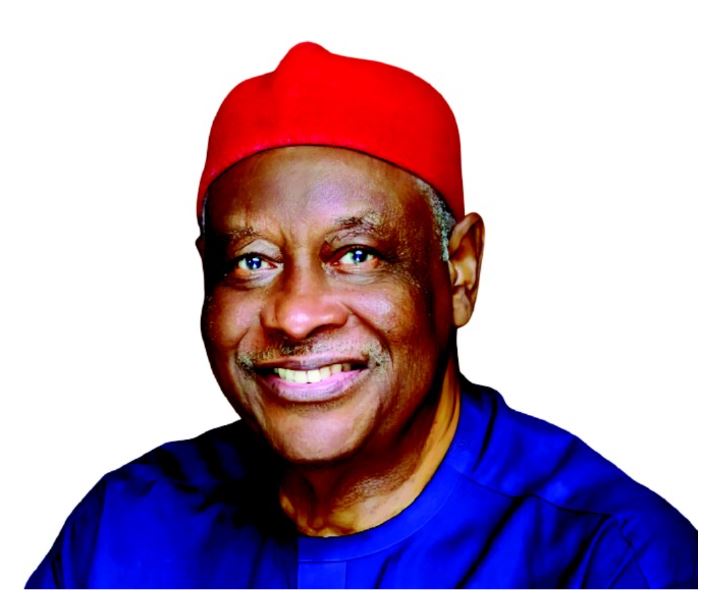
NIGERIA’S pro-democracy movement has lost one of its notable voices, Chief Ralph Obioha, a businessman, politician, elder statesman and founding member of the National Democratic Coalition, NADECO, who died on October 3, 2026, aged 80.
His death, announced by his son, Chima Obioha, on behalf of the family in Enugu, marked the passing of one of the men who put personal comfort, business interests and political calculations aside to join the struggle against military rule and for the restoration of democracy.
For Obioha, however, democracy, which he fought for till death, was never merely about conducting elections or changing governments. It was about justice, equity, fairness, equal opportunity and a political structure that allowed Nigeria’s component parts to develop according to their circumstances
Stand for democratic principles
Obioha remained consistent with that philosophy until the end.
In tandem with his principled stand on justice, equity, human rights and democracy, Obioha, last June, declined the national honour conferred on him by President Bola Tinubu during the 2026 Democracy Day celebrations. He cited concerns over the continued detention of Indigenous People of Biafra IPOB, Leader, Mazi Nnamdi Kanu and the worsening security situation in the country as reasons for rejecting the national award.
Obioha expressed appreciation to President Tinubu and the Federal Government for the recognition but said accepting the award would be inconsistent with the democratic principles that guided the struggle against military rule.
The former lawmaker, who served in the National Assembly between 1979 and 1983, said he joined other pro-democracy activists during the June 12 struggle because they believed in a Nigeria founded on justice, freedom, the rule of law, and respect for fundamental human rights.
“To accept this honour at a time when many of the values for which we fought remain insufficiently realized would, in my view, be inconsistent with those convictions,” he stated.
The late elder statesman was also the Okpuruisizuruoha II of Arondizuogu.
The family described him as a patriot, elder statesman, political leader and businessman whose public life was shaped by a firm belief in Nigeria’s enormous potential and the ideals of service, leadership and nation-building.
But perhaps the most enduring chapter of Obioha’s public life was his role in the June 12 struggle.
June 12 and the birth of NADECO
Obioha was among the 49 eminent Nigerians who signed the document establishing NADECO in 1994 after the annulment of the June 12, 1993 presidential election won by the late business tycoon, Chief MKO Abiola. The coalition brought together politicians, activists and former military officers across ethnic and regional lines in a broad campaign for the restoration of democratic rule and true federalism.
Obioha later explained that the NADECO structure in Nigeria was created by eminent Nigerians, while he was given the mandate to establish its American and Canadian offices. He said NADECO was registered in Nigeria, the United States and Canada and remained active through the difficult years leading to the return of civilian rule in 1999.
The struggle came at enormous personal cost.
Obioha, who was then a major businessman, lost businesses, including a bank, brewery, cement bagging plant and vegetable oil company. He was forced into exile and became a leading figure in NADECO’s activities in Canada and the United States. Yet, years later, he insisted that he had no regrets.
“I will never regret being part of the struggle,” he said, recalling the sacrifices made by him and other pro-democracy activists.
For Obioha, the annulment of June 12 was not simply an electoral dispute. It was a fundamental assault on the will of Nigerians.
He regarded Abiola as a symbol of the democratic aspirations of Nigerians and lamented that the struggle claimed the lives of Abiola, his wife, Kudirat, NADECO leader Alfred Rewane and many other Nigerians.
Looking back in 2018, he said the democracy Nigerians eventually secured should be seen as an evolving experience. There had been progress, he argued, including the historic 2015 election in which an incumbent president was defeated and power was transferred peacefully. But he also warned that the country had not fully realised the ideals for which NADECO fought.
Distorted democracy
Obioha was an unrelenting critic of the quality of Nigeria’s democracy.
In an interview, he argued that Nigeria had distorted the democratic system, turning what ought to be government “of the people by the people and for the people” into government serving a few.
His concern was that elections without justice, economic opportunity and security could not produce genuine democracy.
For him, democracy had to improve the material conditions of the people.
He pointed to unemployment, poverty, insecurity, poor infrastructure and the collapse of industries, particularly in the Southeast, as evidence that political democracy had not translated sufficiently into social and economic democracy.
He was equally emphatic that Nigeria could not build a stable democracy while allowing insecurity and marginalisation to fester.
“It should not be a democracy celebration when lives are wasted daily,” he warned.
Gospel of true federalism
Obioha’s answer to many of Nigeria’s structural problems was a system in which component parts of the federation enjoyed greater control over their affairs and resources.
He was wary of a federation in which virtually everything depended on Abuja.
His argument was straightforward: communities and regions should be empowered to manage many of their own affairs while the Federal Government concentrated on issues properly assigned to it.
“The Federal Government has no business in education and health matters,” he argued, advocating greater regional responsibility and coordination.
For Obioha, restructuring was not about creating confusion or weakening Nigeria. It was about making the federation work.
He argued that people should be allowed to manage their affairs and resources more effectively, warning that a system in which one region dominated national affairs would not be sustainable.
On security, his position was equally practical. He questioned how a police force controlled from Abuja could effectively understand security challenges in Nigeria’s remotest communities.
While he had reservations about state police because of the possibility of governors abusing it, he acknowledged that security was best managed closer to the people, with appropriate national safeguards against abuse.
‘There was never an Igbo coup’
Even in his final months, Obioha remained engaged with some of Nigeria’s most contentious historical questions.
In January 2026, as Nigeria marked 60 years since the January 15, 1966 coup, he rejected the description of the event as an “Igbo coup”.
“Definitely not,” he said, arguing that the coup was carried out by military officers, not by the Igbo as an ethnic group.
He acknowledged that Igbo officers were prominent among those involved but said that did not make the coup an Igbo project. He also condemned the coup itself, describing it as unnecessary and attributing it largely to the restlessness of young officers who wanted rapid change.
How to save Nigeria
Obioha never abandoned hope in Nigeria, even when his assessment of the country was bleak.
In January 2026, he described the country’s condition in stark terms, contrasting the Nigeria he knew as a young man with what he regarded as the poverty, insecurity, tribalism and corruption of the present.
Yet his solution was not despair.
He advocated a national conference at which Nigerians would sit down and agree on a new beginning based on equal rights, fairness and the elimination of entrenched privilege.
“Nigeria will kick off very quickly because we have resourceful people,” he said.
That was perhaps the central message of Obioha’s political life: Nigeria was not short of human or natural resources; it was short of a system capable of deploying those resources fairly.
He also believed that the country’s enormous diversity could become a strength rather than a weakness if citizens were given equal opportunity.
His emphasis was therefore not merely on changing leaders, but on changing the rules by which the country was governed.
Words on marble, legacies
Whether one agreed with all his positions or not, Obioha was difficult to dismiss as a political bystander.
He belonged to a generation that experienced military rule, participated in partisan politics, built businesses, suffered the consequences of political activism, went into exile and returned to a democratic Nigeria.
He served in the Second Republic House of Representatives, became national chairman of the Justice Party and chaired the Ohanaeze Ndigbo Caretaker Committee. He also remained an active voice on national questions long after the military had returned to the barracks.
His life thus straddled several chapters of Nigeria’s political history.
From the turbulence of the First Republic and the civil war era to the Second Republic, military dictatorship, June 12, NADECO, exile and the Fourth Republic, Obioha witnessed Nigeria’s crises at close range.
He fought for the democracy that Nigerians have today, but spent his final years warning that democracy without justice, security, equity and economic opportunity could become an empty ritual.
In death, therefore, Ralph Obioha leaves behind more than the memory of a NADECO activist.
He leaves a question for Nigeria: Can a country with enormous human and natural resources build a political system founded on justice, fairness, equal citizenship and true federalism?
To this question, Obioha answered yes but it required Nigerians to summon the courage to begin again.
The post CHIEF RALPH OBIOHA: NADECO patriot who fought for June 12, true federalism till death appeared first on Vanguard News.