

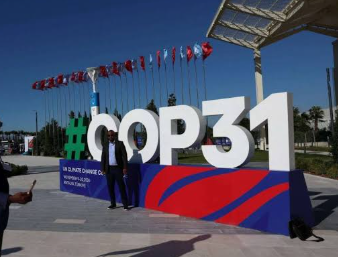
The 31st United Nations Climate Change Conference (COP31) has ended without a comprehensive political agreement after participating countries failed to resolve disagreements over fossil fuels, climate financing and measures to tackle global warming.
The failure to adopt a final cover decision followed almost 48 hours of extended negotiations beyond the summit’s scheduled closing date of November 20, making the conference, held in Antalya, Turkey, the longest in the history of UN climate negotiations.
The 12-day summit opened on November 9, with countries struggling to reconcile competing positions on the future of fossil fuels and financial support for developing nations.
COP31 President, Murat Kurum, announced at Sunday’s closing plenary that delegates had been unable to reach the consensus required to adopt the final draft agreement.
At the centre of the disagreement was whether the outcome document should contain an explicit commitment to move away from fossil fuels, alongside provisions on adaptation financing and carbon capture technologies.
EU rejects final proposal
The European Union and several other countries opposed the final proposal, arguing that its failure to directly address fossil fuels weakened the global response to climate change.
Ireland’s Environment Minister, Darragh O’Brien, who represented the EU, maintained that the bloc could not support an agreement that failed to identify fossil fuels as a major driver of the climate crisis.
Norway, Panama, the Marshall Islands and other vulnerable nations also raised objections to the proposed text.
Ghana, speaking on behalf of the African Group of Negotiators, expressed dissatisfaction with aspects of the negotiation process, particularly the handling of issues affecting Africa and demands for climate financing.
Despite its reservations, the African group indicated that it was prepared to accept the proposed text to preserve the multilateral negotiation process.
Fossil fuel commitment dropped from successive drafts
The controversy intensified as successive versions of the proposed agreement emerged during the negotiations.
The initial draft, published on November 16, called for accelerated efforts to phase out fossil fuels and an immediate transition away from their use in energy systems.
However, subsequent versions removed the explicit fossil fuel provisions, alongside a proposed annual adaptation finance target of $120 billion for developing countries.
The final version, released in the early hours of Sunday, November 22, equally omitted a direct commitment to move away from fossil fuels.
Instead, it referred to the agreement reached at COP28 in Dubai in 2023, which called for a just, orderly and equitable transition away from fossil fuels in energy systems.
But countries seeking a stronger commitment argued that referring to an earlier agreement without spelling out concrete action was inadequate.
The disagreement revived tensions surrounding COP28, which produced the first explicit reference to transitioning away from fossil fuels in a UN climate conference agreement after decades of negotiations.
At COP31, however, governments failed to agree on how that commitment should be strengthened and translated into practical action.
Guterres expresses disappointment
United Nations Secretary-General António Guterres expressed disappointment over the absence of a comprehensive agreement, warning that the scientific evidence of climate change remained clear despite political divisions.
“There may be no consensus in the negotiating room. There is no ambiguity in the science,” he said.
Guterres noted that global temperatures continued to reach record levels, extreme weather events were becoming more intense and greenhouse gas emissions remained dangerously high.
He warned that the world was heading towards breaching the 1.5-degree Celsius warming threshold established under the Paris Agreement.
The UN chief urged governments to intensify efforts to reduce dependence on fossil fuels, increase climate financing and strengthen measures to protect communities most exposed to climate impacts.
Former Executive Secretary of the United Nations Framework Convention on Climate Change, Christiana Figueres, also described the outcome as disappointing.
She, however, noted that more than 130 countries had refused to endorse an agreement they considered inadequate in addressing the severity of the climate crisis.
Figueres argued that developments outside the formal negotiations offered some grounds for optimism, particularly through the COP31 Action Agenda, which encourages governments, businesses and other non-state actors to advance climate initiatives.
She also highlighted commitments and signals from economies representing about half of the global economy to raise electricity’s share of global final energy consumption to 35 per cent by 2035.
African climate advocate condemns outcome
The collapse of the negotiations also attracted criticism from Mohamed Adow, Director of Power Shift Africa, who described the outcome as a warning about the failure of international climate diplomacy to address the needs of vulnerable countries.
Adow accused wealthy nations of failing to provide the financial resources developing countries require to implement climate action.
He also criticised the European Union’s rejection of the proposed agreement, alleging that the bloc had contributed to setbacks in negotiations on adaptation financing and a just transition.
“COP31 was a ghost COP, and its lack of progress will haunt climate-vulnerable communities in Africa and around the world,” he said.
Adow further lamented the failure to establish a just transition mechanism, which he said was among the key expectations carried over from the previous climate summit in Brazil.
Although countries could not agree on the overarching political document, negotiations on some individual issues recorded progress, while activities under the COP31 Action Agenda continued.
The unresolved disagreements will now remain on the international climate negotiation agenda ahead of COP32, scheduled to hold in Ethiopia in November 2027.
The post COP31 collapses as nations disagree over fossil fuel transition appeared first on Vanguard News.