

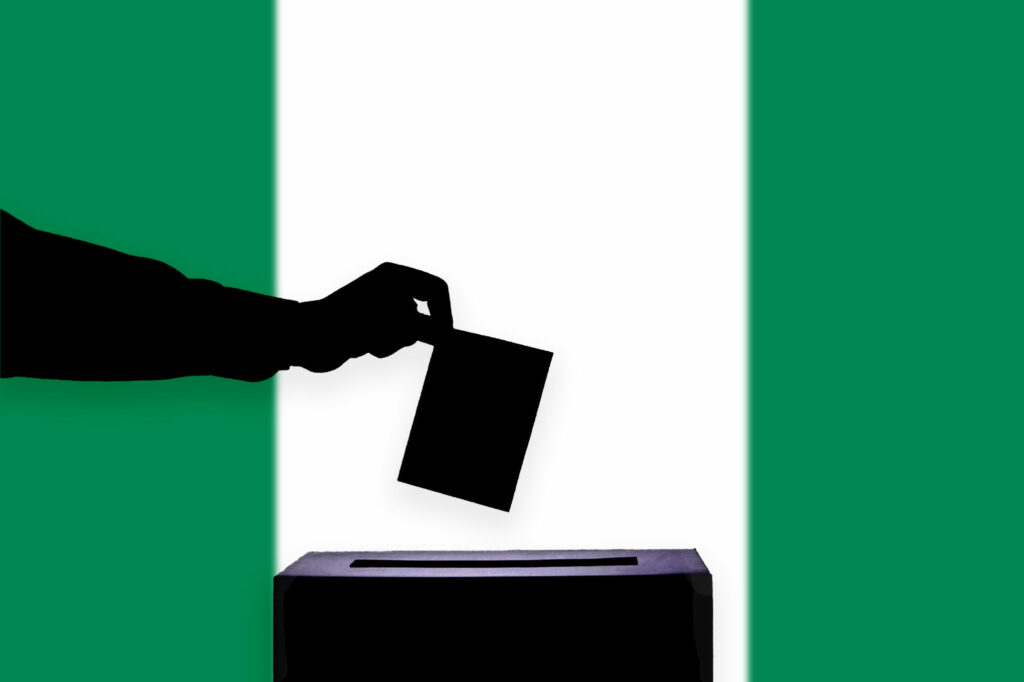
What happens when democracy begins to distrust the people in whose name it exists?
Every democracy begins with an act of faith.
Not faith in kings, experts, judges, generals, or bureaucrats, but faith in ordinary citizens. The entire democratic project rests upon a remarkably audacious belief: that millions of imperfect people, acting independently and often disagreeing with one another, possess a greater claim to political judgment than any institution that might seek to govern them.

When does democratic administration become democratic gatekeeping?
This belief has always appeared somewhat irrational. Citizens can be emotional. They can be misinformed. They can be impatient, contradictory, and unpredictable. They sometimes embrace bad ideas and reject good ones. Yet democracy was never built on the assumption that voters are infallible. It was built on the conviction that no alternative arrangement has proven more legitimate than allowing free citizens to determine their own political future.
For that reason, the greatest threat to democracy is not always the enemy standing outside its gates. Often it is a temptation that emerges from within. It is the temptation to conclude that citizens cannot quite be trusted with the full consequences of their own sovereignty. It is the temptation to believe that democracy must occasionally be protected from the people in whose name it exists.
The recent Federal High Court ruling directing the Independent National Electoral Commission to deregister five political parties has raised questions that extend far beyond the legal fate of the organizations involved. Justice Peter Lifu held that the affected parties failed to satisfy the electoral performance requirements established under Section 225A of the Constitution. The ruling concerns the African Democratic Congress, Accord Party, Action Alliance, Action Peoples Party, and Zenith Labour Party, all of which have indicated their intention to challenge the decision on appeal.
The legal basis of the judgment is neither obscure nor frivolous. Constitutions establish rules, and democratic institutions cannot simply ignore them. Electoral administration requires standards. Ballots cannot expand indefinitely without creating practical difficulties. A political system has a legitimate interest in ensuring that parties demonstrate at least some measurable level of public support.
These are serious arguments.
Yet there are moments when the most important questions are not legal but philosophical. This is one of them.
At first glance, the deregistration of politically weak parties may appear insignificant. After all, if a party has failed to attract meaningful support, what difference does its removal make? Why should democratic systems concern themselves with organizations that have not persuaded voters to embrace them?
The answer lies in understanding what political parties actually represent.
Parties are not merely electoral machines designed to win office. They are among the principal means through which citizens organize themselves into political communities. They transform private concerns into public demands. They provide avenues through which new leaders emerge, unfamiliar ideas are tested, and dissatisfaction finds peaceful expression. Their significance cannot always be measured by the number of seats they hold at a particular moment in history.
Indeed, one of the enduring lessons of democratic development is that political relevance is often difficult to identify in its earliest stages. Many movements that eventually reshaped their societies spent years on the margins of public life. Before they became majorities, they were minorities. Before they became conventional wisdom, they were dismissed as improbable causes. Before they became history, they were regarded as irrelevancies.
Democracy has always depended upon a certain humility in the face of that uncertainty.
No institution possesses a reliable method for identifying which ideas belong to the future. No court can determine which political movement may eventually capture the imagination of a generation. No electoral commission can predict which neglected cause may one day become a national consensus. The future has a habit of arriving from directions that established institutions rarely anticipate.
This is why democracy is fundamentally different from systems organized around expertise or authority. Its central premise is not that citizens will always make wise choices. Its central premise is that citizens themselves possess the right to make those choices, including choices that established institutions may regard as unwise, improbable, or unnecessary.
That distinction matters because every democracy contains a hidden tension.
On one side lies the principle of popular sovereignty, the belief that political legitimacy flows upward from citizens. On the other lies the institutional impulse toward management, order, and control. Both are necessary. No democracy can function without institutions. Yet institutions inevitably develop interests of their own. They seek stability. They value predictability. They prefer arrangements that can be administered efficiently.
The difficulty arises when efficiency begins to compete with freedom.
Across history, democratic societies have repeatedly encountered moments when institutions became convinced that political competition required supervision, refinement, or limitation. Rarely were such efforts presented as attacks on democracy. On the contrary, they were often justified as measures intended to strengthen democracy, protect democracy, or improve democracy.
This is what makes the process so difficult to recognize.
Democratic erosion seldom announces itself dramatically. It rarely arrives in a single catastrophic moment. More often it appears as a series of individually reasonable decisions, each defensible on its own terms, each supported by persuasive arguments, each promising greater order than the alternative. The danger lies not in any single decision but in the cumulative habit of narrowing the space within which citizens are permitted to choose.
Every democracy is, in a sense, a gate.
The gate exists because no person and no institution possesses sufficient wisdom to determine in advance which political voices deserve a hearing. At its widest, the gate allows established movements and emerging movements, popular ideas and unpopular ideas, successful parties and struggling parties to pass before the electorate and submit themselves to public judgment.
The gate begins to narrow when institutions become persuaded that they can improve democracy by reducing the number of choices available within it.
This belief is understandable. It is also dangerous.
For once a democracy accepts the principle that political weakness is sufficient reason for political exclusion, it enters uncertain territory. Electoral underperformance may justify defeat. Whether it should justify disappearance is a different question altogether.
A democracy demonstrates confidence not when it excludes unpopular voices but when it trusts citizens to reject them.
That trust represents more than procedural fairness. It reflects a deeper commitment to the idea that sovereignty genuinely belongs to the people. The ultimate test of democratic faith is not whether citizens are allowed to choose among options that institutions approve of. It is whether they are allowed to choose among options that institutions regard as unnecessary, unlikely, or even foolish.
The ballot box was created precisely for that purpose. It is the mechanism through which political movements rise and fall. It is where parties earn legitimacy and where they lose it. It is where citizens determine which ideas deserve advancement and which deserve retirement.
History offers a remarkably consistent lesson on this point. Democracies rarely weaken because voters are presented with too many choices. More often, they weaken because institutions become convinced that voters should be presented with fewer.
The question raised by the Federal High Court ruling is therefore larger than the future of five political parties. It is ultimately a question about democratic confidence itself.
Does a democracy trust its citizens enough to leave the gate open?
Or does it gradually come to believe that the gate must be narrowed for their own good?
The answer to that question may determine far more than the fate of a handful of political organizations. It may determine whether democracy remains faithful to its founding promise that the people, with all their imperfections and unpredictability, are not merely participants in the political process but its rightful masters.
For the moment a democracy ceases to trust the judgment of its citizens, it begins, however quietly, to lose faith in the very principle upon which it was built.
The post Democracy’s weakest moment is when it stops, by Stephanie Shaakaa appeared first on Vanguard News.

 Vanguard Nigeria
 Daily Post
 Channels TV
 Complete Sports
 Punch Nigeria
 This Day
 Business Day
 Bella Naija
 The Leadership
 Modern Ghana