

***Depot price hits N1,735/Litre in Port Harcourt l12 depots increase prices — Report
***Dangote Refinery determines market pace —Experts
By Udeme Akpan, Ediri Ejor & Jackson-Kalio Tokoni
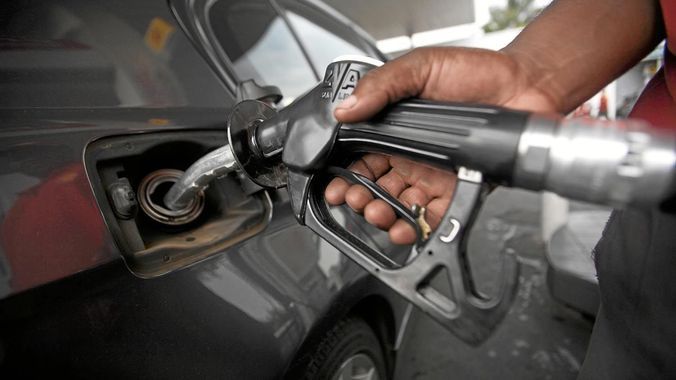
Despite drop in price of crude in the global oil market, operators in Nigeria’s downstream sector have increased the prices of Premium Motor Spirit, PMS, also known as petrol, by an average of N1,212 per litre from N1,158 per litre, an increase of 4.7 per cent which has triggered fresh worries in the polity.
The price of Brent used in benchmarking other crudes dropped to $88.42 per barrel from $88.60 per barrel yesterday.
Also, the price of crude from the Organization of Petroleum Exporting Countries, OPEC, called the OPEC Basket, including Nigeria’s Bonny Light dropped to $90.28 per barrel from more than $94. Per barrel.
Checks by Vanguard indicated that MRS, NNPC and Ardova increased retail prices to N1,205 from N1,125 per litre yesterday.
Also, Mobil increased its retail price to N1,215 per litre from N1,209 per litre, while BOVAS increased to N1,217 per litre from N1,210 per litre.
12 depots increase prices —Report
Meanwhile, 12 petroleum products depots recorded the highest petrol prices across Lagos, Port Harcourt, Calabar and Warri as of mid-day yesterday, with prices reaching as high as N1,735 per litre.
The latest mid-day price report showed that the highest petrol prices were concentrated in Port Harcourt, where several depots quoted between N1,668 and N1,735 per litre, significantly above prevailing prices in Lagos.
The Prudent Depot in Port Harcourt recorded the highest petrol price at N1,735 per litre, followed by Zamson at N1,730, while Rain Oil and NEPAS quoted N1,730 and N1,732 per litre, respectively.
Other high-priced depots included GulfTreasure at N1,680; Duport N1,668; IbaChem N1,668, Ibeto at N1,668; Integrated N1,670; Menj N1,670; TMDK N1,670; and T.Time N1,668.
The report also showed that petrol prices in Lagos were generally lower, although several major depots increased their prices during the period.
In Lagos, MRS posted the highest current petrol price at N1,207 per litre, rising by N15 from N1,192.
Pinnacle followed at N1,203 per litre, representing a N17 increase from N1,186, while NIPCO also quoted N1,203, up N13 from N1,190.
BONO and Pivot increased their prices to N1,203 per litre from N1,195, while African Terminal and Integrated moved from N1,195 to N1,202 per litre.
Dangote Refinery quoted PMS at N1,200 per litre, although no previous price was provided in the report for comparison.
The Port Harcourt market, however, recorded some price declines in Automotive Gas Oil (AGO), also known as diesel with Pivot reporting the largest drop, from N1,750 to N1,670 per litre.
The price disparity between the coastal markets highlights the continuing variation in depot prices across Nigeria, with logistics, location, supply availability and market conditions influencing the cost of products.
The latest figures also indicate that while petrol prices in Lagos remained largely within the N1,200–N1,207 per litre range, prices in Port Harcourt, particularly at some depots, were more than N500 per litre higher.
The development could have implications for the downstream market, particularly for marketers and retailers sourcing products from higher-priced depots, as depot costs remain a major determinant of pump prices.
Dangote Refinery determines pace of the market
—Experts
An Energy analyst who pleaded to be anonymous, said the global oil market had been very unstable but not necessarily high in recent times to justify high prices of petroleum products.
He said it could be directly linked to the huge capacity and dominance of the Dangote Petroleum Refinery in the domestic market.
The analyst said: “The 700,000 barrels per day capacity refinery is huge and currently controls about 80 per cent of domestic supplies. This explains why the market responds. The actions of the refinery would continue to influence other players in the market.”
However, the domestic market recorded some changes when Dangote Refinery raised petrol price by ₦15/litre amid crude oil decline.
The Refinery raised its gantry price of petrol, by ₦15 per litre, from ₦1,185 to ₦1,200, effective yesterday.
Similarly, an operator with the Major Energies Marketers Association of Nigeria, MEMAN, who pleaded anonymity, said petrol pump prices were expected to decline gradually as marketers continue to recover losses incurred during the period of price volatility.
“The price is expected to go down slowly because marketers are trying to recover their losses. Marketers have recorded very significant losses over the last 18 months due to the price fluctuations,” he said.
According to the operator, losses occur across the supply chain whenever petrol prices decline, prompting marketers to adjust pump prices gradually to recover part of their losses.
“Losses occur throughout the supply chain every time prices fall. Marketers therefore reduce prices as gradually as possible in order to recover as much as they can,” he explained.
He added that when prices increase, marketers immediately reflect the new cost in their Enterprise Resource Planning, ERP, systems, which adjusts the value of their existing stock before sales commence.
However, the process is reversed when prices fall.
“This is standard practice in every trading business. What Dangote Refinery can do is try as much as possible to keep costs low, but it is not going to absorb your losses, neither will Dangote subsidise them,” he said.
Also, Former Managing Director and Chief Executive Officer of 11 Plc, Adetunji Oyebanji, urged governments to cushion the impact of rising petrol prices through targeted interventions in transportation, healthcare and education, rather than returning to fuel subsidy.
He said government could subsidise public transport systems, such as the Bus Rapid Transit, BRT, to reduce fares and ease pressure on households.
“Rather than looking for solutions such as subsidising fuel, they should do things like subsidising transportation like the BRT and reduce the cost, and also government hospitals or schools and other things that can make life easier for people,” he said.
While warning that returning to petrol subsidy would place a huge burden on government finances, he said: “You can imagine what would have been the case if we were still paying ₦300 per litre for fuel and the product is now ₦1,200. Government would have been absorbing that.’’
He also called for greater accountability from federal and state governments as increased revenues translate into higher allocations.
“More money is coming to their hands and they should channel it to make life easier for the poor people and common man. This money they are distributing to the governors should be felt by every Nigerian,” he said.
He also advocated wider direct cash transfers and lower government charges for public services to reduce the cost burden on citizens.
Oyebanji noted that the recent rise in crude oil prices, amid uncertainty around the Gulf, was affecting fuel prices globally, not just in Nigeria.
Dangote Petroleum Refinery expresses concern over fuel importation
Meanwhile, the management of Dangote Petroleum Refinery and Petrochemicals, DPRP, has expressed concern over the continued issuance of petroleum product import licences, despite the refinery’s proven capacity to meet and exceed Nigeria’s domestic Premium Motor Spirit (PMS) requirements.
The refinery noted that while it remained fully committed to supporting Nigeria’s energy security and ensuring uninterrupted fuel availability across the country, the volume of imported PMS entering the market has created uncertainty in domestic demand planning and inventory management.
According to market data available to the refinery, imported PMS accounted for approximately 43 per cent of the fuel supplied into the Nigerian market in July, a development that raises questions about the necessity of continued large-scale imports when substantial local refining capacity exists.
Since commencing operations, Dangote Refinery has consistently maintained sufficient inventory levels and reserved product volumes to guarantee steady supply to the Nigerian market.
‘’This commitment has required significant investment in storage, logistics, and working capital, all aimed at protecting Nigerians from supply disruptions and market volatility.
‘’However, the refinery stated that the absence of transparency regarding the actual volume of imported products expected into the country makes effective production and inventory planning increasingly challenging.
‘’Maintaining large stock positions without clear visibility into import volumes imposes substantial carrying costs on the refinery and ultimately undermines efficient market operations.
“As a responsible energy provider, we have always endeavoured to keep adequate reserves to satisfy local demand at all times. However, in an environment where significant volumes of imported PMS continue to enter the market through licences issued by the regulator, and where there is limited visibility on future import volumes, it becomes commercially unsustainable to continue holding excess inventory indefinitely,’’ the Refinery said in a statement issued last night.
It explained that, under these circumstances, any surplus products not immediately absorbed by the domestic market must be exported to regional and international markets. ‘’Consequently, DPRP’s export volumes have increased in recent months, not because local demand cannot be met, but because excess inventory generated by market uncertainty must be evacuated to avoid unnecessary storage and financing costs,’’ it stated further.
Dangote Refinery emphasised that its growing exports should not be interpreted as a lack of commitment to the Nigerian market but noted that exports were a prudent operational response to the realities of a market where imported products continue to compete with locally refined fuel despite the availability of sufficient domestic refining capacity.
The company reiterated that it remained ready, willing and able to meet and surpass Nigeria’s petroleum product requirements and invest heavily in ensuring reliable supply across the country.
The post Despite fall in crude price, petrol hits N1,212 per litre appeared first on Vanguard News.