

- *CSOs challenge INEC, anti-graft agencies; seek Nigerian equivalent of US Hatch Acts
By Nnamdi Ojiego & Gabriel Ewepu
Despite President Bola Tinubu’s assurance that governance will not take a backseat to electioneering, concerns persist over the ability of public officials to balance their constitutional responsibilities with their roles in the All Progressives Congress, APC, presidential campaign for the 2027 election.
Civil society organisations, CSOs, have urged the Independent National Electoral Commission, INEC, anti-corruption agencies and public auditors to strengthen oversight, warning that campaign activities must not undermine governance, legislative scrutiny or public finances.
Their concerns are heightened by the appointment of serving governors and senior government officials to finance, treasury and fundraising positions within the campaign structure.
The expanded 313-member campaign council includes 209 serving public officials, according to an analysis by Sunday Vanguard, representing about two-thirds of the council. They include governors, ministers, principal officers of the National Assembly, legislators and other political appointees.
Tinubu’s assurances
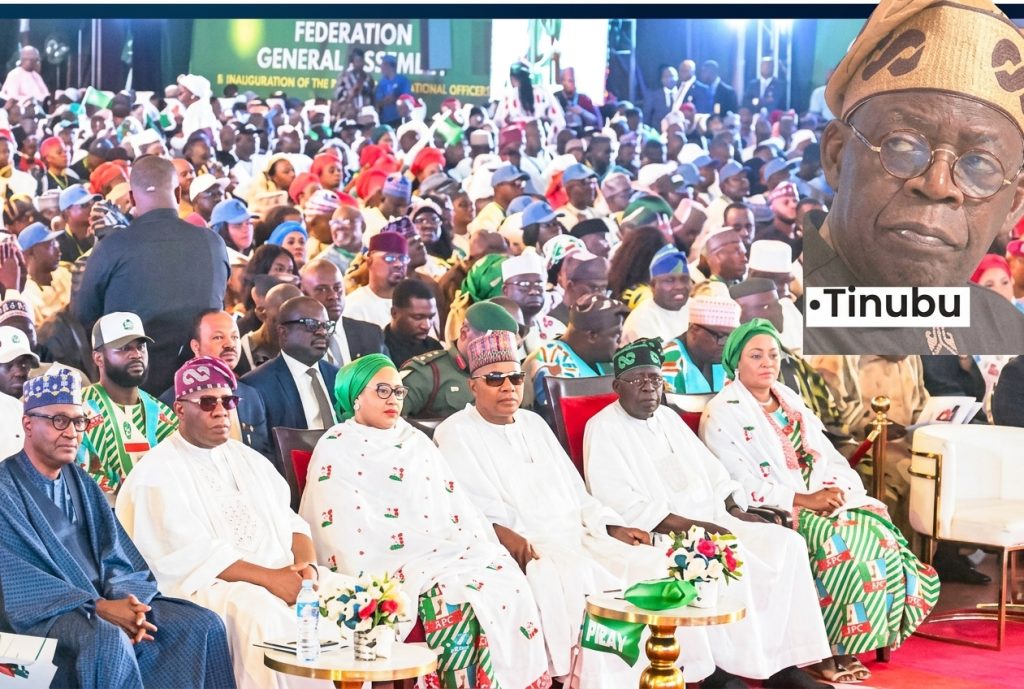
The President, on Wednesday, while inaugurating the campaign council at the State House, Abuja, vowed that governance will continue despite the growing political activities ahead of the 2027 election.
Tinubu said he would continue engaging Nigerians on his administration’s achievements and development agenda while leaving the campaign council to coordinate activities across states and local government areas.
“The responsibility of this office does not pause. So you will excuse me from going everywhere with you. We have bills to pay. The job must go on,” he said, adding that the country needed to sustain its economic commitments and attract investment.
Abbas too
Speaker of the House of Representatives, Tajudeen Abbas, has also warned lawmakers against allowing political activities ahead of the 2027 general election to distract them from their legislative responsibilities.
Speaking as the House resumed plenary after its annual recess, the Speaker urged members to remain focused on lawmaking and oversight despite growing political activities and realignments.
“Our conduct must justify their confidence. Debate may be vigorous, but it must remain responsible. Political competition must not displace our constitutional duties,” he said.
He added that the 10th National Assembly had entered the final stretch of its tenure and needed to assess its performance and prioritise outstanding legislative business.
For the CSOs, however, these assurances must be backed by measurable safeguards, effective monitoring and consequences for officials found to have abused their offices.
While acknowledging the right of public officials to participate in politics, the groups insist that government institutions and taxpayers’ money must not be deployed to advance partisan interests.
Country Director of ActionAid Nigeria, AAN, Dr Andrew Mamedu, said the central concern was whether governance would suffer as officials pursued electoral victory.
“The fundamental concern here is not that public officials are participating in politics. They have a democratic right to do so. The concern is whether governance is being sacrificed for campaigning, and whether public resources will be deployed to secure partisan advantage.
“The APC must demonstrate that the business of government will continue and that taxpayers will not be made to finance the ruling party’s electoral ambitions,” he said.
Finance, fundraising under scrutiny Particular attention has been drawn to the appointment of serving governors and government officials to financial positions within the campaign structure.
Delta State Governor Sheriff Oborevwori is listed as Director of Finance/Treasury, while Kogi State Governor Usman Ododo is named Deputy Director. Ogun State Governor Dapo Abiodun is listed as Director of Fundraising, while Nigeria Revenue Service Chairman, Zacch Adedeji, is named Deputy Director of Fundraising.
The appointments have prompted questions about the separation of public funds from campaign financing, given the officials’ responsibilities for public expenditure, revenue collection and government contracts.
Executive Director of the Rule of Law and Accountability Advocacy Centre, RULAAC, Okechukwu Nwanguma, identified possible diversion of security votes and ministry funds, use of official vehicles and aircraft, pressure on government contractors to make political donations, and the disguising of campaign expenses as official activities as risks requiring preventive monitoring.
He urged INEC, the Economic and Financial Crimes Commission, EFCC, and the Independent Corrupt Practices and Other Related Offences Commission, ICPC, to establish effective monitoring mechanisms before the election.
Nwanguma also called for proper documentation of campaign donations and expenditure, disclosure of donors and contributions, independent scrutiny of campaign accounts and audits of unusual public expenditure.
Mamedu similarly called for mandatory campaign finance disclosures, independent expenditure audits and stricter conflict-of-interest requirements for governors and ministers involved in fundraising.
“Government money must never become campaign money. Every naira diverted from public services to partisan politics is a betrayal of the Nigerian taxpayer,” he said.
However, the organisations stressed that appointments to campaign positions do not, by themselves, establish wrongdoing. Any allegation of abuse, they said, must be investigated on the strength of evidence.
Legislative duties at stake
The involvement of senior National Assembly leaders in the campaign council has also raised concerns about legislative oversight and institutional independence.
The council includes Senate President Godswill Akpabio, House of Representatives Speaker Tajudeen Abbas, Deputy Senate President Barau Jibrin, Deputy Speaker Benjamin Kalu and Senate Leader Opeyemi Bamidele, alongside other serving legislators.
Nwanguma said their participation in managing the ruling party’s campaign raised questions about the ability of the legislature to scrutinise the executive while its principal officers undertake campaign responsibilities.
He called for enforceable rules requiring lawmakers in senior campaign positions to disclose their roles, avoid campaign activities during plenary and committee hours, and recuse themselves from inquiries involving direct conflicts of interest.
Executive Director of the Civil Society Legislative Advocacy Centre, CISLAC, Auwal Musa Rafsanjani, also urged the Senate and House of Representatives to enforce attendance requirements, publish legislative calendars and disclose campaign-related absences.
He said principal officers whose campaign responsibilities prevented them from effectively performing their legislative duties should relinquish those positions.
Mamedu said accountability should be measured through attendance records, committee sittings, legislative productivity and continued scrutiny of government expenditure.
“The National Assembly cannot become a campaign secretariat. Nigerians need lawmakers who scrutinise the government, not legislators too distracted by campaigning to hold it accountable,” he said.
Rafsanjani acknowledged that serving governors, legislators and ministers had participated in previous presidential campaigns, including those of the APC in 2019 and 2023. However, he said precedent could not justify neglect of official duties or abuse of incumbency.
He maintained that campaigns must be organised around constitutional responsibilities, rather than allowing official duties to be dictated by campaign schedules.
Nigerian version
of Hatch Act
Beyond the immediate controversy, the organisations have renewed calls for a comprehensive legal framework to regulate the relationship between public administration and partisan political activity.
Nwanguma advocated a Nigerian equivalent of the United States’ Hatch Act, adapted to the country’s constitutional arrangements and political system.
The US law restricts most federal executive-branch employees from engaging in certain partisan political activities, including using official authority or government resources to influence elections. The President and Vice President are exempt, while elected legislators are subject to separate rules.
In the United Kingdom, the Ministerial Code requires ministers to distinguish government responsibilities from party-political activities and prohibits the use of government resources for partisan purposes.
He said Nigeria could draw lessons from these systems by establishing clear rules governing the use of government vehicles, offices, staff, communications facilities and public funds for campaigns.
The framework should also protect civil servants from compulsory political participation and donations, he said.
Mamedu backed enforceable safeguards, including restrictions on the use of public funds, government personnel, official vehicles and institutional budgets for partisan campaigns.
“The test of democracy is not whether the ruling party can win an election. It is whether the ruling party can contest an election without using the resources of the state to its advantage,” Mamedu said.
“Winning an election does not give a political party ownership of the Nigerian state. The government belongs to every Nigerian, including citizens who will never vote for the ruling party,” he added.
Electoral accountability
Section 95(2) of the Electoral Act 2022 prohibits the use of state apparatus, including the media, to the advantage or disadvantage of a political party or candidate.
The CSOs urged INEC to issue clear guidelines separating official schedules from campaign activities, maintaining distinct financial records and preventing the use of public personnel and facilities for partisan purposes.
They also called for scrutiny of campaign fundraising involving government contractors and businesses subject to official regulation, as well as stronger enforcement of existing rules and meaningful sanctions for violations.
“Our message is simple: campaign with your party’s money, not taxpayers’ money. Campaign with party structures, not government institutions. The 2027 election must be a contest of ideas, policies and performance, not a contest between a political party and the resources of the Nigerian state”, Mamedu reiterated.
The post Despite Tinubu’s Governance Pledge: Anxiety persists as APC engages 209 top govt officials for campaign appeared first on Vanguard News.