

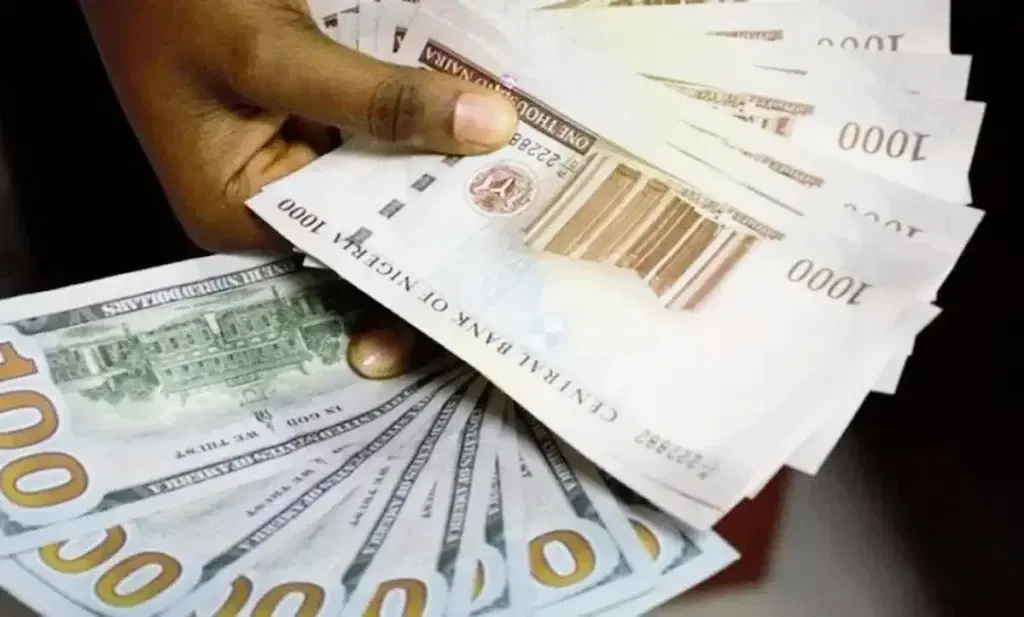
The Nigerian naira opened Friday, November 13, 2026, under sustained demand pressure across both the official Nigerian Foreign Exchange Market (NFEM) and the informal parallel market, as seasonal year-end import and travel obligations continue to weigh on liquidity.
Official NFEM and CBN Rates
At the official window, early market indicators ahead of Friday’s formal trading session show the dollar trading around ₦1,344.30 to ₦1,358.34. According to the latest published data from the Central Bank of Nigeria (CBN) covering recent sessions leading into Friday, the official NFEM weighted average stood at ₦1,358.34 per dollar, while the interbank market closed at ₦1,364.00 per dollar.
The official window experienced notable volatility earlier in the week, highlighted by a ₦10.50 single-session depreciation from ₦1,353.50 to ₦1,364.00—its sharpest daily decline since October 22. Because official NFEM closing figures for Friday are published by the CBN at the end of the day’s trading session, banks and corporate buyers are referencing the ₦1,358.34 benchmark for morning settlements.
Parallel Market (Black Market) Rates
In the parallel market, commonly referred to as the black market, the naira continues to trade at a wide discount to the official rate. Street-level currency dealers and Bureau De Change (BDC) operators across Lagos and Abuja quoted the dollar between ₦1,380 and ₦1,432 for buying, while selling rates ranged between ₦1,390 and ₦1,442.25 per dollar depending on location, dealer liquidity, and transaction volume.
Across major commercial hubs in Lagos, retail trackers placed morning quotations near ₦1,380 for buying and ₦1,390 for selling, whereas high-demand street quotes in Abuja and select Lagos corridors held closer to the ₦1,419 to ₦1,440 range recorded over the past 24 hours. Depending on the specific trading corridor, this leaves an exchange rate spread of roughly ₦32 to ₦82 per dollar between the official NFEM benchmark and parallel market prices.
Market Drivers and Reserve Buffer
Currency analysts attribute the persistent pressure on the naira to heightened fourth-quarter foreign exchange demand from importers restocking for the festive season, alongside overseas travel expenses and foreign portfolio investment outflows. A firmer United States dollar in global markets has further compounded pressure on emerging-market currencies.
Despite the recent softening in both segments of the foreign exchange market, Nigeria’s gross external reserves remain a critical stabilizer. Hovering near $54.9 billion—an 18-year high that sits comfortably above the CBN’s full-year target of $51.04 billion—the reserve buffer continues to provide the apex bank with substantial capacity to support market liquidity and manage sharp volatility through the remainder of the year.
The post Dollar to Naira exchange rate today, November 13, 2026 appeared first on Vanguard News.