

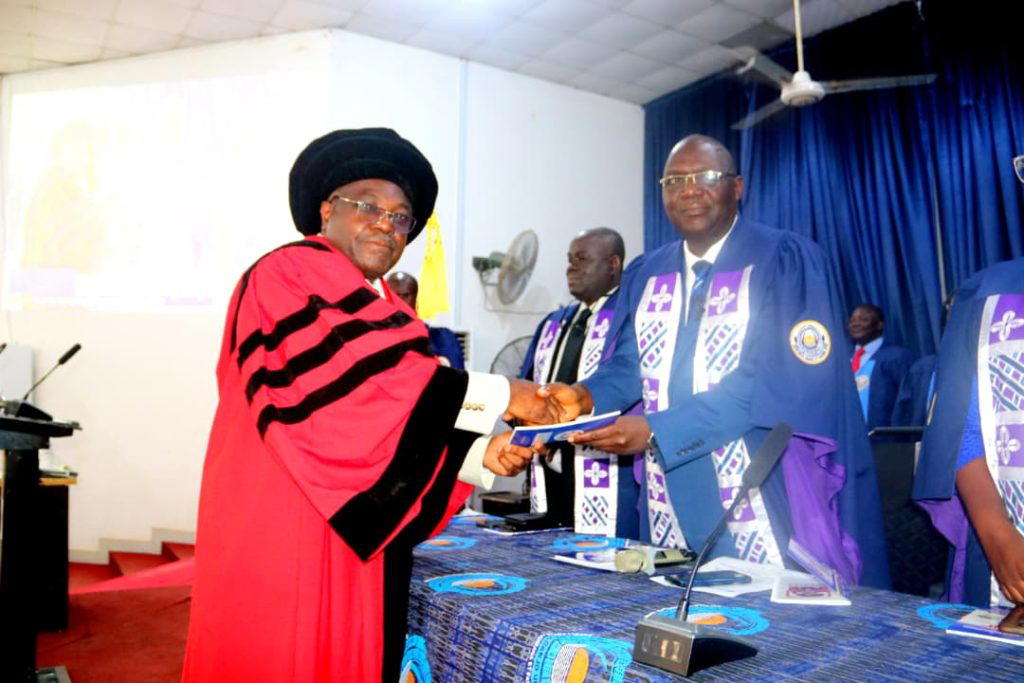
By James Ogunnaike, Abeokuta
A Professor of Fetal Medicine at the Olabisi Onabanjo University (OOU), Ago-Iwoye, Ogun State, Prof. Olufemi Oloyede, has called for a review of Nigeria’s abortion law, to take into account the rights and interests of unborn children.
Oloyede made the call at the sideline of the university’s 130th inaugural lecture, titled, “To Live or Not to Live: Navigating Ethical Dilemmas in Fetal Medicine.”
Speaking with journalists after the lecture, the fetal medicine specialist said Nigeria’s abortion laws had historically focused largely on the interests of the mother, arguing that the condition and wellbeing of the fetus should also be considered in decisions concerning the termination of pregnancy.
According to him, a review of the law should provide room for the consideration of fetuses diagnosed with severe abnormalities or medical conditions that could subject them to prolonged suffering after birth.
He said, “before now, abortion law says you cannot commit abortion. It is criminal; you have various sentences. The abortion law says you can only do that in the interest of the mother, never in the interest of the fetus.
“I am now telling government and those who care about the abortion law that we must begin to factor in the interest of the fetus. The fetus never begged to come, and if the fetus is going to be challenged by something, we should give them that opportunity or right to exit in a painless manner.”
Oloyede said fetuses diagnosed with severe congenital abnormalities and other conditions likely to result in significant suffering should be considered in any reform of the law.
“Malformed fetuses should be allowed to be terminated. Fetuses that will become a burden to themselves should be included in the abortion laws,” he said.
He also raised the issue of ‘down syndrome’ in the debate over fetal rights and termination of pregnancy, pointing to the challenges faced by some people living with the condition.
“Even some things like ‘down syndrome that are there, but they have a lot of challenges that society cannot take care of them; they are on the streets, should we not allow them to be terminated if the mothers or the condition they are experiencing is so bad?” he asked.
The professor acknowledged that the proposal was controversial, particularly in relation to inherited conditions such as sickle cell disease, noting that religious and personal beliefs often influence public attitudes towards the issue.
He, however, argued that the realities confronting people living with severe sickle cell disease should also be taken into consideration.
“Because of religious, personal bias, we say sentiments, we say, ‘Leave them, God is in control.’ But I tell you, no. Especially because the society does not have what it takes to take care of them,” he said.
According to Oloyede, children born with severe sickle cell disease may endure recurrent episodes of excruciating pain, repeated blood transfusions and prolonged absence from school, while some may die at a relatively young age.
He said, “until society gets to that level where they can take care of sickle cell babies, until they are ready to assume that responsibility, if they are not, they should not allow these babies to be delivered, keep suffering excruciating pains, recurrent transfusions, absences from schools, and all the rest.”
He stressed, however, that consideration of termination in such circumstances should not replace efforts to prevent sickle cell disease or improve care and public awareness.
“Let me also quickly mention that that does not stop us from continuing our awareness strategy. We must continue vigorously,” he said.
Oloyede added that where affected children had access to adequate medical and social support, the ethical considerations could be different.
“But where a baby or a child can have access to these things, it’s okay, they can still live. But where they don’t, which is the situation for the majority of affected babies, they should consider it,” he said.
As part of the proposed reform, Oloyede called for the establishment of multidisciplinary bioethics committees comprising fetal and maternal medicine specialists, perinatologists, legal experts, medical sociologists and chaplains.
He said such committees would be responsible for reviewing and authenticating indications for pregnancy termination while also providing support to families confronted with complex prenatal diagnoses.
“This step would checkmate those who may want to take advantage of the liberalisation of the law,” he said.
Explaining the broader message of his inaugural lecture, Oloyede said every pregnancy involved complex biological developments in the womb that could sometimes raise difficult ethical questions about whether a pregnancy should continue.
“For every child that is delivered, there have been serious issues going on within the womb. The child has been undergoing a lot of things that are unknown to the whole world,” he said.
“And some of these things, as they are going on, are such that we need to always ask ourselves and decide: Should this pregnancy continue? Should the child live or should the child not live?”
The fetal medicine specialist also warned pregnant women against exposing themselves and their unborn babies to substances and conditions that could result in congenital abnormalities.
He identified the use of unprescribed medication, radiation and certain infections as among factors that could expose fetuses to developmental abnormalities.
Oloyede urged expectant mothers to avoid taking medications without medical advice and to take appropriate precautions against potentially harmful exposures during pregnancy.
He called on the government, medical professionals, legal practitioners and other stakeholders to engage in sustained discussions on fetal rights, medical ethics and the possible review of Nigeria’s abortion laws.
He said strengthening the country’s legal and healthcare systems was essential to addressing the complex ethical challenges arising in fetal medicine.
The post Don seeks abortion law review to protect interests of unborn children appeared first on Vanguard News.