

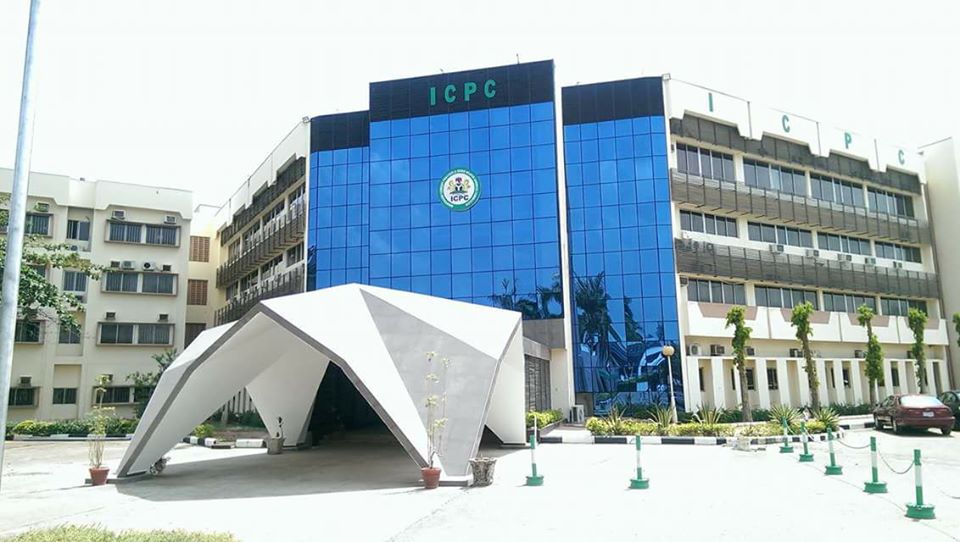
Dr Rueben Abati’s “The Menace of Fake Agencies” syndicated column in THISDAY and TheCable this week makes an interesting, but also an alarming reading. As is usual for a commentator on Nigerian public affairs spanning nearly four decades, the article was well-argued and thought-provoking. Quite unusually, however, the article contains factual misrepresentations of the work of the Independent Corrupt Practices and Other Related Offences Commission (ICPC) and its leadership which require clarification in the interest of the public and the integrity of Nigeria’s anti-corruption efforts.
The said piece makes three important points about the historical and current state of the Nigerian public sector. First, Nigeria’s long-standing problem of “ghost workers” has now evolved into wholesale “fake agencies”, as the recent discoveries of unauthorised agencies within the Nigerian government demonstrate. Both happen, he argues further, because the Nigerian public sector is characterised by poor record-keeping, weak institutional memory, inadequate verification, and non-implementation of the Oronsaye Report. All of these, he concludes, have had serious consequences for both domestic service delivery and Nigeria’s international partnerships, given where we still are with public management.
These are legitimate arguments about weak governance structures in Nigeria over decades, and few could have stated them better. These points also speak directly to the mandate of the ICPC as one of Nigeria’s leading anti-corruption agencies: to root out corruption and improve integrity, transparency, and accountability in government, economy, and society. However, some inaccuracies in the piece require clarification in the interest of truth-seeking. On July 7, 20206, President Bola Ahmed Tinubu directed the ICPC to investigate—and report within 30 days—the controversy surrounding the “Presidential Foreign Investment Promotion Council” (PFIPC). The ICPC took this directive seriously, conducted a thorough investigation, interrogated all involved actors, and submitted its report timely to the President on August 6. While investigating the PFIPC, the ICPC uncovered two more unauthorized agencies: the “FCT Investment Promotion Agency” (FIPA) and the “Foreign Investment Promotion Agency/Public-Private Partnership” (FIPA-PPP). Then, on August 21, the ICPC Chairman, Dr Musa Adamu Aliyu (SAN), further briefed President Tinubu on additional findings of the investigation which uncovered a third unauthorized agency, the National Brands Development and Made in Nigeria Special Project Office, promoted by one George Buchi Nwabueze.
These are the substantive facts of the case, but Dr Abati’s column, instead, contains four misleading inaccuracies that call ICPC’s work in this investigation unfairly into question. First, Dr Abati says that “it is not the job of the ICPC Chairman to speak on behalf of the President within the premises of the Villa, and announce Executive decisions about arrest and suspension of Federal Permanent Secretaries”. This is a very strange and troubling claim.
The Press Gallery in the Presidential Villa is a highly regulated space. No government official can speak to the press there without express authorization from the President. The ICPC Chairman addressed the press on the arrest of Nwabueze and the suspension of the three Perm. Secs. only because President Tinubu personally authorized him to do so. The Villa has a robust team of spokespersons, yes, but the President can also authorize other officials to speak on his behalf if and when he chooses to do so. Moreover, news coverage of the announcement explicitly and accurately cited the President, not the ICPC Chairman, as ordering the arrest and suspensions. As a former Presidential Spokesman and a towering figure in Nigerian political journalism, Dr Abati knows all of these, yet chooses to misrepresent the facts to Nigerians.
The second is the question of why the Head of Service did not first query the suspended Perm Secs to get their responses before their suspension and the unfair assertion that “the ICPC chief was the complainant, and he was the same person who came out to convey the orders of the President”. This is explicitly questioning a President’s authority to suspend Perm Secs without input from the Head of Civil Service. The truth is that if President Tinubu is satisfied with the details of a report and chooses to act on it by appointing, removing, or suspending a Permanent Secretary, he is acting within his constitutional rights and prerogatives. He may or may not consult with the Head of Service, and certainly does not require their recommendation. The President of the Federal Republic of Nigeria does not need the input of the Head of Service to appoint, suspend, or remove a Perm Sec. Section 171 of the Nigerian Constitution is quite clear that the power to appoint and remove Permanent Secretaries rests solely with the President. Indeed, the same Section 171 also vests the power to appoint and remove even the Head of Service with the President, as the Chief Executive of the Federal Government. The power to suspend a Permanent Secretary, therefore, goes without saying in the same constitutional provisions. As a senior figure in Nigerian public affairs, Dr Abati know this, and one can only wonder what are the motivations for misrepresenting simple facts so grossly.
Again, it is not true that “the ICPC chief was the complainant”. The ICPC Chairman was not and is not a complainant against anyone in this case. As noted above, the ICPC Chairman was only briefing President Tinubu on the findings of an objective investigation the President personally and publicly assigned to him. He was not there to complain to the President about any official. His involvement in announcing the suspension of the Perm Secs was entirely incidental in that President Tinubu directed him to do so. The orders were President Tinubu’s, not the ICPC Chairman’s. And so too was the announcement. No more, no less. Third, Dr Abati relies on Nwabueze’s appointment letter and claims that his agency had been in existence since 2010 to say that the ICPC investigation was probably rushed to the President. It surprising that a veteran journalist would rely exclusively on the social media claims of a wanted suspect on the run to make such a sweeping but inaccurate assertion against one of Nigeria’s leading anti-corruption agencies. An appointment letter to an agency is no evidence of the legal foundation of the agency. All agencies of the federal government are either established by an Act of the National Assembly, an Executive Order of the President, or some similar statutory mechanisms which not only establish them but also guide their operations.
Which laws or other legal instruments established Nwabueze’s agency? Where are the details of the legal provisions backing his agency? Why is he on the run if he has nothing to hide? How is an investigation intended to unravel one unauthorized agency, but which uncovered three more be said to have been rushed? Is anyone saying that the President of the Federal Republic of Nigeria is incapable of reading between the lines of a rushed report? These are the proper to ask in the interest of truth-seeking, not to use the claims of a wanted man to drag public institutions that are doing their best to reign in corruption in Nigeria.
Finally, if it is true that the so-called agency has been operating since 2010, has nationwide office structures and staff, then where is the list of previous heads of the agency dating back to 2010 and which former head handed over to him in October 2025? Why is a 16-year-old agency only being allocated office in 2025? Most importantly, Dr Goodluck Jonathan was already President of Nigeria by July 2010 when Nwabueze claims his agency was established. Thank God President Jonathan is still alive, and Dr Abati was his spokesperson. Did President Jonathan authorize the agency? Perhaps the people behind this unauthorized agency are merely trying to drag the former President needlessly into their own mess by clutching on all straws?
In the end, this case is not complicated. The President of the Federal Republic of Nigeria tasked the ICPC to conduct an investigation that falls within the Commission’s lawful remit. The Commission and its Chairman took the task seriously and did a thorough job. They followed the facts objectively wherever it led and reported their findings timely. President Tinubu, in turn, announced certain actions arising from the investigation, including the order of arrest for the principal suspect and the suspension of three Perm Secs. These are presidential actions and would be carried out by other authorities, not ICPC. Anti-corruption agencies in Nigeria do not usually get enough credit for the difficult job they do. But it helps enough if important voices in the national conversation do not drag them into unnecessary controversies
The post Dr Abati’s misrepresentations of the ICPC “fake agency” investigation, by Suleiman A. Suleiman appeared first on Vanguard News.