

…allays fears of spread
...Patient recovering, says minister
…States, hospitals step up preparedness
By Chioma Obinna & Chidinma Chukwu
The Federal Government on Thursday said it has intensified efforts to contain Nigeria’s confirmed case of Ebola Virus Disease; place high-risk contacts in quarantine isolate other contacts and strengthened preparedness across states as well as health facilities.
The government also allayed fears of a wider outbreak even as it also announced that the index patient was showing significant signs of recovery, while stressing that there was, so far, no evidence that the infection had spread into the community.
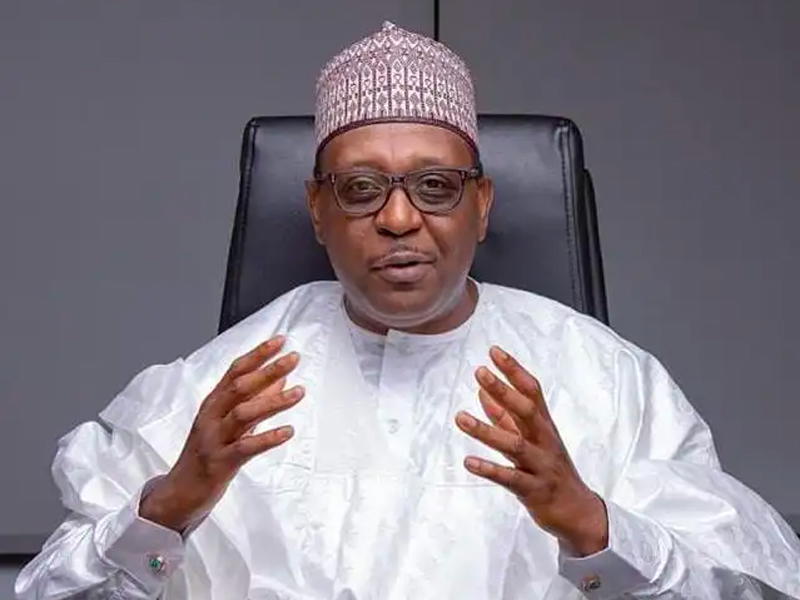
Briefing journalists on the national response in Abuja, the Coordinating Minister of Health and Social Welfare, Prof Ali Pate said the government was working to prevent further transmission through contact tracing, surveillance and coordinated emergency measures.
“I spoke with the clinicians today, and I understand that the laboratory results show significant improvement. There is a possibility that she will recover fully. However, we cannot take anything for granted,” the minister said.
“We currently have one confirmed case, and our priority is to contain it and prevent transmission into communities or a wider outbreak. We are working very hard to ensure that this does not happen.”
The Minister explained that the case was imported based on the patient’s travel history, noting that she was asymptomatic when she arrived in Nigeria but developed symptoms a few days later.
Following confirmation of the infection, public health authorities immediately commenced contact tracing, covering people at the hospital where she received treatment, her domestic contacts and a private medical facility she had visited.
He said contacts had been categorised according to their levels of exposure, with high-risk contacts placed in quarantine at a designated facility and others isolated in line with public health guidelines.
He explained that that Nigeria Centre for Disease Control and Prevention (NCDC) has activated its incident management system and is coordinating the day-to-day national response in collaboration with the Federal Capital Territory Administration, where the case was identified.
The minister, however, warned that the improving condition of the patient and the absence of evidence of community transmission should not lead to complacency.
“We remain vigilant and are not taking anything for granted. However, there is no need for panic. We are confident that we can manage the situation, but we need the cooperation of Nigerians,” he said.
FG mobilises states, resources
As part of efforts to prevent a wider outbreak, the Federal Government said it had informed all state governments and directed those yet to complete their Ebola response plans to do so urgently.
The minister disclosed that the government had mobilised additional resources for the response, including funds released by President Bola Tinubu to strengthen the capacity of the NCDC.
He said the Presidential Task Force had been briefed, alongside the Nigeria Governors’ Forum and the National Economic Council, chaired by the Vice-President.
“All state governments have been informed. Most states already have response plans developed with the guidance of the NCDC. We have directed those that are yet to complete their plans to do so urgently,” he said.
The government is also adopting a whole-of-government approach involving the Federal Ministry of Health and Social Welfare, the Ministry of Aviation and other relevant agencies.
The minister said a meeting with state commissioners of health and information was scheduled to strengthen coordination and ensure that public communication remained consistent across the country.
He maintained that Nigeria’s public health system had demonstrated its capacity to respond swiftly, noting that authorities diagnosed and confirmed the case within 24 hours of notification and informed the World Health Organisation (WHO).
“We are not starting from scratch,” he said, expressing confidence in the expertise of Nigerian health professionals and the investments made in public health preparedness.
Experts to sequence virus
The government has also initiated steps to sequence the virus’s genome to improve understanding of the strain involved and support the response.
The minister said Professor Christian Happi, a renowned infectious disease genomics expert based at Redeemer University, Ede, had been invited to complement the work of the NCDC through the African Centre of Excellence for Genomics of Infectious Diseases.
He said international partners, including WHO and the Africa Centres for Disease Control and Prevention, were supporting the response, while experts with experience in managing outbreaks in other countries had arrived to assist Nigeria.
The minister said the collaboration demonstrated the importance of strengthening local expertise and scientific capacity in responding to public health emergencies.
FG steps up border screening
The government also announced plans to intensify screening and preventive measures at Nigeria’s points of entry as part of efforts to reduce the risk of further imported infections.
According to the minister, port health services had been strengthened, while additional capacity was being sought to improve screening and ensure that thermal imaging equipment was functional.
He said the assessment of travellers would continue to be guided by risk categorisation and international health regulations.
The minister disclosed that Nigeria had gone five months without recording a case despite substantial international travel, with more than 40,000 travellers entering the country during that period.
He said the government would continue to strengthen border health measures, but stressed that the immediate priority remained containing the confirmed case and tracing all contacts.
Hospitals, private clinics on alert
Further, the Ali Pate said all federal hospitals had been notified and directed to ensure adequate bed capacity, functional isolation facilities and strict infection prevention and control measures.
State governments were also urged to prepare their hospitals and ensure that health workers were trained and adequately equipped to identify and manage suspected cases.
He particularly emphasised the role of private healthcare providers, noting that the patient had visited a private medical facility before the infection was confirmed.
“The private sector is equally important because the patient visited a private health facility. A similar situation occurred during Nigeria’s 2014 Ebola response,” he said.
He called for closer collaboration between private medical practitioners and public health authorities to ensure that suspected cases were promptly reported and managed according to established protocols.
The government urged anyone who develops symptoms such as fever, headaches or muscle aches, particularly with a relevant travel history or possible exposure, to promptly contact public health authorities for guidance.
The minister also advised Nigerians to practise frequent handwashing and avoid unnecessary contact with other people’s body fluids.
“Ebola is not an airborne disease. It is transmitted through direct contact with infected body fluids,” he said, urging health workers and members of the public to follow expert advice.
No immediate cancellation of public events
On whether conferences, campaigns and other large public gatherings scheduled for the coming days would be cancelled, the minister said the government was monitoring the situation and would base any decision on scientific evidence and expert advice.
“At this time, there is no indication that we need to change plans for large gatherings that have already been scheduled,” he said.
He added that recommendations would be reviewed if the epidemiological situation changed.
The minister also cautioned political leaders against politicising the outbreak, insisting that public health concerns should take precedence over partisan considerations.
“Health is a great unifier. It has no political party, nationality, tribe or religion,” he said.
FG warns against misinformation against misinformation
The government expressed concern over the circulation of unverified claims about Ebola on social media, warning that misinformation could undermine public confidence and encourage people to disregard quarantine or isolation directives.
The minister urged Nigerians to rely on credible information from the NCDC, the Federal Ministry of Health and Social Welfare, WHO and other recognised public health authorities.
He also stressed the need to respect the patient’s medical confidentiality, warning against publishing private medical information without proper justification.
The minister cited Nigeria’s past experience with misinformation surrounding polio vaccination, saying the rejection of expert advice could have serious consequences for public health.
He urged people identified through contact tracing to cooperate with health authorities and comply with instructions to remain in quarantine or isolation.
The government said it would continue providing regular updates as the situation evolves, with the NCDC holding daily response meetings and the minister receiving regular briefings.
While expressing confidence in Nigeria’s ability to manage the case, the minister stressed that containing the infection would require sustained vigilance, effective coordination and cooperation from the public.
He said Nigeria’s successful management of the 2014 Ebola outbreak demonstrated that the country had the experience and expertise required to respond, provided that public health measures were strictly observed.
The government reiterated that its immediate objective was to prevent further transmission, urging Nigerians to remain calm, avoid spreading rumours and promptly report suspected cases to the appropriate authorities.
The post Ebola: FG quarantines high-risk contacts, says no evidence of community transmission yet appeared first on Vanguard News.