

*** Asks FG to release emergency funds from the service-wide votes and make necessary funding available to the relevant agencies to curb the disease
*** Rejects prayer for lawmakers to visit the principal entry points
*** To Immediately Amend the Quarantine Act 1926
By Henry Umoru, Abuja
The Senate has urged the Federal Government, through the Federal Ministry of Health and Social Welfare, the NCDC and the Port Health Services, to make health screening compulsory for all arriving international passengers at every international airport, seaport and designated land border, consisting of the Health Declaration Form.
According to the Senate, this will also involve a temperature check and symptom screening, with enhanced screening for anyone who has been in or transited an affected area in the past 21 days, regardless of nationality or county of departure, and introduce exit screening for departing passengers during any declared emergency.
The Senate has urged the federal government, through the federal ministry of budget and economic planning, to release emergency funds from the service-wide votes and make necessary funding available to the relevant agencies to curb the disease.
The Senate has also urged the Federal Ministry of Health and Social Welfare, the Federal Airports Authority of Nigeria and the Nigeria Immigration Service to fully station and equip all entry points with trained Port Health officers, thermal scanners, protective equipment and isolation rooms, and to ensure that isolation and treatment centres are ready in all 36 States and the FCT.
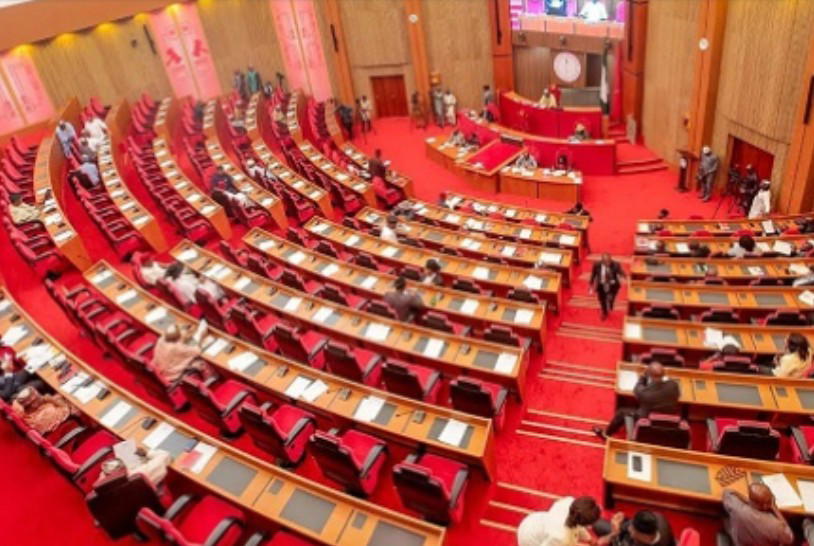
The resolutions of the Senate on Wednesday were a sequel to a motion titled “Urgent Need to Enforce Mandatory Health Screening at All International Airports and Other Entry Points to Prevent the Importation of Ebola and Other Epidemic-Prone Diseases into Nigeria.” It was sponsored by Senator Francis Adedayo Faduyile, APC, Ondo South.
The Upper Chamber has also urged the National Assembly to immediately, in conjunction with the Ministry of Health, repeal and reenact the Quarantine Act of 1926 with a modern public health law consistent with the IHR (2005).
Recall that the Quarantine Act Cap Q2 LFN 2004 (originally enacted in 1926) is Nigeria’s primary legal framework for preventing the introduction and spread of dangerous infectious diseases. In light of recent public health alerts like the 2026 Ebola surveillance, the act empowers the president and state governors to declare infected areas, enforce port/border controls, and mandate isolation or vaccination.
It has also called on Nigerians to be conscious of this development and make adequate arrangements for hand sanitisers at event centres, institutions, private places, and public places.
Meanwhile, the motion to mandate the Committees on Health, Primary Healthcare, Development and Disease Control, Aviation, Interior and Appropriations to liaise with the relevant agencies, visit the principal entry points, and report back within four weeks for further legislative action was unanimously rejected by the Senators.
The Senate has mandated the Committee on Legislative Compliance to ensure implementation of these resolutions.
The motion came on the heels of a report that Nigeria has recorded a case of Ebola in a female patient who travelled from Uganda in East Africa to Abuja, capital of the West African state.
Earlier in his presentation, Senator Francis Adedayo Faduyile said that “the Senate notes that the Bundibugyo Ebola outbreak in the Democratic Republic of Congo, declared in May 2026 and designated by the World Health Organization as a Public Health Emergency of International Concern, now exceeds 9,000 confirmed cases and 4,400 deaths, making it the second largest Ebola outbreak in history, and that there is no approved vaccine or treatment for this strain.”
“Also notes that the outbreak has spread to Uganda and, on 6 October 2026, to Kenya, through a traveller who went from the DRC by road to Kampala and then flew to Nairobi, showing that infected persons can pass through third countries;
“Aware that the Nigeria Centre for Disease Control and Prevention (NCDC) has rated the risk of importation into Nigeria as high, and recall that in July 2014 a single traveller brought Ebola into Nigeria through the Lagos airport;
“Commends the Federal Government for the mandatory Health Declaration Form, the Presidential Task Force and the stepped-up screening at entry points, but is concerned that the declaration was narrowed on 22 September 2026 to travellers from listed countries which Kenya is not included in, that departure halls and many entry points lack Port Health staff and equipment, and that Port Health Services still operate under the Quarantine Act of 1926;
“Disturbed that Nigeria is already battling Lassa fever (1,138 confirmed cases and 268 deaths in 2026, with Ondo State the worst hit), cholera (over 65,000 suspected cases) and diphtheria (over 10,000 confirmed cases), and that its health system cannot afford another outbreak;
“Convinced that protecting our entry points is cheaper than managing one imported case and must be done in line with the International Health Regulations (IHR 2005), without travel bans or discrimination.”
The post Ebola: Senate urges FG to make screening mandatory at all entry points appeared first on Vanguard News.