TRENDING
Nigerian man faces deportation after arrest in US over fraud allegations • Gbenga Hashim hails Justice Umar for nullifying INEC’s timetable • ASERA holds consultation on draft regulation • Oceans: African youths, groups, wage war against micro and nano plastics • PDP to end zoning in Bayelsa East by 2031 • SSS releases Yobe man cleared of wrongdoing, gives him millions • 63-yr-old Chinese grandma arrested as NDLEA busts drug trafficking network • WARRI DELINEATION: Anxiety as Itsekiri, Ijaw/Urhobo sing discordant tunes on INEC report • 2027: Kachikwu-led ADC faction set to hold  National Convention in Abuja • AMVCA 500-bread dress left me with severe back injury — Queen Mercy • Rivers ADC guber primary: Aspirant accuses Amaechi of imposition, says three winners emerged • Nigeria’s First Lady seeks an end to child marriage and obstetric fistula • NCAA places 11 local airlines on ‘no-pay-no-service’ list amid debt burden • Kaduna court jails ex-bank officials over N7.8m theft • Abia announces commencement of operation at newly completed Umuahia Bus Terminal • The Fubara trajectory: A tragedy or blessing in disguise? • Kaduna APC primaries: Power struggles, defections, battle for Northern political relevance • Mchungaji Msigwa apokewa rasmi Chadema, yeye asema… • Abiodun’s aide pays NECO fees for 75 Ogun indigent students • ‘I only wanted to get TikTok followers’ – Man arrested for raising fake bandits attack alarm begs police • Nigerian man faces deportation after arrest in US over fraud allegations • Gbenga Hashim hails Justice Umar for nullifying INEC’s timetable • ASERA holds consultation on draft regulation • Oceans: African youths, groups, wage war against micro and nano plastics • PDP to end zoning in Bayelsa East by 2031 • SSS releases Yobe man cleared of wrongdoing, gives him millions • 63-yr-old Chinese grandma arrested as NDLEA busts drug trafficking network • WARRI DELINEATION: Anxiety as Itsekiri, Ijaw/Urhobo sing discordant tunes on INEC report • 2027: Kachikwu-led ADC faction set to hold  National Convention in Abuja • AMVCA 500-bread dress left me with severe back injury — Queen Mercy • Rivers ADC guber primary: Aspirant accuses Amaechi of imposition, says three winners emerged • Nigeria’s First Lady seeks an end to child marriage and obstetric fistula • NCAA places 11 local airlines on ‘no-pay-no-service’ list amid debt burden • Kaduna court jails ex-bank officials over N7.8m theft • Abia announces commencement of operation at newly completed Umuahia Bus Terminal • The Fubara trajectory: A tragedy or blessing in disguise? • Kaduna APC primaries: Power struggles, defections, battle for Northern political relevance • Mchungaji Msigwa apokewa rasmi Chadema, yeye asema… • Abiodun’s aide pays NECO fees for 75 Ogun indigent students • ‘I only wanted to get TikTok followers’ – Man arrested for raising fake bandits attack alarm begs police
Eid Shoppers Hit By Soaring Sheep Prices In Ivory Coast
Back to Home

Eid Shoppers Hit By Soaring Sheep Prices In Ivory Coast

Channels TV about 21 hours 4 mins read


Buyers trudged through a muddy market in Abidjan, looking for the best-priced sheep to be sacrificed for Eid al-Adha, with traders driving hard bargains in the run-up to the Muslim festival.

Prices have shot up this year, and animals are harder to come by as the Ivory Coast’s usual supply from neighbouring Sahel countries has been hit by export bans and conflict.

Ivory Coast depends heavily on imports to meet demand. Around 75 percent of the sheep and cattle needed for Tabaski, the name for Eid in West Africa, come from countries such as Burkina Faso and Mali. That amounts to about 350,000 animals.

READ ALSO: Hajj Pilgrim Numbers Surge To Over 1.5 Million Despite Middle East War
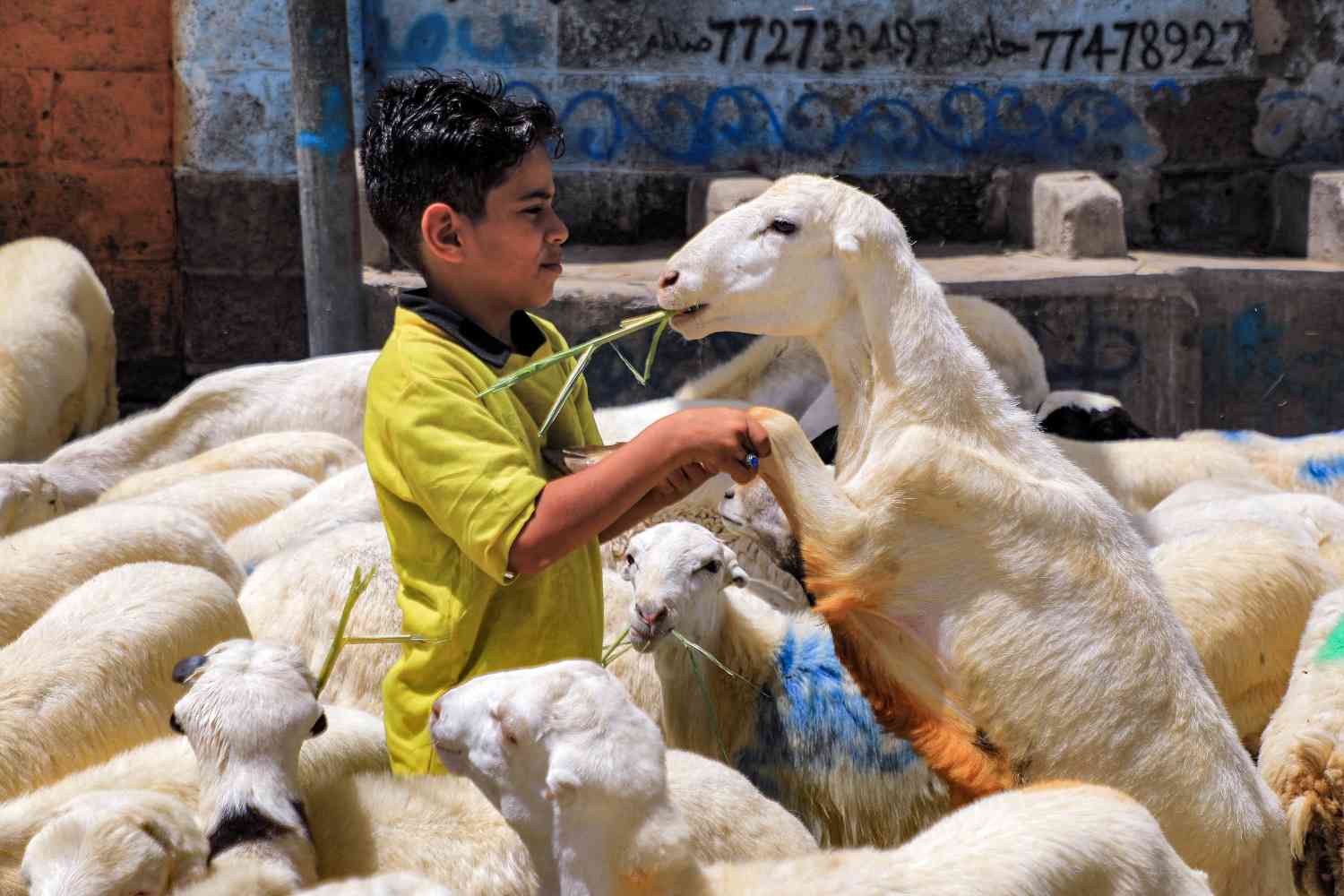
A boy holds a sheep by the front limbs at a livestock market in Yemen’s Huthi-held capital Sanaa on May 23, 2026, as people prepare ahead of Eid al-Adha, the Muslim Feast of Sacrifice. Photo by MOHAMMED HUWAIS / AFP


But Burkina Faso halted livestock exports earlier this month to protect its domestic market, following a similar move by Niger in March.

In Mali, roads have been blocked by jihadists linked to Al-Qaeda, making transport routes dangerous.

Some trucks manage to slip across borders illegally, but tighter checks on the Burkinabe side are keeping numbers low.

So, supply is tight, and in the mud-soaked pens of the Adjame livestock market, prices are on the rise.

Sheep and goats feed at a livestock market in Yemen’s Huthi-held capital Sanaa on May 23, 2026, as people prepare ahead of Eid al-Adha, the Muslim Feast of Sacrifice. Photo by MOHAMMED HUWAIS / AFP


“I have 300 head of cattle at the Burkina border. It’s impossible to bring them into Ivory Coast,” said Assimi Barry, who has been selling at the market for 40 years.

Another trader, Ibrahim Sow, said he had “150 animals blocked in Koutiala, in Mali, all paid for, just waiting to be delivered here”.

“My boss used to send me up to 200 animals from Burkina Faso for Tabaski. This year, only part of them made it into Ivory Coast. The rest are across the border,” he added.

Both men say supplies are particularly tight this year — about half of last year’s levels, according to Sow.


High prices
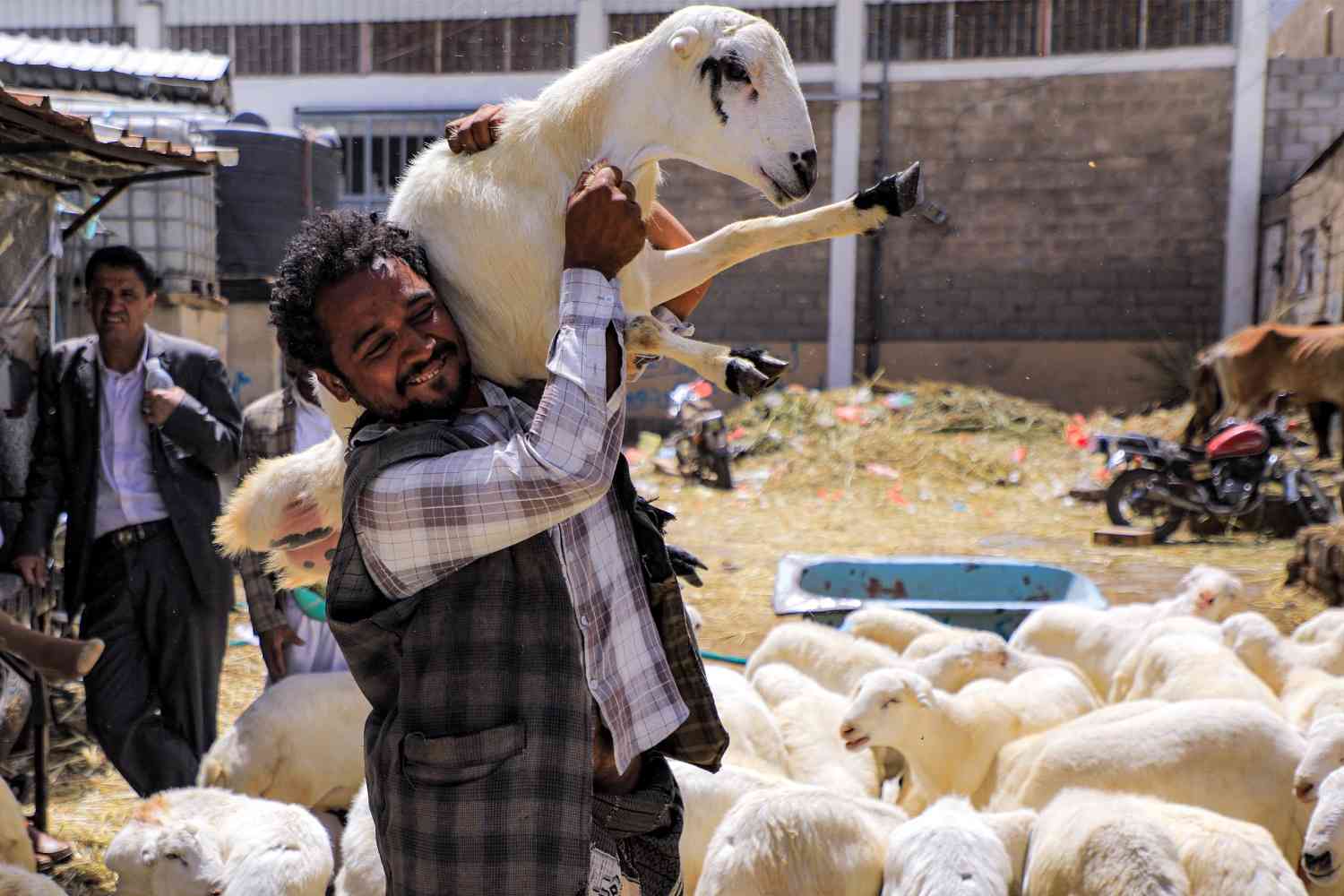
A man carries a sheep at a livestock market in Yemen’s Huthi-held capital Sanaa on May 23, 2026, as people prepare ahead of Eid al-Adha, the Muslim Feast of Sacrifice. Photo by MOHAMMED HUWAIS / AFP


With fewer sheep available for sacrifice at the family feast this year, haggling was in full swing across the market.

“I’m offering 250,000 CFA francs ($440). Otherwise, I’ll look elsewhere,” said Lagazane Ouattara, speaking from inside his car to avoid the mud.

The seller refused to budge, blaming the shortage.

“This one’s worth 500,000 CFA francs,” he said, patting the ram.

After lengthy bargaining, Ouattara walked away with a large ram from another trader for 320,000 CFA francs but complained of the higher prices this year.

“Last year, 200,000 CFA francs would get you a good ram. This year, you’re looking at at least 250,000,” Barry said.

Vendors wait with animals at a livestock market in Yemen’s Huthi-held capital Sanaa on May 23, 2026, as people prepare ahead of Eid al-Adha, the Muslim Feast of Sacrifice. Photo by MOHAMMED HUWAIS / AFP


For many, this is out of reach in a country where the monthly minimum wage is 75,000 CFA francs ($131).

Buyer Kassoum Ouattara told AFP he was struggling to find an animal within his usual budget of 150,000 CFA francs.

A week before the holiday, Trade Minister Ibrahim Kalil Konate said nearly 165,000 sheep — 47 percent of national demand — were already on the market, with prices “for all budgets”.

Authorities said this month they aimed to boost local production, which currently covers between 25 and 45 percent of demand, according to official figures.

But convincing buyers to switch might not be easy.

Locally bred sheep are known to be smaller than those from neighbouring Sahelian countries — a key factor for families catering for a major religious celebration.

The post Eid Shoppers Hit By Soaring Sheep Prices In Ivory Coast appeared first on Channels Television.


This article was sourced from an external publication.

Share this article

Comments (0)

Want to join the discussion?

Sign in to post comments and engage with the community.

Be the first to comment!

Economy

View All

Import & Export

View All
AD
OneClick Africa Logo

Africa's premier digital hub for impactful news, entertainment, and business insights.

© 2026 OneClick Africa. All rights reserved.