

By Chukwuma Ajakah
After years of showing across Africa, Europe and America, Anthony Chukwudinma Nsofor is coming home. His solo exhibition, Eje Ayó — The Homecoming opens at the National Museum of Arts and Monuments, Onikan, Lagos on November 3 and runs till November 9. The exhibition marks a return — not just of the artist, but of the stories, colours and conversations the art connoisseur has gathered across cultures.
Eje Ayó — The Homecoming Exhibition marks a new chapter for Tony. Featuring 30 works that were created between 2019 and 2026 in Lagos, Ivory Coast and the United States, the show traces a restless period of movement, relocation and search — and how place, travel and lived experience have shaped his art.
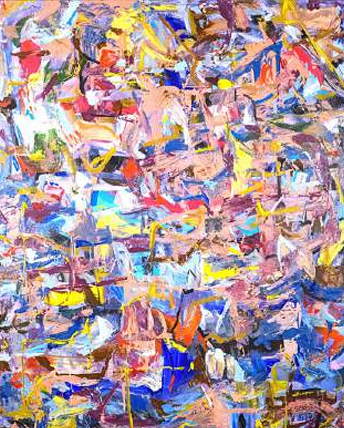
As depicted in Ofala Festival: A Kingly Harvest (2023, oil on canvas), Tony’s work returns often to community, festival and ritual — childhood memories of shared space. Widely travelled, he is drawn to conversations across cultures, with paintings shown at ART X Lagos, Art on Paper New York and the Dak’Art Biennale, among others.
In preparing for the show, the artist revisited works stored in his Lagos home, paintings from his years in the United States and Ivory Coast, and recent pieces made after his return to Nigeria.
The artworks allow viewers to trace the evolution of his practice and how environment has shaped his expressions. Tony’s stylistic shifts across the decade capture the moods and circumstances of the places he has sojourned.
Self-curated by the artist and co-curated by Ugonna Ibe-Ejiogu, founder of Yenwa Gallery, Eje Ayó reads like a map of Tony Nsofor’s life with each work marking a time and a place: From earth-toned, crowded canvases to fields of pure colour, and full-bodied women to fragmented forms.
Lagos, with its chaos, intensity and relentless energy, is central to his depiction of the human experience. Although Tony’s move to Abidjan was a search for quiet, the travel impulse that eventually took him on journeys across Africa and Europe came during his NYSC year in Tafawa Balewa, Bauchi.
“What strikes me is how much pleasure there is in Tony’s paintings, even when the histories behind them are difficult,” says Ugonna Ibe-Ejiogu, adding, “His figures crowd together, brushstrokes sweep across the canvas and colour keeps the eye moving. An African artist should have the freedom to create works that are emotionally charged, but also to paint because he loves colour, bodies and the company of people. I want viewers to give that pleasure their attention too.”
Sharing that attention to pleasure and craft, Dallas-based collector, curator, and artist-archivist Adam Odomore speaks to what draws the eye in Tony’s work, saying: “I am drawn to his manipulation of light and colour, his storytelling and reverence for culture.
“There is an uncanny weight and volume, yet a lively buoyancy. Rigorously structured, the compositions feel effortless — like a child at play. The red ground throws warmth, interplaying with something voluptuous and tender. That is what sets his work apart.”
Tony travelled to the United States in 2019 to exhibit at an art fair in New York. He stayed through the COVID-19 lockdown, when the city’s familiar bustle gave way to deserted streets and unsettling stillness. He later moved to Atlanta, where close personal relationships drew him back to the human figure and intimate encounters.
Works from that period include Olamma (2020), an intimate acrylic and charcoal drawing on cartridge paper that mirrors a moment of widespread isolation and the ache for human closeness.
After that relationship ended, time in Maryland and Virginia gave the artist a different sense of belonging. His acceptance into the studio programme at the Torpedo Factory Art Center in Alexandria, Virginia, opened a new community of artists and a more settled rhythm of work.
The pandemic broke old certainties. Culture, tradition, religion and heritage came under renewed scrutiny — and with it, how history shapes identity and how we live with the past.
That distance deepened questions of identity and difference: Where do I really come from? What did my ancestors do? Where is my place in Africa, and in the future? America pushed him to confront slavery, restitution, the return of stolen African art, reparations — even seeking forgiveness from the dead. That push is distilled in 12000 Ships from Africa (The Clotilda and Others), his meditation on the transatlantic crossing — on the ships that left, the lives that were lost at sea, and for some, like those who chose the water over chains, a final act of refusal. Despite years abroad, Nigeria has remained home for the Oguta-born artist, who still cherishes his birthplace and neighbouring Owerri where he spent his boyhood. His return in October 2025 has been a chance to see familiar surroundings with new eyes, to reconsider what he learned abroad and to re-establish himself in the communal life of Nigerian art.
After a brief creative break to reflect and readjust, the idea for Eje Ayó came from a conversation with his collector and father-figure, Igwe Achebe, who asked simply: “Why not do a homecoming exhibition?” The works he had brought back from the United States and Ivory Coast became the anchor. The National Museum, Onikan — which Tony sees as the right place for his reintroduction — now brings together geographies, experiences, and stages of his work in motion.
Among the works to be featured in Eje Ayó: The Homecoming Exhibition are I Gave Myself to Dreaming, But the Present Followed Me, Encounters in this Place Called Life-Strange Sightings, 12000 Ships from Africa, Trail Homewards, Black Diamonds from the Earth’s Belly /Joyful Africans, Akara: Id, Identity and Idea, Clashing Bodies Make Good Music, and In Line to Nowhere (Citizens of Nowhere), and When We Unite (Global Citizens).
The timing is symbolic. Eje Ayó comes thirty years after 6 New Painters from Nsukka Tony’s first major group show. Three decades on, it is both a return and a reckoning — a chance to take stock of how far the work has travelled, and where it belongs next.
As its title suggests, Eje Ayó is both map and memory. It traces physical and artistic journeys — across Nigeria and beyond — and the lessons of living among different cultures. It is a story of leaving and returning.
As Prof. Ike Francis Okoronkwo, Professor of Art at the University of Port Harcourt, notes: “Eje Ayó: The Homecoming asks us to read these paintings as maps rather than destinations. They chart journeys between memory and history, departure and return, exile and belonging. Like Eneke the bird in Tutuola’s The Palm-Wine Drinkard, who travelled outward to discover a new homeland before returning to guide others toward it, Tony’s paintings suggest that every meaningful homecoming begins long before arrival. The traveller does not return to reclaim an unchanged past, but to illuminate it with wisdom gathered along the road.
“Through signs, evocative titles and chromatic tensions, his works reveal that belonging is not fixed by arrival, but continually negotiated through experience. Read through Oye Mba Enwe Ilo and Avtar Brah’s notion of homing desire, the journey becomes an education in difference and self-discovery.”
Eje Ayó arrives as Lagos hums. With Chike Okeke-Agulu’s retrospective across ART X and the Yemisi Shyllon Museum, Obiora Udechukwu at 80, and a new book on the AKA group, the season has become one of remembrance and return. Nsofor’s homecoming belongs squarely in that moment.
More than paintings made in different places, the show is an inquiry into movement, belonging, identity and memory — into how place shapes the hand. For Tony Nsofor, homecoming is both joy and reflection: the traveller returns, distances covered and his life transformed, but still rooted in home.
The post Eje Ayó: Tony Nsofor stages homecoming art exhibition at National Museum, Onikan appeared first on Vanguard News.