

By Omeiza Ajayi, ABUJA
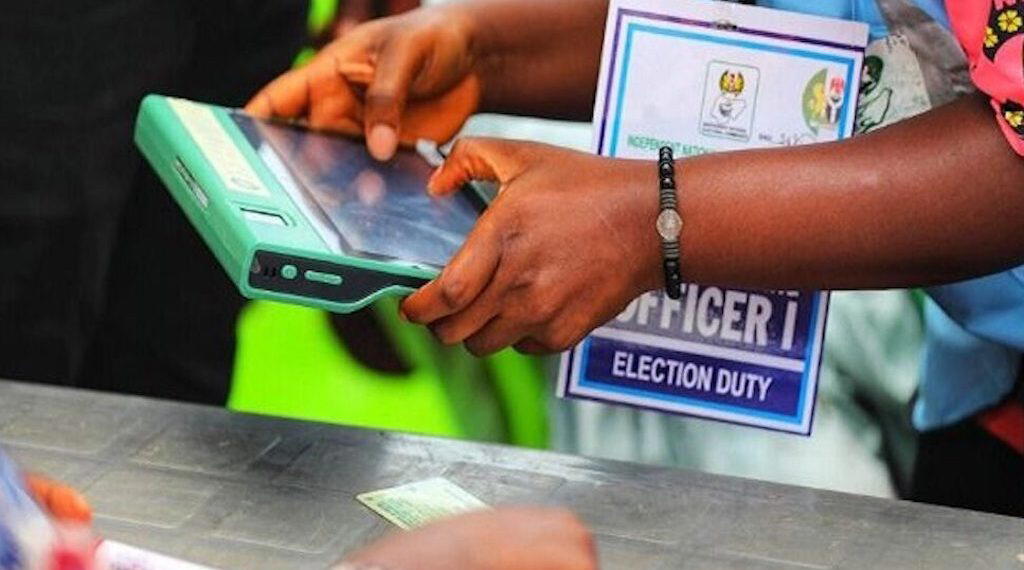
As Nigeria prepares for the 2027 general elections, public trust in election technology remains a major talking point. But building on lessons from past polls, the Professor Joash Amupitan-led Independent National Electoral Commission, INEC, has clarified the operational guidelines and legal frameworks governing technical glitches, specifically involving the Bimodal Voter Accreditation System, BVAS, and the INEC Result Viewing Portal IReV.
Read Also:
*Presidential Election: Tinubu got 517,341 Kano votes in 2023; can he win it in 2027?
So, here is a breakdown of what INEC’s plan entails and what happens if BVAS experiences a technical failure during polling.
1. Local glitches won’t stop overall results
The failure of BVAS in specific polling units will not halt voting, collation, or announcement of results in unaffected areas.
2. Impact Assessment
Collation of results will continue unless the uncollected votes from the affected polling units are significant enough to alter the overall outcome.
3. 24-Hour Reschedule Provision
Under the Electoral Act, if a malfunctioning BVAS cannot be repaired or replaced, voting in that specific unit is postponed to the next day.
4. Hardware & Power Upgrades
INEC said it has procured 57,000 additional BVAS devices and is replacing unit batteries to tackle hardware and power failures.
5. Field Support Teams (RATECH)
Dedicated technical teams will be deployed across Registration Areas for immediate on-site intervention.
6. Upgrades & Technical Prevention Strategy
To mitigate risks before election day, INEC is addressing hardware, battery life, and transmission bottlenecks:
7. 57,000 New BVAS Units
Additional devices are being deployed to serve as active inventory and quick-response backups across polling zones.
8. Battery Replacement
Recognizing power loss as a main cause of past delays, INEC is upgrading built-in batteries to sustain operations throughout polling hours.
9. IReV Platform Optimizations
Software enhancements are underway on the IReV portal to ensure seamless uploading and transmission of polling unit result sheets (eEC8A).
10. On-Ground Troubleshooting: The RATECH Framework
When a BVAS unit fails, polling staff do not immediately cancel voting. INEC utilizes Registration Area Technical Support teams RATECH.
Legal and Operational Scenarios: Step-by-Step;
Scenario A: Localized Technical Failure
Rule: If BVAS fails to transmit results in a single polling unit or cluster of units, elections in unaffected polling units, wards, and local governments proceed as scheduled.
Impact: The failure does not trigger a nationwide or state-wide pause.
Scenario B: Unresolvable Technical Failure on Polling Day
Rule: In accordance with the provisions of the Electoral Act, if a BVAS device cannot be fixed or swapped by RATECH on election day, polling in that specific unit is suspended and rescheduled for the following day.
Scenario C: Collation vs. Margin of Lead
Rule: When collation reaches the constituency, LG, or national level, election officers evaluate whether the total registered voters in the affected/delayed polling units can mathematically alter the winner.
Outcome
If the combined votes in the affected units will not alter the winner, collation proceeds and a winner is declared.
However, if the affected votes could alter the winner, declaration is withheld until supplementary voting takes place.
Conclusion
INEC’s stance for 2027 emphasizes contingency management over disruption. Therefore, while technology remains central to voter accreditation and result transparency, localized tech failures are expected to be contained via fast-swap backups, RATECH field teams, or localized 24-hour election postponements — ensuring the broader democratic process is not brought to a standstill.
Note
RATECH stands for Registration Area Technical Support.
A “Registration Area” is an electoral ward.
RATECH consists of specialized Information and Communications Technology (ICT) personnel and trained ad-hoc technical staff deployed by the Independent National Electoral Commission (INEC).
Their main duties include:
On-the-Ground Troubleshooting
They are stationed at ward level (Registration Area Centers) specifically to respond when election devices—such as the BVAS (Bimodal Voter Accreditation System)—experience technical glitches.
Hardware & Software Support
Furthermore, if a BVAS unit freezes, experiences battery drain, fails to authenticate voters (via fingerprint or facial recognition), or struggles to upload results to the IReV (INEC Result Viewing Portal), RATECH officers are called in to fix or replace the device on-site.
Direct Communication Link
Also, they maintain a direct line of communication with Polling Officers at the polling units to ensure rapid intervention so that voting and result transmission are not unnecessarily delayed.
The post Explainer: What if BVAS fails in 2027 election? appeared first on Vanguard News.