

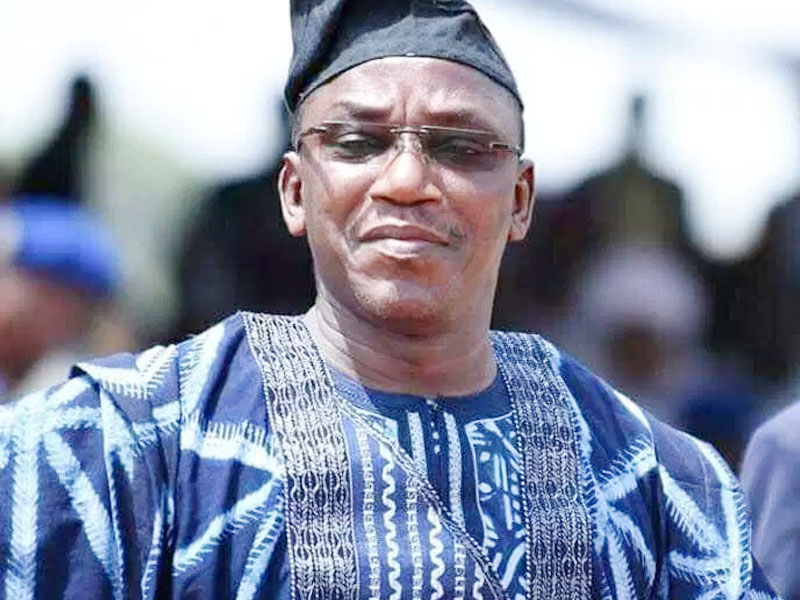
Solomon Dalung, a chieftain of the African Democratic Congress, ADC, has openly faulted the style of Nigeria's High Commissioner to South Africa, Femi Fani-Kayode, in the ongoing diplomatic row between Abuja and Pretoria.
Dalung said nobody is stopping Fani-Kayode from defending Nigerians who suffer xenophobic attacks in South Africa, but he must behave like a man who is carrying the image of a whole country.
The former Minister of Youth and Sports Development spoke in a post he shared on Facebook on Sunday, at a time when many Nigerians were still talking about the alleged cutting off of Fani-Kayode's speech from the livestream of the event where he presented his credentials to President Cyril Ramaphosa.
He blasted the constant attacks on Nigerians in South Africa, the killings, the burning and looting of their shops, and the general hatred against them. He said Abuja cannot afford to treat the safety of its citizens abroad as a small matter.
Yet, Dalung warned that standing up against injustice must not make an envoy lose his sense of diplomacy. In his view, what should count for an ambassador is what he is able to achieve on the ground, not how much controversy he creates online.
"The question, therefore, is not whether FFK should speak against xenophobia. Of course, he should. The question is whether his approach advances the safety of Nigerians in South Africa or unnecessarily complicates the diplomatic relationship through which that safety must be pursued," he wrote.
The former minister explained that diplomacy does not mean fear, and it does not mean keeping quiet. It means tackling hard problems in a way that produces something useful at the end.
He also cautioned against using Nigeria's sacrifice during South Africa's liberation struggle as a licence to brush aside that country's sovereignty and diplomatic feelings.
He noted that both countries are tied together by trade, investment, security and continental politics, and that is why they need careful handling, especially with the tension already in the air.
Dalung stressed that the work of an ambassador is to grow the relationship, defend the national interest and bring home real gains for citizens, not to fight personal wars or look for applause.
"An ambassador is not appointed to win arguments, settle personal scores or demand public applause. He is appointed to build relationships, protect national interests and secure tangible outcomes for the citizens whose interests he represents," he stated.