

By Juliet Ebirim
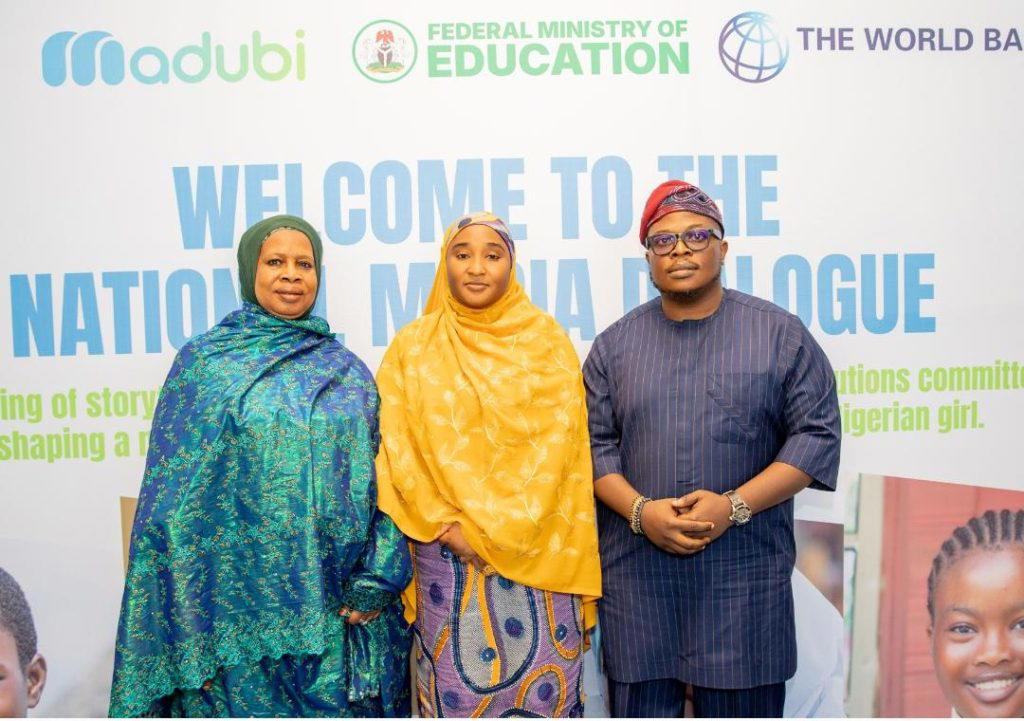
“Madubi,” the Hausa word for mirror, took centre stage in Lagos as education stakeholders, media professionals and communication experts gathered to examine how girls and women are represented in society and why those narratives matter beyond the headlines.
The media campaign, launched by the Federal Ministry of Education and the Adolescent Girls Initiative for Learning and Empowerment (AGILE) project, encouraged storytellers to spotlight ambition, resilience and leadership among young women rather than repeatedly framing them through hardship and vulnerability.
The event themed “The Girls in the Mirror: Media as Catalysts for Change in Girls’ Education,” also featured panel discussions on media framing of girls’ education, digital advocacy and responsible reporting.
Minister of State for Education, Suwaiba Said Ahmad, said girls are too often portrayed from the perspective of struggle alone, despite the responsibilities many already carry at home, in school and within their communities.
“We report girls as weak and vulnerable, but girls are strong. We need to report girls from the position of strength, not weakness,” she said.
According to her, girls frequently shoulder responsibilities from an early age while still pursuing education and personal advancement, adding that societal attitudes towards women can change when the media deliberately highlights stories of resilience, leadership and achievement.
Ahmad also urged media practitioners and content creators to focus less on superficial portrayals and more on women’s character, competence and impact.
“We should look beyond the physical. We should see women from the depth of their character, their capability and the impact they make,” she said.
The dialogue which explored how media narratives shape perceptions around girls’ education, confidence and opportunities, formed part of activities under the AGILE project, a $1.2 billion World Bank-supported initiative aimed at improving secondary education opportunities for girls in Nigeria.
National Project Coordinator of AGILE, Amina Buba Haruna, said the campaign was designed to inspire reflection on barriers limiting girls’ access to education, while also celebrating their potential and achievements.
“The media is not merely a channel for disseminating information, it shapes opinion, challenges norms and drives social transformation,” she said.
According to her, the World Bank-supported initiative, currently active in 21 states, has supported millions of girls through cash transfers, digital literacy programmes, school renovations and alternative learning opportunities for out-of-school girls.
On his part, Group Chief Executive Officer of RED | For Africa, Ayodeji Razaq, urged journalists to centre storytelling around the lived experiences of affected communities, rather than narratives that exploit poverty or suffering.
He reiterated that people should be treated as “heroes of their own stories” and warned against storytelling that strips individuals of dignity.
Communication coach Enifome Ogbimi also warned against dehumanising narratives, noting that the social consequences of negative storytelling eventually affect everyone.
The post FG, AGILE advocate fresh lens on girls’ stories with Madubi appeared first on Vanguard News.

 Premium TImes
 This Day
 Punch Nigeria