

By Joseph Erunke, Abuja
The Federal Government has taken a major step towards strengthening rehabilitation services in Nigeria with the development of the country’s first-ever National Rehabilitation and Assistive Technology Strategic Plan and Monitoring and Evaluation Framework, aimed at integrating rehabilitation into the nation’s healthcare system and improving the lives of millions of Nigerians living with disabilities, injuries and chronic health conditions.
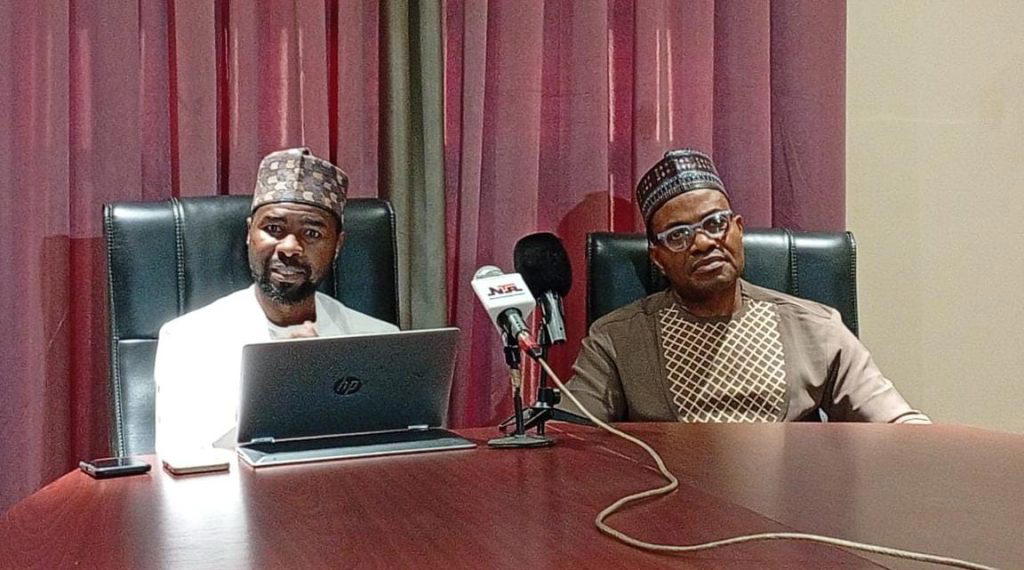
Registrar of the Medical Rehabilitation Therapists (Registration) Board of Nigeria (MRTB), Prof. Rufai Ahmad, disclosed this on Thursday in Abuja during a press briefing on the sidelines of a three-day Stakeholders’ Zero Draft Review Meeting of the National Rehabilitation and Assistive Technology Strategic Plan.
He said the landmark initiative aligns with the World Health Organization’s Rehabilitation 2030 Agenda and the 2023 World Health Assembly resolution directing member states to integrate rehabilitation into national health systems.
According to him, the strategic plan marks Nigeria’s response to global calls to guarantee equitable access to healthcare, education, employment and other essential services for persons requiring rehabilitation.
“The first national strategic plan and monitoring and evaluation framework for rehabilitation in Nigeria has been developed. This is a major milestone for the country because it provides the roadmap for strengthening rehabilitation services and ensuring that no Nigerian is left behind,” he said.
Prof. Ahmad explained that the strategic plan followed a comprehensive nationwide assessment of Nigeria’s rehabilitation sector conducted between 2025 and 2026 using the WHO Rehabilitation Maturity Model.
The assessment, he said, examined six critical pillars of the health system, including leadership and governance, health workforce, health financing, health information systems, service delivery and assistive technology.
He noted that the review exposed significant gaps in rehabilitation governance, workforce planning, financing and service coordination, which the five-year strategic plan seeks to address.
Among the key proposals contained in the draft plan is the establishment of dedicated rehabilitation departments or divisions within the Federal Ministry of Health and Social Welfare and state ministries of health to coordinate rehabilitation programmes nationwide.
He added that a National Rehabilitation Policy has also been developed to provide long-term direction, while the five-year strategic plan will drive phased implementation and periodic evaluation.
Prof. Ahmad stressed that rehabilitation goes beyond restoring health, saying it enables individuals affected by diseases, injuries or disabilities to regain independence, return to work and contribute meaningfully to national development.
“If people who have suffered injuries or illnesses cannot return to productive living, the country loses economically. Strengthening rehabilitation services will not only improve quality of life but also enhance national productivity,” he said.
The registrar disclosed that the Federal Ministry of Health had already demonstrated commitment by approving key recommendations arising from stakeholder engagements since 2023.
He listed some of the achievements to include the integration of rehabilitation into primary healthcare beginning from Bauchi State, ongoing plans to expand the programme nationwide, increased training of rehabilitation professionals in Nigerian universities, and efforts by the Federal Ministry of Humanitarian Affairs to revive rehabilitation centres across the country’s geopolitical zones.
Responding to concerns about policy continuity, Prof. Ahmad said broad stakeholder ownership remains the strongest guarantee against policy inconsistency.
According to him, representatives of federal and state ministries, development partners, professional associations, persons with disabilities and international organisations actively participated in developing the strategic plan, thereby ensuring shared responsibility for implementation.
“When those who will implement a policy are involved in designing it, ownership becomes stronger and implementation becomes easier. Every proposal submitted to the ministry since 2023 has received approval, which shows the government’s commitment,” he said.
He also revealed that the National Health Insurance Authority (NHIA) is reviewing its benefit package to expand rehabilitation coverage beyond physiotherapy.
According to him, occupational therapy, speech and language therapy, audiology, prosthetics and orthotics are now being considered for inclusion in NHIA reimbursement schedules, a move expected to reduce the financial burden on patients who currently pay largely out-of-pocket.
On assistive technology, Prof. Ahmad said the strategic plan recommends increased local production of rehabilitation devices to lower costs while advocating import waivers for equipment that cannot yet be manufactured locally.
He explained that the plan also addresses procurement systems, affordability and wider access to assistive devices for Nigerians who need them.
He called on governments at all levels, development partners, healthcare professionals, civil society organisations and the media to support the implementation of the policy once approved.
“The media has a crucial role. Without public awareness, these documents may remain on shelves. We need Nigerians to understand and support this initiative because rehabilitation is an essential component of universal health coverage,” he said.
The three-day stakeholders’ meeting brought together officials of the Federal Ministry of Health and Social Welfare, National Health Insurance Authority, National Primary Health Care Development Agency, Federal Ministry of Humanitarian Affairs, development partners including the World Health Organization, International Committee of the Red Cross, Clinton Health Access Initiative and UNIDO, as well as professional bodies and organisations of persons with disabilities.
Participants reviewed the zero draft of the five-year National Rehabilitation and Assistive Technology Strategic Plan ahead of its submission to the Federal Government for approval.
The post FG unveils first-ever National Rehabilitation Plan, moves to integrate services into healthcare system appeared first on Vanguard News.