

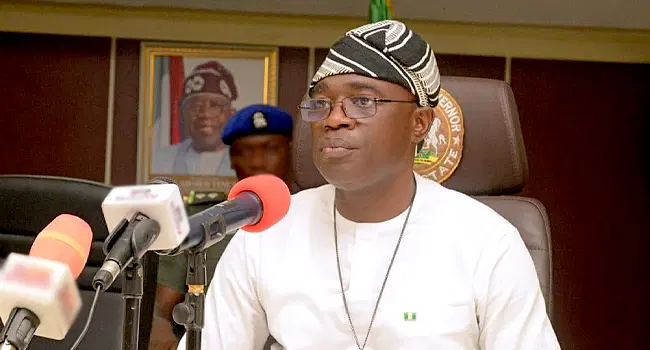
By Chris Agbedo
I have read Valentine Obienyem’s “Fr. Alia and the Seduction of Power” with a mixture of concern and sadness. Concern, because the conduct attributed to Rev. Fr. Hyacinth Alia, Governor of Benue State, raises questions that deserve serious scrutiny. Sadness, because the article, in its passionate condemnation of the priest-governor, seems to me to cross a line that a Catholic should approach with considerably greater caution.
Let me state my position plainly. I do not defend everything Fr. Alia does. I defend the Catholic principle that an erring priest must be corrected without being reduced to the sum of his errors; held accountable without being humiliated; admonished without being dehumanised; and, above all, prayed for rather than publicly abandoned to the judgment of those who appear to delight in his fall.
That distinction is not semantic. It goes to the heart of Catholic understanding of sin, priesthood, grace and redemption. Fr. Alia is a priest who entered politics. His decision to do so has its canonical and ecclesiastical history, and the Church is competent to deal with whatever canonical questions arise from it. His political conduct is equally open to legitimate public scrutiny. As Governor of Benue State, he is a public officer entrusted with public power and public resources. He cannot invoke the clerical state as a shield against accountability.
But neither should his political failures become a warrant for Catholics to forget the Christian obligations governing how we speak about another human being.
The priest is not the sin. This is where I part company with the spirit of the article. There is a fundamental difference between condemning an act and condemning a person.
A Catholic can say:
This action is wrong.
This policy is unjust.
This conduct is inconsistent with the Gospel.
This government must be held accountable.
This priest has failed in his responsibility.
All of these are legitimate forms of moral and civic criticism. But there is another kind of language that moves beyond criticism of conduct into the destruction of character. Once the person himself becomes the object of ridicule, contempt and sweeping moral denunciation, we enter dangerous territory.
The Catholic tradition does not teach us that a sinner becomes less human because he has sinned. Nor does it teach us that a priest who falls becomes someone for whom prayer is no longer necessary. Quite the opposite. The greater the fall, the greater the need for grace.
And if the person who falls happens to be a priest, the proper Catholic response should be even more deeply rooted in prayer. The Church does not teach us to celebrate a priest’s fall
The priesthood is a vocation, not a certificate of moral perfection. Priests are human beings. They are capable of courage and cowardice, generosity and selfishness, holiness and sin. The sacramental character of Holy Orders does not turn the priest into an angel incapable of temptation.
That is precisely why the Church prays for her priests.
She does not pray for them because they are presumed to be incapable of falling. She prays because they can fall. The Catholic faithful are therefore called not merely to admire the priest when he succeeds but also to pray for him when he struggles, stumbles or fails.
This is particularly important in the case of Fr. Alia. If, as Obienyem argues, the priest-governor has become intoxicated by political power, then the Christian response should surely be:
Lord, save him from the seduction of power.
If he has allowed political ambition to overwhelm pastoral charity: Lord, restore his pastoral heart.
If he has become deaf to the cry of his suffering people:
Lord, reopen his ears to the cry of the poor.
If he has failed his priestly vocation: Lord, give him the grace to rediscover it. That is not political naivety. It is Catholic Christianity.
Accountability remains necessary. Let nobody misunderstand this position.
Prayer is not an alternative to accountability. If Fr. Alia has violated the law, he should answer to the law. If he has abused public office, the appropriate institutions should investigate.
If his administration has failed the people of Benue, citizens have every right to say so.
If his conduct has violated ecclesiastical obligations, the competent authorities of the Church have the right and duty to act.
If allegations made against him are false, they should be rejected.
If they are true, they should be confronted.
Truth, accountability and prayer are not contradictory. They belong together.
What I resist is the idea that accountability requires contempt. It does not. A judge may sentence a criminal without hating him.
A bishop may discipline a priest without despising him.
A citizen may reject a governor without dehumanising him.
A Catholic may denounce injustice without abandoning charity.
Indeed, this is precisely where Christian morality becomes more demanding than ordinary political rhetoric. Politics often asks us to choose between for and against.
The Gospel asks something harder: Speak the truth—and love the person.
What does Canon Law require of us?
This is where I would urge particular caution.
It would be too sweeping to claim that Canon Law simply prohibits Catholics from criticising a priest. It does not.
Catholics have rights and responsibilities within the Church. Canon 212 §3 recognises the right, and in some circumstances the duty, of the faithful to make their views known to their pastors concerning matters affecting the good of the Church. Legitimate criticism therefore has a place within Catholic life. But that right does not exist in a moral vacuum. Canon 220 protects the person’s right to a good reputation and privacy. The exercise of one’s freedom of expression does not abolish the Christian duty of charity, truthfulness and respect for the dignity of others.
This distinction is crucial.
The Catholic faithful are not forbidden from correcting an erring priest. We are forbidden, in the broader moral sense, from turning correction into cruelty.
That is why I cannot embrace the proposition that the proper Catholic response to Fr. Alia’s alleged failures is to lambast him as though his fall has cancelled his humanity, his priestly identity or his need for redemption.
If anything, his condition should intensify our prayers.
“Pray for us sinners”
Every Catholic who participates sincerely in the Mass repeatedly acknowledges a truth that should humble us before we speak too harshly about another sinner.
“Pray for us sinners.”
Not pray for those other sinners.
Not pray for politicians who have fallen.
Not pray for priests who have disappointed us.
Pray for us sinners.
The word us is theologically uncomfortable because it removes the safe distance between the righteous observer and the condemned offender.
Fr. Alia is a sinner.
So am I.
So is the writer of the article.
So is the reader.
So is every person who will ever stand before the judgment seat of God.
The difference is not that some of us require grace while others do not.
We all do.
The prodigal priest still has a Father
The Gospel of the Prodigal Son is not merely a story about a reckless son. It is a story about the Father’s response to a fallen child.
The Father does not say:
“You have disgraced the family. Stay away.”
He waits.
He watches.
He receives.
He restores.
That is the logic of grace.
And it is why I hesitate whenever Christian criticism begins to sound as though a particular sinner has become unworthy of redemption.
No Catholic should ever write a human being out of the possibility of repentance.
The priest who falls needs the same Christ who called him.
The governor who fails needs the same mercy available to every sinner.
The man intoxicated by power needs the same grace that can liberate him from power’s intoxication.
Grace is not cancelled by failure.
Indeed, grace becomes most visible precisely where human weakness has become most obvious.
The danger of turning a priest into a political caricature.
There is another problem with the article.
Once Fr. Alia is presented almost entirely as a political villain, there is a danger that the priest disappears and only the caricature remains.
But Catholicism refuses to reduce the human person to his worst moment.
The priest remains a priest.
The politician remains a human being.
The governor remains a citizen.
And the sinner remains someone for whom Christ died.
This does not absolve anyone of responsibility.
It simply reminds us that moral judgment must never become a substitute for divine judgment.
We can evaluate conduct.
We can examine evidence.
We can demand justice.
But we should be very careful about assuming the throne of the Judge.
The temptation of power is not peculiar to Fr. Alia
There is an irony here that deserves attention.
The article is titled “The Seduction of Power.”
Fair enough.
But political power has seduced many people who never wore a cassock.
It has seduced politicians, businessmen, intellectuals, traditional rulers, activists and religious leaders.
It has seduced people across ideological, ethnic and denominational boundaries.
So the question should not merely be: Why did Fr. Alia fall for power?
It should also be: Why does power so easily seduce human beings?
The answer lies partly in our understanding of human nature. Power amplifies what is already within us.
It can make a generous person more generous and a vain person more vain.
It can enlarge humility, or enlarge arrogance.
It can turn service into self-service.
It can transform public office from stewardship into possession.
That is why every person who occupies public office needs moral restraint.
Including priests.
Especially priests.
A priest in Government House needs more prayer, not less.
Perhaps this is the point at which my position differs most sharply from Obienyem’s.
I do not see Fr. Alia’s situation as an invitation to abandon him.
I see it as an invitation to pray harder for him.
If the burdens of political office have become too heavy for his priestly vocation, pray for him.
If political power has distorted his judgment, pray for him.
If he has become surrounded by sycophants, pray for him.
If he has lost the capacity to hear criticism, pray for him.
If he has become estranged from his ecclesiastical superiors, pray for him.
If he has failed the suffering people of Benue, pray for him, and pray for the people he governs.
And if he has sinned, pray that he may repent.
This is what Catholics do.
We do not pray only for saints.
We pray precisely because people fall.
The Church must not become the scapegoat for one man’s failures.
I equally resist the attempt to turn Fr. Alia’s conduct into an indictment of the Catholic Church.
The Church is larger than one priest.
Her history is larger than one governor.
Her moral witness cannot be measured by the conduct of her most controversial sons.
The Church has produced saints and sinners, martyrs and renegades, reformers and compromisers. This is not evidence of the failure of Christianity. It is evidence of the perennial tension between divine calling and human freedom.
The answer to an unfaithful Christian is not to abolish Christianity.
The answer is fidelity.
And when a priest fails, the answer is not to abolish the priesthood.
The answer is to call him back to the demands of his vocation.
Correct him, but pray for him.
There is therefore a Catholic formula I would propose for our response to Fr. Alia:
Correct him without destroying him.
Criticise his conduct without condemning his soul.
Demand accountability without abandoning charity.
Defend the people without dehumanising the governor.
Defend the truth without surrendering compassion.
And above all, pray for his return to grace.
This is not an invitation to political cowardice.
It is an invitation to Christian maturity.
A Catholic should be capable of saying simultaneously:
“Governor Alia, you are wrong.”
and
“Lord, have mercy on your servant Alia.”
Those two statements are not contradictory.
They are Catholic.
The final judgment belongs elsewhere.
There is one final reason why I resist the language of wholesale denunciation.
Every Catholic believes that there is a final Judge before whom all of us—priests, governors, journalists, professors, bishops, politicians and ordinary citizens—will eventually stand.
On that day, none of us will appear before God carrying newspaper columns as certificates of righteousness.
We will all stand as sinners in need of mercy.
That knowledge should make us courageous in confronting evil but modest in judging persons.
We should fight injustice vigorously.
But we should never become intoxicated by our own righteousness.
Perhaps that is the paradox at the heart of the entire debate about Fr. Alia.
The danger is not only that power can seduce a priest.
The danger is that condemning the seduced can seduce the condemner—into believing that he stands outside the reach of the same human frailty.
He does not.
None of us does.
Let us therefore pray.
I will not ask Catholics to pretend that Fr. Alia has done no wrong.
I will not ask Benue people to suppress their grievances.
I will not ask victims of bad governance to remain silent.
I will not ask the Church to abandon her canonical responsibilities.
I ask something simpler—and, perhaps, more difficult.
Let us pray for him.
Let us pray that the priest in him will triumph over the politician in him.
Let us pray that service will triumph over self.
Let conscience triumph over expediency.
Let humility triumph over pride.
Let pastoral charity triumph over political calculation.
Let the Cross triumph over the seduction of the throne.
And if he has indeed wandered far from the path of grace, let us pray that he finds his way home.
Because that is what the Catholic faith teaches us to do with a fallen brother.
Not to celebrate his fall.
Not to destroy his name.
Not to deny his humanity.
But to pray that grace may find him again.
Surely, in the final analysis, the question is not whether Fr. Hyacinth Alia is worthy of our applause.
He is not.
Nor is the question whether he is above criticism.
He is not.
The question is whether he is beyond grace.
No Catholic should ever presume that.
And so, even while demanding truth and accountability, I choose to end not with a curse upon a fallen priest but with a prayer:
Lord, keep your servant faithful to the grace of his priestly calling.
Where he has erred, correct him.
Where he has fallen, raise him.
Where power has blinded him, enlighten him.
Where he has wounded, give him the courage to repair.
And where he has strayed, lead him home.
Amen.
The post Fr Alia, the seduction of power, and the Catholic duty to pray appeared first on Vanguard News.