

… As partnership connects nearly 2,000 schools, trains over 19,000 teachers
By Chioma Obinna
Nearly one million Nigerian students across the country are benefiting from free digital learning opportunities through a partnership between Airtel Africa, the United Nations Children’s Fund, UNICEF, and the Federal Government, as stakeholders move to bridge the digital divide and equip young people with skills for future employment.
The initiative, which has connected nearly 2,000 schools and reached more than 20,000 teachers, is removing data-cost barriers to digital education through free access to learning platforms, while equipping students with digital literacy, artificial intelligence, entrepreneurship, and employability skills.
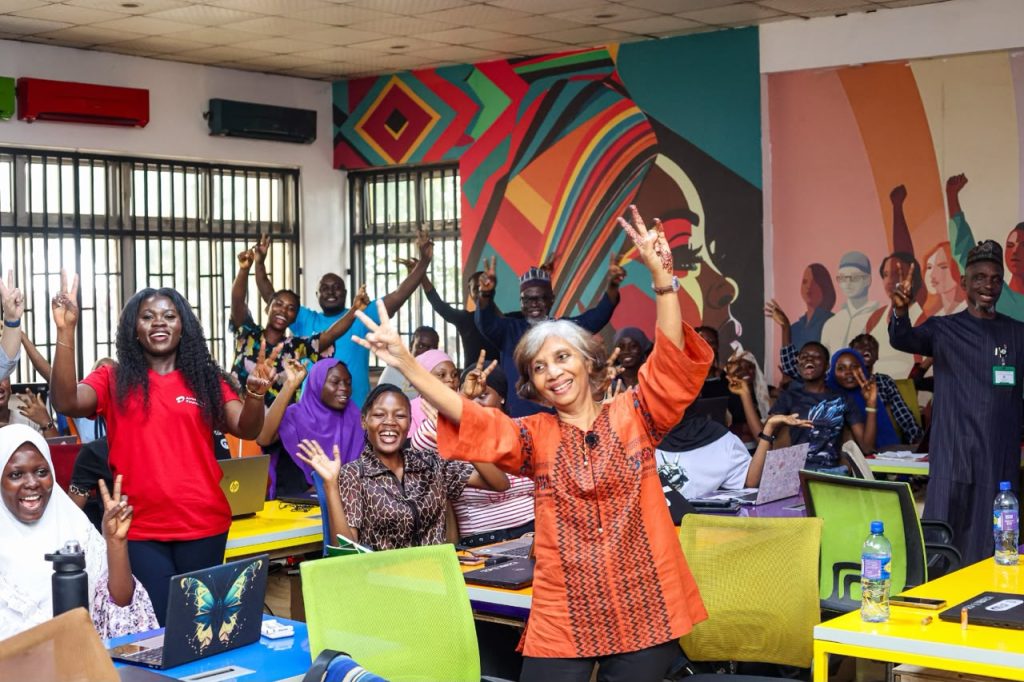
The impact of the programme came into focus during a joint Airtel Africa-UNICEF delegation’s assessment tour of selected schools and youth programmes in Lagos, where students demonstrated how technology is changing their learning experience and opening new opportunities beyond the classroom.
The delegation, led by Garreth Spillane, Chief of Staff to the Chairman of Airtel Africa, visited Government Senior College, Agege; St George’s U.N.A. Primary School, Ipaja; and Yaba College of Technology, where students, teachers and young people showcased the practical benefits of digital learning and skills acquisition.
At Government Senior College, students demonstrated how digital learning tools, including artificial intelligence, are supporting classroom activities, while young people at Yaba College of Technology showed how digital platforms are helping them develop skills for employment, entrepreneurship and self-reliance.
Speaking during the tour, UNICEF Deputy Representative in Nigeria, Dr Rownak Khan, said free access to digital learning was helping young people acquire the knowledge and skills needed to prepare for their future.
“I’m very impressed to see how these girls are learning digital skills, and I really would like to thank the Ministry of Education at both the federal and state levels,” Khan said.
“But our biggest appreciation goes to Airtel Nigeria for this partnership. Airtel has supported us with zero-rating, providing free access so these girls can learn the skills they need to prepare for school and their future careers.”
She said the initiative was particularly important for girls, children with disabilities and learners in underserved communities, who must not be left behind as education increasingly embraces technology.
“Access to free digital learning not only bridges the digital divide but also brings children and young people closer to the knowledge, skills and opportunities they need to shape their and their country’s future,” Khan said.
“Our partnership with Airtel and the Government of Nigeria is supporting teachers and creating pathways from learning to earning. Girls, children with disabilities and those in underserved communities must be among the first to benefit.”
The Nigeria Learning Passport, one of the programme’s major platforms, provides online, mobile and offline access to curriculum-aligned educational resources for pre-primary, primary and secondary school pupils.
The platform hosts more than 15,000 educational resources, including lessons in English, Hausa, Igbo and Yoruba. It has recorded more than 2.5 million registered students and nearly 100,000 registered teachers.
The initiative, introduced in Nigeria during the COVID-19 pandemic when school closures disrupted learning nationwide, is now hosted by the Federal Ministry of Education as part of efforts to expand access to educational resources.
Through the partnership, Airtel provides zero-rated access to the Nigeria Learning Passport, the ministry’s Inspire and Ignite platforms, the Digital National Education Management Information System and the Youth Agency Marketplace, also known as YOMA.
The arrangement allows users to access the designated platforms without incurring mobile data charges, addressing one of the major obstacles to digital learning for families with limited resources.
Head of Programmes at the Airtel Africa Foundation, Esi Asare Prah, said digital inclusion in education was central to preparing young Africans for an increasingly technology-driven world.
“One of the biggest missions for the foundation is driving faster digital inclusion in education to improve learning outcomes,” Prah said.
“For Airtel as an organisation, digital inclusion is a major priority. We want to ensure that young people across Africa are equipped for the future.”
She said the visit demonstrated how access to digital resources could help young learners, particularly girls, gain confidence in technology and develop practical skills.
“It was wonderful to see young girls taking full advantage of the opportunity afforded by the zero-rated Learning Passport,” she said. “Because they can learn free of charge, they are able to absorb information and, within minutes, develop content from what they’ve learned.”
Prah said the Airtel Africa Foundation was committed to strengthening digital infrastructure, expanding access in underserved rural communities, empowering marginalised groups and promoting long-term educational equity.
She added that young people across Nigeria with an Airtel connection could access the Nigeria Learning Passport free of charge.
For students, the benefits extend beyond lessons delivered in school.
The Head Girl of Government Senior College, Tosin Adeola, said the platform had improved students’ academic performance and study habits by allowing them to revisit lessons and review difficult topics at home.
She thanked UNICEF and Airtel for providing the opportunity, saying students were determined to make effective use of the platform.
Airtel Africa Foundation committee member, Spillane, said connectivity could transform education when it enabled students to access quality learning materials and teachers to use digital tools effectively.
“Connectivity brings transformative opportunities when it helps students access quality digital learning and enables teachers to use digital tools effectively, as we’ve seen demonstrated so ably here in Nigeria,” he said.
“Working with UNICEF and governments, we will continue to connect schools, remove data-cost barriers through zero-rated learning platforms and support teachers across the continent.”
The Minister of State for Education, Prof. Suwaiba Sa’idu Ahmad, said collaboration among government, development partners and telecommunications providers was necessary to improve learning outcomes and ensure that digital education reached children regardless of their location.
“Transforming education in Nigeria requires strong partnerships aligned with government priorities and learners’ needs,” Ahmad said.
“We must strengthen teachers’ capacity, expand access to quality digital content, protect children online and ensure digital learning reaches every child, wherever they live.”
In Abuja, the delegation also met with the Office of the Vice President and the Federal Ministry of Education to discuss reliable connectivity, quality learning content, teacher training, inclusive digital design, stronger education data systems, child online safety and sustainable financing.
The partners reaffirmed their commitment to strengthening these areas to improve learning outcomes and expand access to digital education.
Across 13 African countries, the five-year Airtel Africa-UNICEF partnership has connected more than 3,000 schools, provided zero-rated access to more than 60 learning platforms and reached over 2.5 million children.
The partners said continued collaboration with governments would be critical to expanding the initiative and ensuring that more children and young people, particularly those in underserved communities, could benefit from digital learning and the opportunities it creates.
The post Free digital learning reaches 1m Nigerian students — UNICEF, Airtel appeared first on Vanguard News.