

By Henry Umoru
ABUJA — The Obidient Movement has faulted the Federal Government’s 30-day petrol discount initiative, questioning the figures used to calculate fuel-related interventions and accusing the government of failing to provide sufficient transparency in the management of the petroleum sector.
The movement said the temporary discount raised questions about the government’s position on fuel subsidy following its decision to remove the scheme, arguing that Nigerians deserved affordable petrol and accountability in the use of public funds.
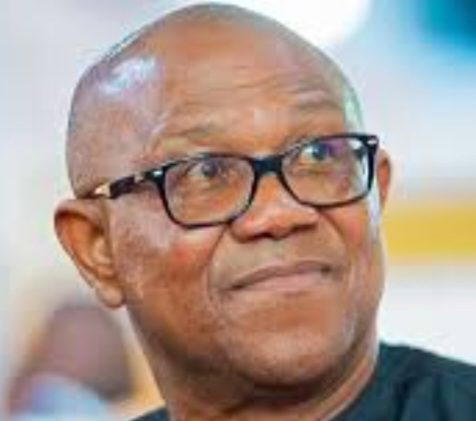
It also said the presidential candidate of the Nigeria Democratic Congress (NDC), Peter Obi, would restore fuel subsidy if elected, but under what it described as a transparent, accountable and verifiable framework designed to ensure Nigerians pay half the reference price of petrol.
The movement’s position was contained in a statement issued on Friday by its Head of Media and Communications Directorate, Onyeka Dike.
It accused the All Progressives Congress (APC)-led Federal Government of insisting for years that subsidy removal was necessary while Nigerians endured the resulting economic hardship.
According to the movement, the government’s latest announcement of a 30-day petrol discount raises questions about the basis for calculating fuel consumption and the financial implications of interventions in the sector.
It argued that Nigerians should not have to choose between affordable petrol and accountable governance.
“The Obidient Movement believes that Nigerians deserve affordable petrol without the corruption, secrecy and criminality that have characterised the management of fuel subsidy in Nigeria,” the statement said.
“Under a Peter Obi administration, fuel subsidy will be restored, but not as a vehicle for enriching a privileged cartel at the expense of the Nigerian people. It will be a transparent, accountable and verifiable system that guarantees Nigerians pay half the price of petrol.”
The movement questioned the reported daily petrol consumption figures used by government officials, contrasting President Bola Tinubu’s September 2024 statement that consumption had fallen to around 30-something million litres daily following subsidy removal with Finance Minister Taiwo Oyedele’s reported estimate of approximately 50 million litres daily in October 2026.
“How did Nigeria move from thirty-something million litres to 50 million litres? Where is the independently verifiable data supporting this figure?” it asked.
The movement argued that discrepancies in consumption figures required clarification, particularly where the volume of petrol reportedly consumed could influence the cost of public interventions.
It called on the Federal Government to publish the data supporting its estimates, explain the methodology used to calculate daily consumption and allow independent verification.
The group maintained that the previous subsidy regime was undermined by disputed consumption figures, difficult-to-verify claims and opaque financial arrangements involving government institutions and petroleum operators.
It said Nigerians deserved to know how much public money was being spent on fuel interventions, the basis for the payments, who received the funds and the quantity of petrol actually delivered to consumers.
Obi proposes half-price petrol policy
Outlining its proposed alternative, the movement said an Obi administration would introduce a “Half Price Policy” under which Nigerians would pay half of an independently determined reference price for petrol.
According to the statement, the reference price would be published weekly by an independent panel using international benchmarks, freight costs and verified domestic costs.
The movement said subsidy payments would be tied to actual, verified sales, with no refiner, depot operator or marketer receiving reimbursement for petrol that had not been sold to consumers through metered filling station pumps.
It also proposed digital tracking to establish an auditable trail from refinery gates to filling stations and prevent inflated claims and fictitious consumption from qualifying for payment.
On domestic refining, the movement said access to Nigerian crude oil for local refineries should operate under transparent and fair rules that do not favour a single company or privileged group.
It argued that competition and accountability should replace opaque arrangements in the petroleum industry.
The proposed framework would also require legislative and budgetary approval by the National Assembly, alongside monthly public reports detailing the reference price, volumes sold, subsidy payments, beneficiaries, breaches, penalties, recoveries and independent audit findings.
The movement said public funds should not be concealed in Nigerian National Petroleum Company Limited (NNPCL) accounts under unexplained labels such as under-recovery.
Movement alleges subsidy continues under different names
The group further accused the APC-led government of continuing subsidy-like payments under different descriptions despite announcing the removal of petrol subsidy.
It alleged that terms such as under-recovery and energy security costs had obscured the true extent of government support in the petroleum sector.
The movement also revisited the 2012 fuel subsidy removal controversy, claiming that the proposed petrol price of ₦145 per litre following the policy was opposed by Tinubu and other APC figures, who participated in protests against the measure.
It accused the current administration of repeatedly increasing petrol prices without providing sufficient transparency about daily consumption, actual costs and public expenditure.
The allegations were made by the movement in its statement.
To address what it described as structural weaknesses in the sector, the group proposed auditing energy security contracts, reducing crude production costs by tackling corruption and inflated security contracts, strengthening pipeline protection through partnerships with host communities and ensuring fair access to crude oil for licensed domestic refineries.
It said the measures would be implemented through a clear framework, including necessary legislative amendments, to establish a sustainable system rather than a temporary intervention that would expire after 30 days.
The movement also questioned the Federal Government’s decision to introduce the temporary discount alongside a mechanism through which refiners and importers could recover shortfalls later.
It said the government should explain what was being paid, how the payments were accounted for and why the figures could not be independently verified.
“Under Peter Obi, fuel subsidy will no longer be a black hole for public money. It will be a measurable public intervention designed to make petrol affordable while protecting public funds from fraud and abuse,” the statement said.
The movement maintained that its proposed policy would combine affordability with oversight, insisting that every litre sold and every payment made must be verifiable.
“Every litre must be verified. Every payment must be justified. Every naira must be accounted for,” it said.
“The welfare of Nigerians must never be a seasonal political project.”
The post Fuel Discount: Obidient Movement faults FG, backs subsidy restoration appeared first on Vanguard News.