

By Ben Ngwakwe, Gombe
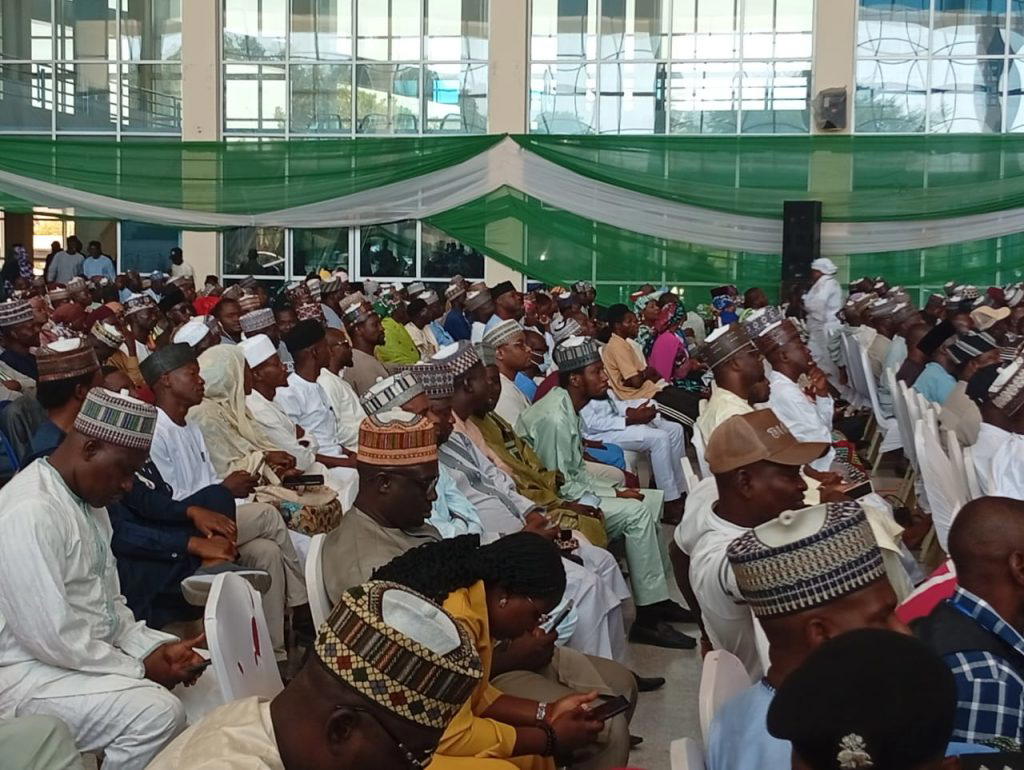
GOMBE — Governor Muhammadu Inuwa Yahaya of Gombe State has called for continuity in governance, political unity and sustained investment in critical sectors as the state marks 30 years of creation, saying its future must transcend the ambitions of any individual or political party.
Yahaya, reflecting on the state’s three-decade journey, said the anniversary provided an opportunity to celebrate past achievements and assess how statehood had translated into improved living conditions, expanded opportunities and inclusive development.
The governor, whose second term ends in 2027, urged political leaders, traditional rulers, religious institutions, youths and other stakeholders to approach the forthcoming political transition with responsibility, peace and commitment to the collective interest of the state.
Speaking against the backdrop of the anniversary theme, “Reflecting on our History, Consolidating Progress, and Charting the Future,” Yahaya said successive generations must understand the state’s history, preserve developmental gains and build institutions capable of outlasting individual administrations.
He also highlighted achievements recorded under his administration in education, healthcare, infrastructure, agriculture, industrialisation, electricity, environmental protection, public service reform and grassroots development.
Gombe State was created on October 1, 1996, by the late General Sani Abacha following years of agitation for greater political representation, accelerated development and governance closer to the people.
Yahaya expressed gratitude to Abacha and the state’s founding fathers and mothers, saying their contributions laid the foundation on which successive administrations had built.
“Thirty years ago, a dream that our people had carried for generations finally became a reality. It was the recognition of a longstanding aspiration for greater representation, accelerated development, political inclusion and a stronger voice within the Nigerian federation,” he said.
He, however, noted that state creation alone did not guarantee development, stressing that its value lay in expanding opportunities, deepening inclusion, improving governance and enhancing citizens’ welfare.
According to him, Gombe’s development cannot be credited to any single administration, political party or individual, describing governance as a relay in which each generation must advance the work of its predecessors.
The governor paid tribute to the state’s pioneer military administrators, Group Captain Joseph Orji and Lieutenant Colonel Mohammed Inuwa Bawa, for establishing the machinery of government and laying the institutional foundations of the state.
He also acknowledged the contributions of the late Alhaji Abubakar Habu Hashidu, the first democratically elected governor; Senator Mohammed Danjuma Goje; and Senator Ibrahim Hassan Dankwambo, whose administrations, he said, contributed to the expansion of infrastructure, institutions and development opportunities.
Yahaya, who served as Commissioner for Finance and Economic Development under Goje, said successive administrations had operated under different circumstances but contributed to the state’s development.
“When I took the oath of office on May 29, 2019, I made a simple commitment: to leave Gombe better than I found it,” he said.
He said the commitment informed his administration’s 10-year development agenda, DEVAGOM, designed to promote people-centred governance through institutional reforms, strategic investments and inclusive development.
Education: Over 2,000 classrooms constructed, renovated
On education, Yahaya said his administration declared a state of emergency in the sector and embarked on extensive infrastructure development to improve access to quality learning.
He disclosed that more than 2,000 classrooms had been constructed or renovated across more than 400 schools, while four mega colleges had been built and 1,000 teachers recruited.
The administration also provided school improvement grants, while the Better Education Service Delivery for All programme, BESDA, was used to bring 350,000 out-of-school children back into the education system.
He added that integrated Almajiri and Tsangaya schools had been established across the state’s 11 local government areas to expand access to education.
At the tertiary level, Yahaya said two additional faculties had been established at Gombe State University, while increased subventions had strengthened tertiary institutions’ capacity to deliver teaching, research and innovation.
He described the enactment of the Gombe State Education Trust Fund Law as a major step towards establishing a sustainable financing framework for the sector.
According to him, education remains central to the state’s long-term prosperity, competitiveness and social development.
Healthcare: GoHealth covers over 400,000 beneficiaries
In the health sector, Yahaya said his administration had constructed or renovated 228 primary healthcare centres to provide two functional facilities in each of the state’s 114 political wards.
He listed the construction of the General Hospital in Kumo, its subsequent conversion into a Federal Medical Centre, the renovation of general hospitals in Bajoga and Kaltungo, and the upgrading of the Gombe State Specialist Hospital among the interventions recorded under his administration.
The governor said the establishment of the Hospitals Management Board was intended to improve healthcare administration, while the GoHealth contributory healthcare scheme had expanded access to medical services.
According to him, the scheme now covers more than 400,000 beneficiaries, including approximately 100,000 poor and vulnerable citizens.
He added that 440 healthcare professionals had been recruited and the CONMESS and CONHESS salary structures implemented to improve remuneration for health workers.
Yahaya said the measures reflected his administration’s commitment to making healthcare more accessible, particularly to rural communities and vulnerable populations.
Infrastructure, urban renewal and housing
On infrastructure, the governor said the Network 11-100 initiative had facilitated the construction and rehabilitation of more than 1,000 kilometres of roads across the state, with several roads complemented by solar-powered streetlights.
He listed the Gombe City Centre Underpass and the Gombe Northern Bypass among the major projects undertaken to improve mobility, connect communities, enhance public safety and stimulate economic activity.
The administration, he said, also established the Gombe Geographic Information Systems (GOGIS) and reformed the Gombe State Urban Planning and Development Authority (GOSUPDA) to strengthen land administration, physical planning and urban development.
Yahaya disclosed that work had commenced on a Three-Arms Zone comprising the State House of Assembly Complex, State High Court Complex and State Secretariat.
He said the government had also constructed 550 housing units through the Family Homes Funds and another 500 in collaboration with the North-East Development Commission.
According to him, the investments were intended to strengthen democratic institutions, improve public administration and provide housing opportunities for residents.
Industrialisation, agriculture and investment
In agriculture and industrialisation, Yahaya said the government was working to harness Gombe’s economic advantages by promoting productivity, value addition, enterprise development and private-sector investment.
He identified the 1,000-hectare Muhammadu Buhari Industrial Park as a major investment in the state’s industrial future, providing a platform for manufacturing, entrepreneurship and employment generation.
The ongoing Renewed Hope Agro-Industrial Hub, he said, was designed to position Gombe as a major centre for agricultural trading, processing and logistics in the North-East.
The facility comprises an international livestock market, a modern grains market, an abattoir, an animal feeds market and an inland dry port.
Yahaya attributed the state’s recognition as Nigeria’s leading state in ease of doing business in 2021 and 2022 to measures taken to improve the business environment, including the establishment of the Gombe State Investment Promotion Agency.
He said the administration’s economic vision was to create an environment where government provides the necessary infrastructure and regulatory support, while businesses, farmers, entrepreneurs and investors drive growth and employment.
Electricity and water supply
The governor said his administration had taken advantage of opportunities created by the Electricity Act 2023 to strengthen the state’s electricity sector through the establishment of the Gombe State Electricity Regulatory Commission and the Gombe Electricity Company.
He cited the completion of the one-megawatt Talasse solar mini-grid as a significant achievement, adding that similar projects in Filiya and Gelengu had reached about 90 per cent completion.
According to him, additional mini-grid projects had been flagged off in Akko, Dukku, Funakaye and Kaltungo as part of a broader plan to connect 80 communities to an interconnected mini-grid network.
On water supply, Yahaya said the expansion of the Gombe regional water distribution network and the provision of dedicated electricity for the Gombe water treatment plant were nearing completion.
He expressed optimism that the projects would help address longstanding water shortages in Gombe and neighbouring communities.
Environment, public service reforms and workers’ welfare
On environmental protection, the governor said the Gombe Goes Green initiative had set a target of planting four million trees to combat desertification, restore degraded landscapes and strengthen environmental resilience.
He also highlighted erosion-control interventions around the Federal College of Education, Mallam Inna, Gombe State University and Hayin Misau, saying the projects were intended to protect lives, homes, livelihoods and public infrastructure.
In the public service, Yahaya said his administration had established the Bureau of Public Service Reforms, implemented the N70,000 minimum wage for state and local government employees, and carried out promotions and appointments across the civil service.
He further disclosed that more than N44 billion had been paid in pension and gratuity obligations, including N21 billion inherited from the previous administration.
At the grassroots, he said the government had strengthened local government financial discipline and administrative capacity while creating 13 Local Council Development Areas to bring governance closer to communities.
On security, Yahaya said his administration had worked with security agencies, traditional institutions and local communities to sustain peace in the state.
He listed the establishment of GOSTEC, the revitalisation of community-based dispute-resolution mechanisms and improved security coordination among the measures taken to strengthen public safety.
He also reiterated his support for state police as part of broader efforts to reform Nigeria’s security architecture.
Yahaya acknowledges challenges, seeks continuity
Despite the achievements highlighted, Yahaya acknowledged that Gombe still faced significant developmental challenges, stressing that his administration did not consider every problem solved or every aspiration fulfilled.
He said the gains recorded had been achieved amid national and global difficulties, including the COVID-19 pandemic, economic recessions, fiscal constraints and security challenges affecting the wider northern region.
The governor attributed the state’s progress, despite the constraints, to the resilience of its people, the commitment of public servants and cooperation with development partners.
Looking ahead, he said his vision was to bequeath a Gombe that was economically competitive, socially inclusive, environmentally resilient and institutionally strong.
He envisaged a state where every child had access to quality education, young people acquired relevant skills, women realised their potential, healthcare was accessible, communities were secure and infrastructure served all parts of the state.
He stressed the need for long-term planning, technological innovation, stronger private-sector partnerships and continuity in public policies to sustain development gains beyond his administration.
“The future of Gombe State must always be greater than the ambitions of any individual or political party,” he said.
Gombe at 30: Preserving history, preparing for 2027
As part of efforts to preserve the state’s history, Yahaya announced the preparation of a commemorative publication titled Gombe State: Thirty Years of Promise and Progress, 1996–2026.
He described the book as an effort to document the struggle for state creation, the evolution of public institutions, the contributions of successive administrations, the state’s socioeconomic transformation and its future development prospects.
The governor commended the editorial committee, researchers, contributors and other stakeholders involved in the project, saying the publication would provide a reference point for future scholarship, policymaking and public understanding.
With the 2027 general elections approaching, Yahaya urged political stakeholders to place the collective interest of Gombe above partisan differences.
He said the anniversary should remind residents that the movement for state creation had been sustained by a common purpose that transcended individual interests.
“I therefore appeal to all our political leaders, traditional institutions, religious leaders, young people and citizens across the state to approach the coming transition with a spirit of peace, responsibility and shared commitment to our common future,” he said.
Yahaya added that the greatest tribute to the state’s founding fathers and mothers would be to ensure that Gombe continued to fulfil the promise that inspired its creation.
He concluded that while the first 30 years had been devoted to establishing the foundations of statehood and progress, the next three decades should focus on consolidating those gains and building a prosperous future for generations yet unborn.
The governor also commended the Gombe State at 30 Planning Committee and Secretariat for organising the anniversary and thanked former governors, traditional and religious leaders, development partners, security agencies, delegations from other states and citizens at home and in the diaspora for their contributions to the state’s development.
The post Gombe @30: Yahaya seeks continuity ahead of 2027 appeared first on Vanguard News.