

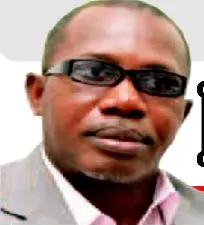
Bombs tormented Henry Onyemanze Nwosu all through the Civil War years while his family sought refuge in Biafra. As hostilities ceased in 1970, they relocated to Lagos to begin a new life. When the footballer started his career, Aguda Bombers was an attraction.
By 1972, Nwosu was playing for Aguda Bombers, a youth team. That was how Paul Okoku got to meet his friend, for the first time. The boys moved to Lagos from their respective villages after the war. East Central State shook hand with Mid – West.
In a tribute to his fallen colleague, Okoku said: “Football greatness reveals itself. I played against Henry after we had both returned from the village, following the war. Henry played for Aguda Bombers and even at that young age, he was already famous for his bicycle kicks.”
Bombers were up against Bristol Rovers, a cadet team set up by one Tunji, son of a police officer at Iponri Barracks, near St. Paul’s Primary School, Ebute Metta, Lagos, by Costain Bus Stop. Sunday Irabor was part of the Bristol squad. He lived in the same barracks building, Block 4, with Patrick Ozie and Victor Ebong, alias Ebonga.
“Back then”, Okoku added, “any player who executed a bicycle kicks, was often called Zagalo, after the Brazilian star known for that acrobatic style.
“Henry and I performed wonderfully for our respective teams. We were both then, short in stature, probably around 4 feet 8 inches and at St. Paul’s, I was fondly called ‘Short Engine.’ Little did they know that I would eventually grow to 5 feet 8 inches.”
Okoku lost that nickname in due course but got something similar. They tagged him, Sule Kekere. In Yoruba, Kekere means small. He was likened to Mighty Jets pioneer, Sule Kekere who founded the Jos club in 1969 alongside Ismaila Mabo, Sam Garba Okoye, Layiwola Olagbemiro, Gabriel Olugbodi, Mathew Atuegbu and Uba Junior..
As a young member of the Green Eagles in 1981, Nwosu encountered the real Brighton Rovers, in cold London. The Nigerians were preparing for an important España 1982 World Cup qualifier, against Algeria. That was why they embarked on a training tour of Europe.
It was a disaster. Brighton won 5-1. The Eagles squad comprised Best Ogedegbe, Moses Effiong, Kenneth Boardman, Loatis Boateng, Tunde Bamidele, Okey Isima, Felix Owolabi, James Udemba and Ayo Ogunlana. Others were Muda Lawal, Sylvanus Okpala, Adegoke Adelabu, Fatal Yekini, Bala Ali, Stephen Keshi, Aloy Atuegbu and Ifeanyi Onyedika.
When the Green Eagles returned to Nigeria, fans expressed disappointment that a team that lifted the African Nations Cup in 1980, struggled in World Cup qualifiers. Brighton Rovers were invited to Benin. They sent a weak team which lost 4-0.
Nwosu ended up in Benin, playing for New Nigerian Bank (NNB). And his stay brought many Lagos Boys. Keshi told me that it was because of friendship that he rushed to join his pal.
“I joined NNB to stay with Henry. At Lagos ACB, I was earning more than they offered me in Benin. Aloy Atuegbu wanted me to play for Enugu Rangers”, Keshi explained in the air as we flew from Dakar to Lagos, aboard a Nigeria Airways flight in 1992.
Nwosu and Keshi were part of the all conquering NNB team that won Nigeria’s first WAFU Cup in 1983, retained it in 1984 and were going to win the Eyadema trophy for keeps in 1985 before Nigeria withdrew from the competition.
In 1983, the Bankers did not lose a match, on the way to cup glory. They triumphed over Kakande of Guinea, Asfosa of Togo, Requins de L’ Atlantique of Benin before dethroning defending champions Sekondi Hasaacas. The Ghanaians had beaten Spartans of Owerri in the 1982 finals.
The same feat was achieved in 1984. Ivorians, Stade Abidjan, Jangorzo Maradi of Niger Republic, Fisheries of Sierra Leone and Mali’s Stade fell. The Sierra Leoneans had eliminated Rangers in the second round of the 1983 CAF Champions League.
The star studded NNB team had Wilfred Agbonavbare, Amos Edosege, Bright Omokaro, Edema Bright, Lawrence Orairo, Austin Popo and Samson Ozogula. Led by coach Willy Bazuaye, there were Sunday Eboigbe, Peter Yeboah, Humphrey Edobor, Nwosu and Keshi.
Nwosu would later play against NNB in the 1988 quarter finals of the WAFU Cup. In the first leg at Ogbe, ASEC of Cote d’Ivoire got a 1-1 draw. The Nigerian defended his goal thus: “ASEC pays me and I did my job.” The Bankers smiled past with a 4-3 penalties win.
In 1988, Nwosu was home again, against a Nigerian team, Ranch Bees in the finals of the WAFU Cup. He was not fielded, though. On duty was compatriot, Tarila Okoronwata. The Kaduna team would go ahead to win the trophy.
At the 1988 African Nations Cup in Morocco, Nwosu was the lone Nigerian in the CAF Team of the Tournament. Other lucky ones were Joseph – Antoine Bell, Emmanuel Kunde, Stephen Tataw, Emile Mbouh, Paul Mfede, Roger Milla, Aziz Bourderbala, Jacques Kingambo and Tijani El Martaoui.
The Nigerian star died in Lagos on March 14, 2026 and will be buried in Naze, Owerri on June 6. He was a Pioneer Flying Eagle, with Keshi, Okoala, Sam Igwenagu, Prince Afejuku and Sunday Nwokocha.
The post Henry Nwosu’s Aguda bomb, by Emeka Obasi appeared first on Vanguard News.

 Punch Nigeria
 This Day
 Vanguard Nigeria