

…Macaulay’s legacy inspires my education, skills devt agenda – Tinubu
…Sanwo-Olu, Osuntokun, Jinadu, Osaghae, Arogundade speak
…Bode George asks Tinubu to return Macaulay’s demolished ancestral home
By Clifford Ndujihe, Dapo Akinrefon & Henry Obetta
LAGOS – From the lips of eminent Nigerians including political leaders and scholars, it was an ocean tributes, yesterday, for late elder statesman and father of Nigeria’s nationalism, Sir Herbert Macaulay, who posthumously turned 162 years.
Speaking at a memorial colloquium organised by the Macaulay Heritage Foundation, speaker after speaker urged leaders to imbibe the political and leadership virtues of Macaulay to fast track Nigeria’s development.
This was as the organisers urged the Federal Government to return the land where the General Post Office, Lagos, is built to the Macaulay to be turned into a site to house Macaulay’s monuments and legacies for future generation to learn from.
It’s time to end poor leadership selection process
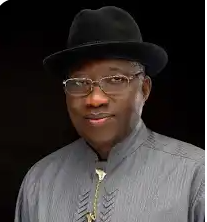
Former President Goodluck Jonathan, who chaired the event warned that Nigeria will continue to struggle with development unless it abandons what he described as primitive methods of selecting political leaders based on religion, ethnicity, language and other narrow considerations.
He urged Nigerians to prioritise competence and merit in leadership recruitment, arguing that the country’s enormous human and natural resources would remain underutilised if political choices continued to be driven by primordial sentiments.
The colloquium, themed Nationalism and Nation Building, attracted prominent political leaders, academics, professionals and other stakeholders, including President Bola Tinubu, who was represented by the Deputy Vice Chancellor of University of Lagos, Professor Afolabi Leshi; Lagos Governor Babajide Sanwo-Olu, former Minister of External Affairs, General Ike Nwachukwu, retd; former Peoples Democratic Party, PDP, Deputy National Chairman, Chief Olabode George; Emeritus Professor Jide Osuntokun; Professor Adele Jinadu; and Director-General of the Nigerian Institute of International Affairs, NIIA, Professor Eghosa Osaghae.
Jonathan identified leadership failures, institutional weaknesses, corruption, policy inconsistency, inadequate infrastructure, insecurity and over-dependence on raw material exports as major obstacles to Nigeria’s development.
He also called for comprehensive democratic reforms, functional education, research-driven universities, stronger institutions and a national development agenda anchored on measurable targets and accountability.
Describing Nigeria’s democratic system as “opaque and amorphous”, he said it must be restructured to guarantee popular participation, the rule of law, respect for human rights, judicial independence, accountability, pluralism and a vibrant civil society.
Paying tribute to Macaulay, whom he described as a man of remarkable intellect, courage and conviction, Jonathan said the nationalist’s struggle went beyond the transfer of political power from colonial authorities to Nigerians.
He said: “Herbert Macaulay was a man of remarkable intellect, courage and conviction. An engineer, journalist, political activist and public intellectual, he distinguished himself as one of the earliest voices to challenge colonial injustice and demand greater political participation and self-determination for Nigerians.
Tinubu, Sanwo-Olu pay tributes
President Bola Tinubu, represented by the Deputy Vice-Chancellor of the University of Lagos, Professor Foluso Afolabi Lesi, described Macaulay as a visionary leader, patriot and fearless advocate of justice and self-determination.
He said education remained one of the greatest ways to preserve the nationalist’s legacy, noting that the Federal Government was implementing reforms to improve access to quality education, strengthen skills development and promote innovation under the Renewed Hope Agenda.
The President cited the Nigerian Education Loan Fund, NELFUND, skills development initiatives and start-up grants for young entrepreneurs as interventions aimed at preparing Nigerian youths for the global economy.
Tinubu commended the Macaulay family, George and the foundation for preserving the nationalist’s memory, urging Nigerians to emulate his integrity, courage and selfless service.
Governor Sanwo-Olu, represented by the Secretary to the State Government, Mrs Abimbola Salu-Hundeyin, reaffirmed Lagos State’s commitment to collaborating with the foundation to preserve Macaulay’s legacy.
The governor, who received the Herbert Macaulay Award for Leadership in Public Service, Cultural Ambassadorship and Urban Development, said his administration had pursued improvements in transportation, infrastructure, public institutions and opportunities for Lagos residents.
He said the state was committed to modernising Lagos without losing its historical identity and cultural character.
The President of the Nigerian Society of Engineers, Engr. Ali Alimasuya Rabiu, represented by Engr. Ayotunde Olukayode Ogunnoiki, also described Macaulay as Nigeria’s first indigenous professional engineer and one of the foremost pioneers of Nigerian nationalism.
He said the country needed the vision, courage, intellectual rigour and commitment to public service that characterised Macaulay’s life.
Macaulay, born on November 14, 1864, is widely regarded as the father of Nigerian nationalism. He died in Kano in 1946, 14 years before Nigeria attained independence.
2060: What kind of country will we celebrate?
Expressing concern over Nigeria’s development trajectory, Jonathan challenged the country to examine its performance against the aspirations of the founding nationalists.
He compared Nigeria’s development with that of South Korea, India and Singapore, which gained independence or emerged from colonial rule around the same period but had recorded remarkable advances in industrialisation, technology, education, healthcare and human development.
He said South Korea had become a global force in electronics and advanced manufacturing, Singapore a major centre of global commerce and innovation, while India had established itself in technology and healthcare.
“Where is Nigeria and African countries in comparison? What has prevented us from translating our enormous human and natural resources into comparable levels of development? What are the stumbling blocks that have kept us from realising a greater percentage of the aspirations that inspired our independence?” he asked.
He noted that Nigeria would mark the centenary of its independence in 2060, just 34 years away, and urged leaders to begin preparing for that milestone.
“The question is: what kind of country will we be celebrating in 2060?
“Will we have overcome the challenges confronting us today, or will another generation be lamenting the same failures and unrealised aspirations?
“Where will Nigeria stand in the Human Development Index? What will be our life expectancy, the quality of our education and healthcare, and the standard of living of the average Nigerian? What progress will we have made in science, technology, digital innovation and industrial development?” he asked.
The former President said these questions must form the basis of a national development agenda with clear objectives, measurable targets, timelines and identifiable responsibilities.
He added: “Our political leaders must provide direction in line with a well-established national vision; our public institutions must deliver efficiently; our businesses must invest in productive capacity; our educational institutions must prepare our people for the demands of the future; and our citizens must embrace the values of hard work, integrity, patriotism and responsible citizenship.”
Jonathan also urged young Nigerians to take responsibility for advancing the ideals of nationalism through innovation, enterprise, civic participation and accountability.
He said: “We must not allow Herbert Macaulay, Nnamdi Azikiwe, Obafemi Awolowo, Ahmadu Bello and the other founding nationalists regret, even in their graves, the struggle they waged for our independence.
“The present generation must therefore resolve that the lamentations of today will not become the inheritance of our children and grandchildren. The greatest tribute to our national heroes is not merely to celebrate their birthdays or preserve their monuments, but to build a nation that reflects the ideals for which they struggled.”
Jinadu, Osaghae, Arogundade demand reforms
In separate interventions, prominent scholars and public intellectuals called for a fundamental reorientation of Nigeria’s political and governance systems, insisting that the ideals represented by Macaulay remained relevant to the country’s development challenges.
Professor Adele Jinadu said the nationalist represented the courage of intellectuals and professionals to speak truth to power, a quality he regretted was increasingly missing in Nigeria.
He lamented that the professional and middle classes had largely remained silent in the face of democratic backsliding because of ethnic considerations and the politics of whose turn it was to produce the President.
“We are all quiet in the face of the backslide that we are going through, almost going to the precipice. We have turned those who should not be heroes into heroes. And those who should be heroes, we don’t celebrate them,” he said.
Jinadu argued that Nigerians should assess political leaders based on competence rather than ethnicity, adding that the middle class had a responsibility to lead the struggle against democratic decline.
He also recalled Macaulay’s contribution to the nationalist movement and regretted that his death in 1946 interrupted the political mobilisation that could have helped build a broader national political movement.
On his part, Professor Osaghae, Director-General of the NIIA, said Macaulay distinguished himself from a middle class increasingly given to consumerism and conspicuous consumption.
He highlighted the cosmopolitan character of colonial Lagos and its contribution to the emergence of Pan-African nationalism, arguing that Nigeria must continually fine-tune its federal arrangement to accommodate the country’s diversity.
Osaghae said federalism was a continuing process that must respond to changing political realities and accommodate different groups without undermining national unity.
He cited the Nigerian National Democratic Party, NNDP, and the National Council of Nigeria and the Cameroons, NCNC, as examples of political movements that brought together diverse interests.
Media rights activist, Lanre Arogundade, outlined six lessons from Macaulay’s nationalism that Nigeria must embrace to build a just and prosperous society.
They included a non-parasitic ruling class, protection of citizens from oppressive taxation and impoverishing policies, universal education, freedom of expression, people-oriented political parties and rejection of tribalism.
He argued that public office should be about service rather than personal enrichment, noting that Macaulay earned his living through his professional practice as an engineer and surveyor.
Arogundade also condemned growing intolerance of criticism, warning that democracy could not survive where citizens and journalists were denied the freedom to question those in power.
He called for a national memorial to Macaulay, suggesting that Lagos State should establish one at CMS Grammar School, and advocated a wider programme of activities to teach younger generations about the nationalist’s contributions.
Bode George seeks return of Macaulay’s house
Earlier, Chief Olabode George, a grand-nephew of Macaulay, appealed to President Tinubu to return the nationalist’s demolished ancestral home to his descendants for conversion into a permanent memorial centre.
George recalled that the colonial authorities demolished the house shortly after Macaulay’s death in 1946 and built the General Post Office on the site.
He said the family was prepared to establish a memorial hall where younger generations could learn about the nationalist’s contributions to Nigeria’s political development.
“We are Nigerians. We must be proud of those God has given us,” he said.
He added: “We want to ask the President and his team to return that building back because we are ready to build a permanent memorial hall. Where younger generations, as they are growing up, see all the works that our great-grandpapa did for this country.”
George urged participants to support the family’s appeal to the President, describing Macaulay as a courageous nationalist who regarded public office as service to the people rather than an avenue for personal gain.
The post HERBERT MACAULAY@162: Nigeria’s devt doomed until we end primitive leadership selection — Jonathan appeared first on Vanguard News.