

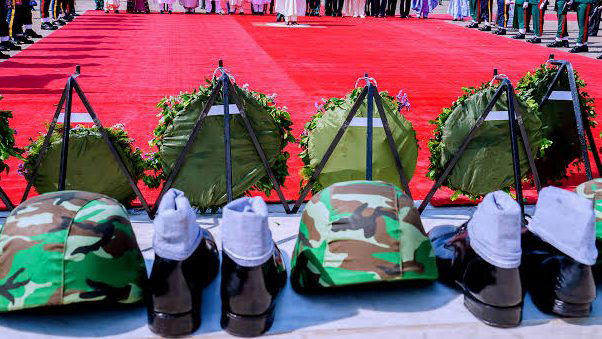
The commissioning of 50 energy-efficient homes for wives of fallen military personnel in Ibadan is a reminder that the nation’s obligation to those who die defending it does not end with a funeral. Delivered through PHDL, Family Homes Funds Limited and other partners, the homes offer security and dignity to families who have paid a heavy price. Each unit has solar power, while the estate has water and street lighting. Yet the question is whether such interventions are sufficient.
The Army’s post-service housing programme dates to 1996, when the Post-Service Housing Directorate was approved by the Army Council to address the hardship faced by officers and soldiers struggling to secure homes after retirement or discharge. PHDL emerged from that structure and was subsequently reorganised as a limited-liability company in 2006. The initiative was born under the military administration of General Sani Abacha. Its mandate is to provide affordable homes and land to which Army personnel can retire.
There has been progress. PHDL says it now has 31 estates in 16 states, while the Army’s Affordable Home Ownership Option for All Soldiers (AHOOAS) has expanded beyond its Abuja pilot, where more than 400 units were delivered and occupied. In Ibadan, the Army commissioned 60 AHOOAS units in 2025, while the latest 50-unit project specifically assists families of fallen personnel. These are welcome steps, but modest against the size of the military and the sacrifices demanded amid worsening insecurity.
The typical family left behind by a fallen soldier confronts far more than the loss of a breadwinner. There may be rent, school fees, healthcare bills, food insecurity, psychological trauma and the disruption of children’s futures. Existing service entitlements and welfare interventions matter, but do not automatically guarantee a permanent home or lifelong economic security. The housing gesture is therefore valuable precisely because it addresses a need that cash payments alone cannot solve.
The shortfall is scale, coordination and comprehensiveness. Housing for heroes should not depend on occasional projects or individual partnerships. It should provide an automatic, transparent entitlement for eligible families, backed by predictable funding, a national register of fallen personnel and dependants, maintenance arrangements and monitoring. Nigeria should also learn from countries where military and veteran welfare systems combine housing with education, healthcare, survivor benefits, rehabilitation and employment assistance.
Such support should extend beyond the Army to the Navy, Air Force, Police, NSCDC and other armed or security personnel who die in the line of duty. This is not charity. It is social justice. A soldier who knows the state will protect his family if he falls can serve with greater confidence. Broadening and institutionalising these benefits would strengthen morale, reward sacrifice and affirm a national covenant: those who die protecting Nigeria must not leave their families to struggle for the protection they earned through their service.
The post Housing families of fallen heroes appeared first on Vanguard News.