

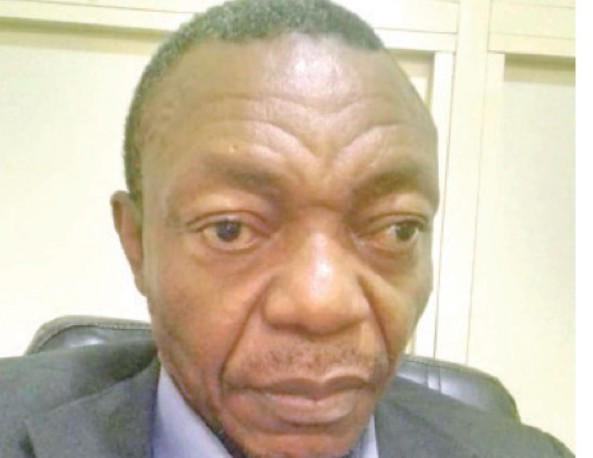
By Chris Onuoha
Obinna Chilekezi is a poet, author, teacher, literary critic and research fellow including insurance expert. His passion for creative writing, poetry precisely, spans over three decades with lots of publications to his credit. The Imo State-born social commentator, in this interview describes his journey into literary world as one with multifaceted background. Excerpts:
How would you describe yourself, believing it will make sense?
I don’t know how to start. Simply, I can say that I have multifaceted background, having read library science, publishing and journalism before vying into the business studies through reading banking and finance, market, insurance, and lastly entrepreneurship at the doctorate level.
Although I worked very briefly with Daily Times where I started writing in 1985 (had articles in Sunday Times, Business Times and my first poem in Times International); I can say that all my life I have worked and still working in the insurance industry. It is important to note that I started writing before I joined the insurance and I can say that it was like I forgot writing while being active in the insurance sector until few years back that I went back to writing.
Could you recount events, things, places or people that inspired your passion into writing particularly poem appreciation?
I will say that all of them; that is events, things, places and people had inspired my writing. I will also wish to note the influence of my mother which should be story for another day. Nevertheless, I will prefer to acknowledge two people who had inspired me physically to write poetry. The first was one Dr Onukaogu. I cannot recollect his first name. He was our ‘Use of English’ lecturer at the then College of Technology Owerri (COTECH), who would come to class and be reciting poems to us. I came in to read information science with my secondary school subjects in Physics, Chemistry and Biology and a pass in Mathematics that prevented me from reading sciences. Dr Onukaogu would give copies of poems to read. Initially I was reluctance but awhile I started noticing the beauty in this piece of work.
The second person was one Afam Ekeh with Times International who was in charge of the poetry column of the Magazine that literally forced me to write something. I can remember the title of the poem, which was ‘The Moon I Point My Fingers.’ I must confess that it was not a serious work ooo. Although he published it. I can guess that it was not for its literary merit, but to motivate me to write. I will always remain grateful to him for this literary and motivational gesture.
Ironically both left for USA before they could finish their self-chosen work on me. We did not finish the semester when Dr Onukaogu left for USA and same applied to Afam who left while I was doing my industrial attachment with Daily Times.
When did you start writing and how many published works to your credit including fiction or non-fictional?
I will say that I started writing poems more seriously in 1988. I had a poem in ANA Review then with Uche Nduka, whom I believe was the editor. It was the same time that I joined ANA Lagos and Committee for Advancement of New Authors (CANA) promoted by the trio of Chinweizu, Nwosu and the another guy that wrote the book ‘Sex Is A Nigger’s Game.’ I couldn’t remember his name. It was in his house in Apapa that we usually meet. But for ANA Lagos we used different locations like the National Museum and finally ending up in Dr Ajayi’s home the medical doctor novelist.
It was during this period that we had this anthology Twenty Nigerian Writers edited by Dr Ajayi and this guy from the Mass Communication department of the University of Lagos.
For the published works I will say that my works have appeared in may journals and anthologies both nationally and internationally published. I can also say that I have five serious works which are Songs of A Stranger At The Smiling Coast by Kraft Books Limited, that I would say is the most successful among them. Others are My Gambian and Other Poems by Libretto Publishers, Calligramme by Emotion Books, I Want To Paint With Words by Stripes Press, and A Love That Faded Away With Distant Cries, recently released by Kraft Books.
I also have a pretty collection published by a Zimbabwean Publisher ‘Like A Starry Night.’
For the fiction, I just completed a collection of short stories titled: One Penny Ring and Other Stories. Yes there have been two collections of essays on Amazon and they are ‘Truth Beauty’ which is the motto of the secondary school that I attended that I later found to be taken from the poem of John Keats. In all I can say that my literary feet is work in progress.
How do you classify your poetic style: romance, dirge or socio-politically motivated. What language do you employ most to drive your messages?
I tries to be Afrocentric in my writing in the first place. I also believe that African writings have a major place in world literature. This is why I do not feel that an African writer should worry himself much about his foreign readers. I may be wrong on this position. But this is how I feel.
I will want to refer myself as a generalist if there is anything like it in literature. Nevertheless, I can claim that my works are lyrical. I don’t believe that poems should be a puzzle for the readers. This is why I love African poetry. Just like songs. You understand the ‘egwu owa’ the igbo moonlight folksong stuff. I may agree that at times many poems may be socio-politically influenced. Especially those that deal with issues like hunger.
I would like to make a reference from ‘SIM Now,’ a South African publication that did a little review on my writings. And I quote, “When we begin to reflect upon hunger, I draw upon the words of provocative Nigerian poet Obinna Chilekezi, who, filled with his own descriptions and impression, started writing poems at an early age.
Chilekezi personalizes hunger. ‘Hunger befriends the land / The land befriends hunger,’ he writes in ‘Food comes first.’ In ‘Not just this change,’ he writes, ‘Hunger has swallowed our land whole.’ I find it compelling how Chilekezi uses an experience like hunger, which involves want and emptiness, to personify a glutton with a ravishing appetite. I also find his metaphor rather unsettling.
I think this speaks much of my writings, especially my poems. My English teacher in the secondary school at Ife Secondary School, the late Mr Dominic Nwachukwu (Nnanyi Dom) would say then, “it is an Axiom, yes self-evident truth !”
What messages do you drive in your poems with emphasis on societal values?
I had once told African Research Forum that I am a poet that believe in Art for art’s sake. First and foremost I see my poems as works of arts. There are times like every other artists, that I can use my writings to deliver a vintage message. That is it.
In your multifaceted state as a writer, how do you navigate between creative to business writing. Do they clashes with your personality as author of books in different communities?
This question usually comes up in all my interviews. I have tried to attempt answering it in various media that writing and insurance have a common objective of addressing societal ills. While insurance tends to provide succour to societal mishap, writing in the other hand, tends to mirror this mishaps so that the society can not only learn from them but also provide mechanism to cater for the fall outs like insurance. This way, there has been many insurance practitioners who are writers too. Some of them were renowned that included Wallace Stevens who worked for decades as an executive and vice president at the Hartford Accident and Indemnity Company in Connecticut USA while simultaneously writing modernist poetry that won him the Pulitzer Prize for Poetry in 1955.
We also had Franz Kafka who worked as an insurance officer and claims administrator for the Workmen’s Accident Insurance Institute in Prague, drafting technical legal reports and writing existential fiction by night. Also, Tom Clancy who owned and operated an independent insurance agency (O.F. Brown Agency) in the Maryland USA before breaking out as a best-selling military thriller novelist in the 1980s.
There is nothing strange for one to be an insurance practitioner and be a writer same time. There is no conflict at all.
Lets talk about your other career as an insurance expert. You have continued authoring books in this field. How many books have you in your kitty and what are they focusing on?
Yes, I have written many technical books on insurance and God willing will write more. I shared the African Insurance Organisation’s Book Award in 2016 with my friend Charles Nwanze. Incidentally, I am Charles too, although I prefer not to use it. For the number of books including those that I edited I can say that there are over fifteen in number.
For the career I will say that I have been around industry for more than three decades that took me to different arms of the industry. Presently I am more into teaching, research and consulting. Or if you can permit me to say, writing too.
The post I try to be Afrocentric in my writings — Obinna Chilekezi appeared first on Vanguard News.