

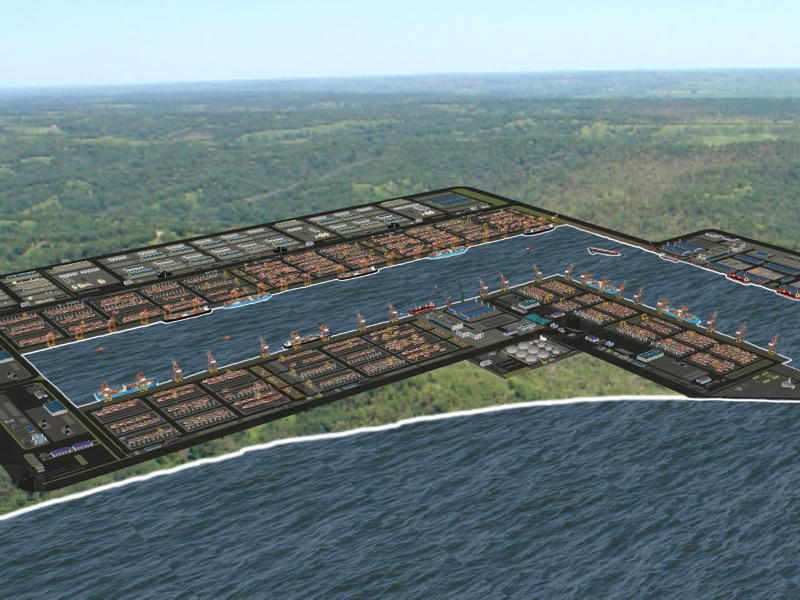
The Ibom Deep Seaport project is a depressing illustration of Nigeria’s penchant for recycling development promises without delivering results. Conceived in 1999 under the visionary administration of Governor Victor Attah as the Ibaka Deep Seaport and Industrial City, it has survived the regimes of Godswill Akpabio, Udom Emmanuel and the incumbent, Umo Eno, without progressing to actual construction. More than a quarter of a century later, it remains a political talking point rather than an economic reality.
Successive governments have offered assurances, raised expectations and announced milestones. The late President Muhammadu Buhari’s administration reportedly secured the Federal Executive Council’s approval for the first phase in December 2020, which is a public-private partnership estimated to cost $4.6 billion and a preferred consortium involving Bolloré Africa Logistics and PowerChina. Yet, that approval did not translate into construction. President Bola Tinubu also promised the project during his 2023 presidential campaign in Uyo. His November 6, 2026 visit to Akwa Ibom, during which he again announced its approval, therefore sounds like a recycled promise.
What happened to Buhari’s approval? Why was the preferred investor consortium unable to commence work? Were financing arrangements concluded? What exactly has Tinubu approved that was not approved in 2020? Where are the concession agreements, financial commitments, construction contracts and commencement dates? Nigerians deserve documentary answers. Enough of presidential declarations at political rallies.
The reluctance of successive Federal Governments to activate this project is particularly troubling. Nigeria urgently needs to diversify its maritime infrastructure beyond the congested Lagos ports and the struggling facilities elsewhere. Ibom offers an exceptional opportunity. Its proposed deepwater facilities, with an approach channel exceeding 18 metres in depth, could accommodate large ocean-going vessels. Its container, bulk and liquid-cargo terminals, supported by a proposed 14,400-hectare industrial city, could transform regional commerce, manufacturing, agriculture and exports.
The economic benefits are enormous: employment, foreign investment, expanded government revenue, cheaper logistics and improved access to international markets. Akwa Ibom could become a major maritime and industrial gateway serving the entire South-East, South-South, North Central, North East and neighbouring countries.
Governor Eno must, however, move beyond political lobbying and demand an enforceable implementation timetable. Senate President Godswill Akpabio should deploy his influence to secure federal action. These senior Akwa Ibom politicians must make their prominent positions in the ruling party count. The President should publish the approvals, financing structure and contractual commitments behind his latest announcement.
Meanwhile, government must proactively rehabilitate and develop other neglected ports, including Onne, Calabar, Warri, Onitsha and Port Harcourt, to distribute maritime traffic, stimulate regional economies and reduce Lagos’s burden.
The seaport is not a bargaining chip for electoral loyalty or a campaign trophy. It is a national economic necessity, irrespective of which party conceived, approved or eventually delivers it. Nigeria has waited long enough.
Enough promises; let construction begin.
The post Ibom Seaport: All promises, no action appeared first on Vanguard News.