

By Godwin Oritse
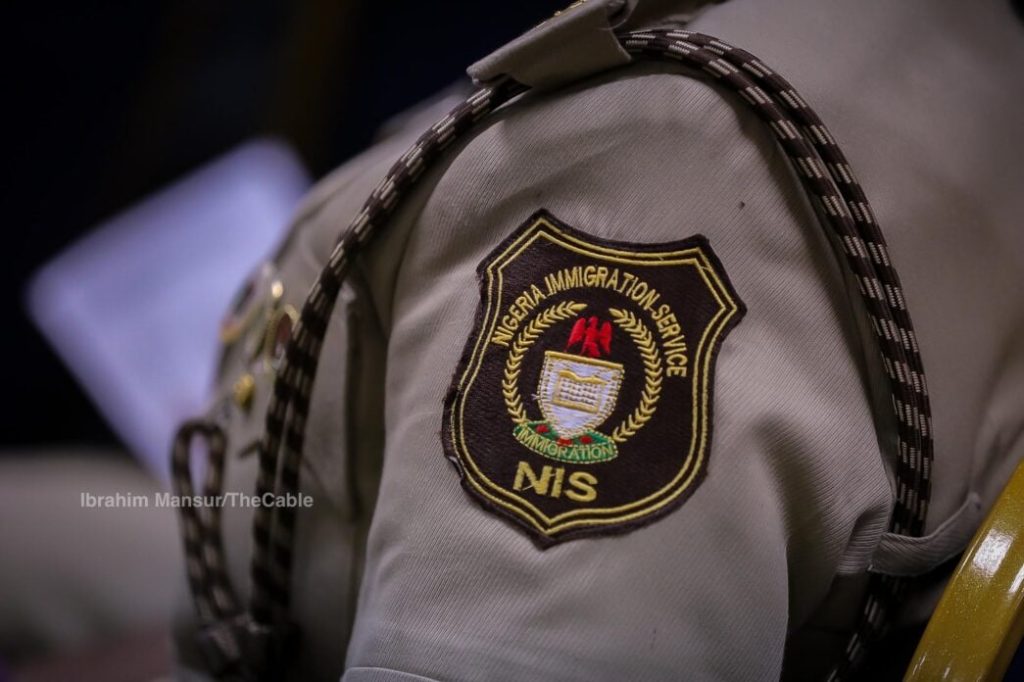
The leadership of the Nigerian Immigration Service (NIS) has announced plans to deploy digital border management systems aimed at strengthening national security and curbing cross-border criminal activities across Nigeria.
Speaking at the opening ceremony of the 2026 edition of the African Border Research Network (ABORNE) in Lagos, Comptroller General of the NIS, Kemi Nanna Nandap, stressed that digitalisation alone cannot guarantee effective border security without the experience and expertise of personnel operating the technologies.
Nandap also said the conference came at a time when border governance and management are undergoing significant transformation across Africa and beyond.
According to Nandap “Advances in technology, evolving migration patterns, regional integration, cross-border economic activity and emerging security challenges continue to reshape our borderlands and the lives of the communities that depend on them.
“The theme of this conference, the connected borderlands, socio-cultural integration and the centrality of policy, research and security is therefore both timely and highly relevant. Borders must be understood not merely as geographical lines separating sovereign states but as dynamic spaces where families remain connected, communities interact, cultures converge, livelihoods are sustained and legitimate trade and movement take place.
“Our collective responsibility is to make sure that these spaces remain secure while facilitating lawful mobility, strengthening regional cooperation and preserving the socio-cultural and economic relationships that are fundamental to the vitality and stability of border communities.”
The NIS boss stated that physical patrol and documents inspection remains essential but are no more sufficient on their own adding that human trafficking, snuggling, Identity fraud, organised crime, terrorism and cyber-enabled crimes are increasingly operating across national boundaries.
She said:”Addressing them requires us to work differently and, importantly, to work together. For the Nigerian Immigration Service, this means combining the experience and the judgement of our officers with technology, intelligence and stronger cooperation with other institutions.
Nigeria’s journey towards modern border management has been progressive. In 2007, we became the first African country to introduce the electronic passport, strengthening the link between a travel document and the identity of its holder. We have continued that journey through the enhanced e-passport, with stronger security and biometric features, and through greater automation of passport applications, payment systems, processing and identity verification.
“We have also introduced centralised passport personalisation to improve the integrity and efficiency of passport production. Our participation in the ICAO-PKT, that is the Public Key Directory, further strengthens international confidence in the authentication of Nigeria’s electronic passports.
“The contactless biometric passport services are making the process even more accessible, particularly for Nigerians living abroad, while maintaining the security standards required to protect the integrity of our travel documents.
“At our international airports, automated border control systems, including the e-gates, are transforming the passenger experience by combining biometric identity verification with faster, more efficient and more secure border processing. These advancements are being complemented by sustained investments in software systems, command and control capabilities, communications infrastructure and integrated border platforms and data platforms, designed to strengthen situational awareness across Nigeria’s air, land and maritime borders. These investments have not been pursued for the sake of technology alone.
“Their fundamental purpose is to enhance the capacity of our officers to make timely and well-informed decisions, identify emerging risks at an earlier stage, to improve operational coordination and facilitate the seamless movement of legitimate travellers while safeguarding national security. However, even as we embrace innovation, we must remain mindful of the indispensable human and human dimension of border management. Technology cannot replace professionalism, experience, judgement and integrity of the officers entrusted with the securing of our borders.
“Equally, effective border governance cannot be achieved without the trust, cooperation and participation of border communities. The people who lead and conduct their livelihoods within our borderlands possess valuable knowledge and understanding of these environments that technology alone cannot replicate. They should therefore not be regarded merely as populations residing at the geographical margins of the state, but as essential stakeholders and strategic partners in promoting secure, peaceful, resilient and prosperous borderlands.”
The post Immigration moves to digitalize border management to enhance security appeared first on Vanguard News.