

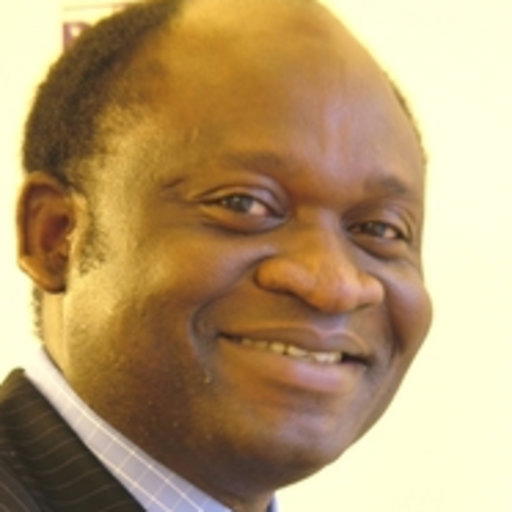
Last week, on October 7, the London School of Economics, LSE, hosted the UK launch of my book In The National Interest: The Road to Nigeria’s Political, Economic and Social Transformation. Two LSE faculties—the Department of International Relations and the Firoz Lalji Institute for Africa—collaborated to organise the book launch, which included a public lecture. Coming after the book’s highly successful launch in Nigeria last November, hosted by Vanguard and supported by BusinessDay, the UK launch marked a hugely significant milestone as it introduced the book not only to the Nigerian diaspora but also to a wider international audience. And it was a wonderful event!
The first thing that struck me about the UK launch was how curious the international community is about Nigeria and how interested the Nigerian diaspora is in this country. The ticketed event sold out a week earlier, and so many people were put on the waiting list. The organisers quickly changed the venue to accommodate more attendees. Even so, the new venue was full on the day. I was delighted to see some notable Nigerians in the audience, including Cheta Nwanze, the CEO of SBM Intelligence, the reputable geopolitical risk advisory firm; Wilson Erumebor, Principal Economist at the Nigerian Economic Summit Group, NESG; and Atsen Ahua, a veteran journalist. There were representatives from the international investment community, such as British International Investment, a capital market company, and Third Bridge, an investment advisory company. And many came from academia and the diplomatic world!
Understandably, the LSE Events team was elated about the outcome and sent me an email afterwards. It reads: “Thank you for writing such an insightful book. ‘In The National Interest’ brought a great audience to the LSE, and it was great to have you as one of our valued alumni, presenting on such an interesting topic.” As I said, the event was also a public lecture, featuring a keynote speech by me. It was ably chaired by Professor Milli Lake at LSE, while the brilliant discussant was Aanu Adeoye, a journalist at the Financial Times in London, who, until last year, was the FT’s West Africa correspondent in Lagos. The event was also billed as a fireside chat, during which the discussant and the audience asked me questions. It was quite stimulating yet also depressing. Why depressing? Well, because the questions and interventions revealed how deeply frustrated the Nigerian diaspora and the wider international community were about Nigeria. The air of disappointment and despair was so thick one could cut it with a knife!
My speech was titled “66 Years On: How Can Nigeria Escape the Fragility Trap and Unlock Its Potential?” I chose the topic for two reasons. One, the event was timed to mark Nigeria’s 66th Independence Anniversary. Second, the topic reflected the core themes of my book, which is about how Nigeria could overcome its fragility and unlock its potential so it could become a force for good for its people, for the rest of Africa and, indeed, the world. I started the speech by setting out Nigeria’s well-known political, economic and social challenges, and then traced the problems to three structural roots. First, Nigeria’s “birth defects”, stemming from its painful colonial origins, when Britain cobbled the country together from centuries-old disparate nations that remain utterly disunited, leaving Nigeria as a state of nations rather than a nation-state. Second, Nigeria’s troubled historical evolution, entailing decades of military rule and a destructive civil war, which created wounds and grievances that are still festering, as well as political and governance structures that are deeply flawed. And third, path-dependent institutional development, rooted in the failure to act in the national interest, evidenced by the refusal of civilian leaders to uproot the colonial-and-military-era structures and replace them with ones that would transform the country. I argued that the three structural root causes have led to two fundamental weaknesses. One, weak nationhood, characterised by Nigeria’s lack of unity, national cohesion and a shared purpose; and two, weak statehood, defined by Nigeria’s lack of state capacity to perform essential functions, including tackling the critical challenges of unemployment, poverty and insecurity, not to mention the acute bureaucratic deficits, endemic corruption and the total absence of the rule of law. The way forward, I concluded, was a fundamental restructuring of Nigeria’s political and governance systems so it can become a strong nation and a strong state.
Responding, the discussant, Adeoye, who covered Nigeria for the FT for three and a half years, said: “My sense is that Dr Fasan is actually far more optimistic about the state of Nigeria than I am.” He added: “I really agree with you about the need for political restructuring, but how do the same people benefitting from the current system change that system? It’s like asking turkeys to vote for Christmas.” I agreed, turkeys won’t vote for Christmas, but, historically, the change that transformed nations was always driven by the people, not necessarily in violent revolutions but in civil pressures that leaders, and powerful vested interests, couldn’t resist. I said what Nigeria needed was a critical mass of enlightened citizens that could demand and fight for change. However, I quickly added that such a critical mass was hard to achieve in Nigeria mainly because of tribal and religious sentiments. Yet, I argued, the fear of Nigeria descending into a failed state might, eventually, force leaders and followers alike to think seriously about saving the country from total collapse.
Then, someone asked me how bad things had to be before Nigeria became a failed state. “You talked about the fear of Nigeria descending into a failed state,” he said, “but, essentially, what we have is a failed state; most citizens don’t expect anything from the government.” I replied that Nigeria was not yet a failed state because there was still a glimmer of hope that it could be transformed if everyone acted in the national interest and did the needful. Another asked: “Isn’t Nigeria a fascist state, given how brutally government suppresses protests and demands for change?” I said, sometimes, Nigeria behaved like a fascist state, as state brutality during the #EndSARS protests showed. But no country that purports to be a civilised democracy can resort to killing its people whenever they demand change through peaceful protests, even civil disobedience. However, worldwide, transformative change often requires a vibrant civil society, a robust middle class and free and fearless media—all of which are needed to empower the people and coordinate their demands for change.
At that point, someone pointed out that the state had captured civil society in Nigeria. Another argued that the middle classes who could pressure for change were leaving the country. “The middle classes are escaping the country because they have no hope in it, and the people left have no leverage to influence change. So, how would change happen?” she asked, adding: “You have more positive hope in Nigeria than I do.” Pursuing the middle-class theme, a Nigerian academic from King’s College London said: “You mentioned the middle classes, but you will agree with me that a significant number of Nigerians who can be considered middle class are now outside the country. The wave of brain drain is huge; I think the best of Nigerians are leaving Nigeria every day.” He asked how the Nigerian diaspora could contribute to the way forward. I said they should give back through the diffusion of ideas and active engagement, including sensitising the people to the need for change. It’s also worth pushing for eligible Nigerians in the diaspora to vote in presidential elections, a powerful leverage!
The discussions continued during a reception that lasted over two hours. I am enormously grateful to LSE, the world-renowned university, for honouring me with such a great book launch and public event, and to those who defied a wet evening to attend the event. The key takeaway is unmistakable: Nigerians abroad and the wider international community are deeply frustrated about Nigeria; some even despair for its future. But my book charts the way forward, if only Nigerian leaders and citizens would read and heed its words!
The post In The National Interest: UK launch exposes deep frustrations about Nigeria, by Olu Fasan appeared first on Vanguard News.