

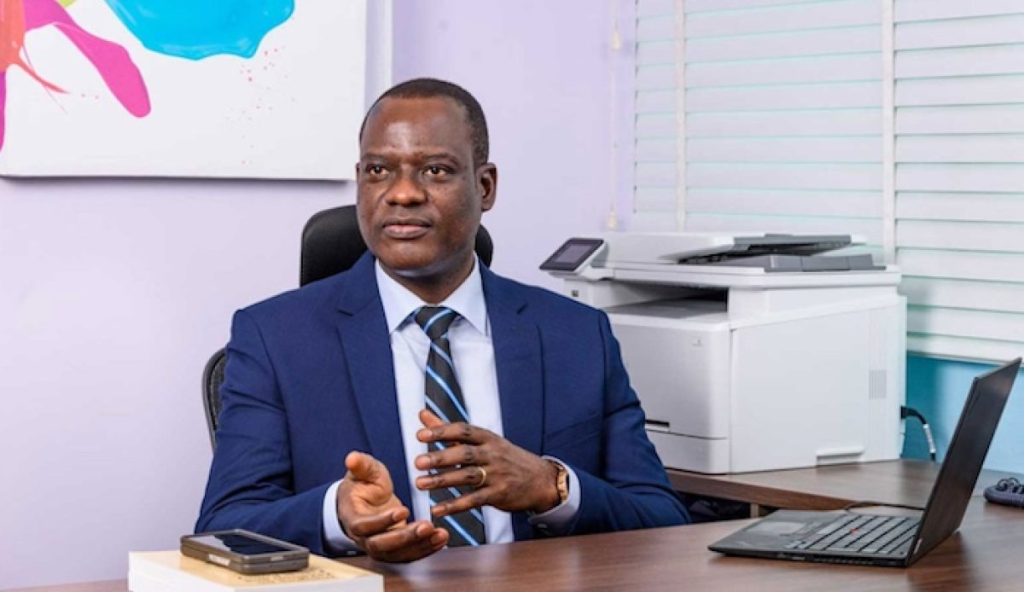
By Babajide Komolafe
Nigeria’s economic reforms have strengthened investor confidence, with financial markets and the international community pricing in the prospect of President Bola Tinubu’s re-election and continuity of the policies beyond the 2027 general election, the Minister of Finance and Coordinating Minister of the Economy, Taiwo Oyedele, has said.
Oyedele, who spoke during a press briefing alongside the Governor of the Central Bank of Nigeria, CBN, Mr. Olayemi Cardoso, at the 2026 IMF/World Bank Annual Meetings in Bangkok, Thailand, said investors were concerned about whether political developments would lead to a reversal of the government’s economic reforms.
He said: “The markets and the international community have been pricing in the prospect of a second term for the President, and they expect continuity in the reforms.”
Responding to questions about the forthcoming election and the implications for economic policy, the minister acknowledged that investors were seeking assurances that Nigeria would not abandon the reforms that had helped stabilise the economy.
According to him, investors had raised questions about the possibility of political pressure forcing the government to reverse its policies.
“They ask, ‘Are you under pressure because of elections?” Oyedele said, recounting the concerns investors had expressed.
He maintained that the government’s reform programme was driven by the need to put the economy on a sustainable footing, rather than by political calculations.
“It is not because I am trying to help Mr President win re-election,” he said, explaining the rationale for maintaining the policies.
Oyedele said the government remained committed to sustaining the reforms, insisting that a reversal would undermine confidence, trigger capital flight and renew pressure on the naira.
“There will be no return to fuel subsidies or multiple exchange rates,” he declared.
He explained that the recent decision by NNPC Retail to offer a discount on petrol was a commercial decision and should not be interpreted as a return to government-funded fuel subsidies.
“What you are seeing from NNPC Retail is a commercial decision. It is not a subsidy. A company can decide to reduce its margin or offer a discount as part of its business strategy. That does not mean the government has brought back subsidies,” he said.
The minister warned that reversing the reforms would carry significant economic costs.
“If you reverse these reforms, investors will respond. Capital will leave, pressure will return to the foreign exchange market and the naira will come under pressure. We cannot afford to go back to where we were,” he said.
Economic Growth
Oyedele also expressed confidence that Nigeria would outperform the economic growth projections of the International Monetary Fund, IMF, and the World Bank, arguing that the government’s ambition should not be limited to the forecasts of multilateral institutions.
“The IMF and the World Bank make projections based on the information and assumptions available to them. We respect their work, but our ambition cannot be limited to their projections,” he said.
“We are targeting growth of seven per cent. That is what we believe Nigeria needs to create jobs, improve incomes and reduce poverty. We must be ambitious, but we must also do the work required to achieve that growth.”
He identified food, energy and logistics costs as major constraints on economic expansion, saying reforms in these areas would be critical to reducing inflation and stimulating investment.
“If we want stronger growth, we have to address the things that make production expensive in Nigeria. Food, energy and logistics are major pressure points. We need to bring down those costs and improve the efficiency of doing business,” he said.
On inflation, Oyedele said the government wanted a sustained decline that would create room for lower interest rates and improve access to credit for businesses.
“We want inflation to come down to low single digits. When inflation is high, interest rates are also high, and businesses struggle to borrow at a cost that allows them to make a profit. Our objective is to create an environment where businesses can invest and grow,” he said.
The minister disclosed that Nigeria had presented 65 investment projects valued at $78.5 billion to prospective investors, covering energy, transportation, industry, mining, agriculture, healthcare and urban services.
He said attracting private capital into the projects would support economic expansion and employment creation.
Oyedele stressed that the ultimate test of the reforms would be their impact on ordinary Nigerians.
“Stability is earned, and growth is a task. It is not enough to say that the numbers are improving. We must ensure that growth creates jobs, that businesses are able to expand and that Nigerians can see the benefits in their daily lives,” he said.
He urged Nigerians to recognise the opportunities emerging from the reforms, adding that policy consistency would be critical to sustaining investor confidence and achieving stronger economic growth.
The post Investors bank on Tinubu’s re-election, continuity of reforms — Oyedele appeared first on Vanguard News.