

Three developments have crossed our reporting threshold this weekend. They concern the All Progressives Congress (APC) expanding political organisation in Kaduna, fresh local-government election results in Kogi, and an increasingly public disagreement between two major opposition presidential campaigns.
1. KADUNA: PROMINENT EL-RUFAI ALLIES RETURN TO APC
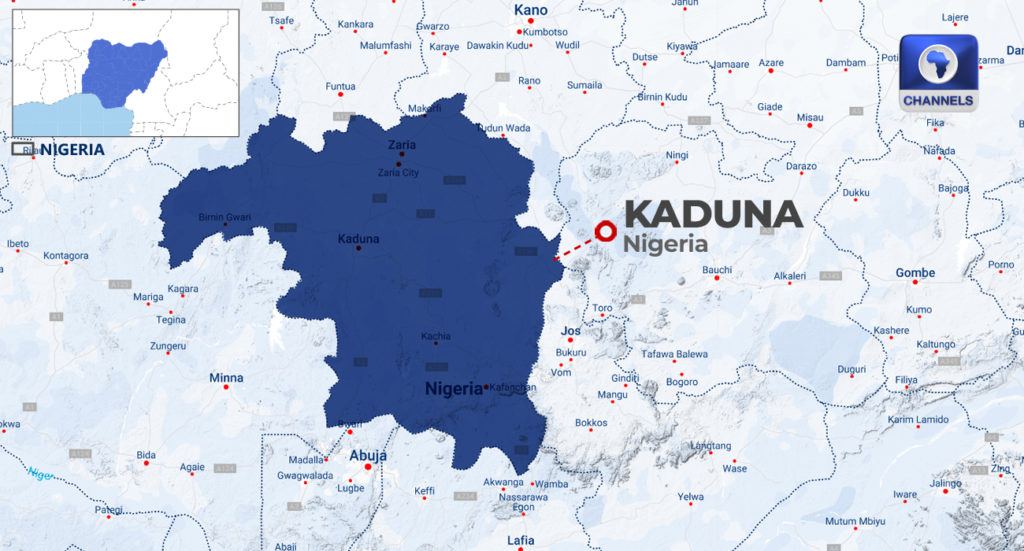
Several former associates of ex-Governor Nasir El-Rufai have defected from the ADC to the APC.
They include former Chief of Staff and Finance Commissioner Muhammad Bashir Sa’idu, former Education Commissioner Jafaru Sani and former Senator Suleiman Abdu Kwari.

The defections were formally acknowledged at a reception in Zaria on Saturday, October 17. Sa’idu claims that more than 200,000 ADC members and supporters have moved to the APC. That figure remains an unverified political claim, not an independently established membership count.
The departures followed disagreements over the ADC governorship primary won by Isah Ashiru.
Governor Uba Sani has consequently raised the APC’s Kaduna vote-mobilisation target from two million to three million. This is a campaign objective, not polling evidence.
Electoral implications: Kaduna’s opposition organisation is undergoing a significant realignment. The APC has recruited politicians with established connections to the state’s previous administration, while the ADC must assess how the departures affect its ward and constituency structures.
This matters for both the governorship and presidential contests. It does not establish that the defectors’ supporters will necessarily follow them.
Kaduna assessment: Organisational alignment materially changed; voter preferences unmeasured.
2. KOGI: APC WINS EVERY LOCAL-GOVERNMENT SEAT
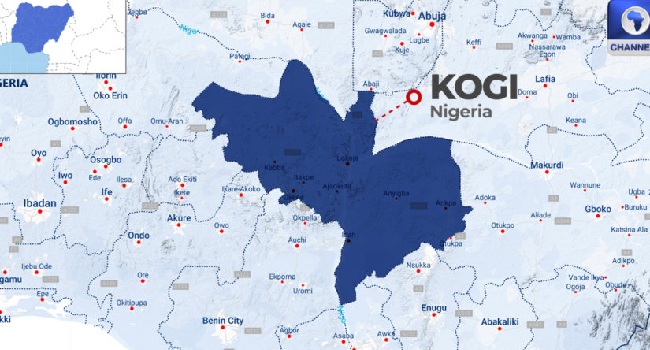
The APC has won all 21 chairmanship positions and 239 councillorship seats in Kogi State’s local-government elections conducted on Saturday, October 17.
The results were announced on Sunday, October 18, by Mamman Nda-Eri, chairman of the Kogi State Independent Electoral Commission (KOSIEC).
The elections covered 21 local government areas and 239 wards.
Why this matters
The results establish the APC’s control of the elected local-government offices in Kogi.
However, these elections were administered by KOSIEC, not INEC.
This distinction is important when assessing their significance for the 2027 general elections.
State electoral commissions operate under different administrative arrangements from INEC, and local-government elections frequently produce extensive victories for parties controlling state governments.
Without detailed turnout figures, ward-level vote totals, opposition participation data and independent observer assessments, the results cannot reliably establish the relative popularity of parties in the forthcoming presidential election.
Nevertheless, the outcome provides evidence of the APC’s continuing local-government organisation.
Kogi assessment: APC local-government control confirmed; no corresponding presidential voter-strength adjustment.
3. PRESIDENTIAL RACE: KWANKWASO REJECTS WITHDRAWAL FOR ADC

A significant development has emerged in the relationship between the ADC and the Nigeria Democratic Congress (NDC).
On Sunday, October 18, former Kano Governor Rabiu Kwankwaso, the NDC vice-presidential candidate, declared that the Obi-Kwankwaso ticket would not withdraw in favour of the ADC or another party.
He was responding to criticism from the ADC Presidential Campaign Council following his earlier suggestion that ADC presidential candidate Atiku Abubakar should step aside for Peter Obi.
The ADC campaign had accused Kwankwaso of undermining opposition unity.

Kwankwaso rejected that accusation and reaffirmed his party’s intention to contest independently.
Electoral implications
This is relevant to the broader opposition-coalition discussion.
The ADC and NDC are presently pursuing separate presidential campaigns.
Their public disagreement demonstrates that no unified opposition presidential arrangement has emerged between them.
The implications extend particularly to the North-West, where Kwankwaso retains established political networks, and to constituencies where Obi’s 2023 presidential support remains relevant historical evidence.
But there is no fresh polling establishing how voters would respond to either cooperation or continued competition.
Presidential assessment: Separate ADC and NDC candidatures reaffirmed; no measurable change in voter preferences.
THE ELECTORAL MAP: TODAY’S ADJUSTMENTS
State/region Development Assessment
Kaduna: Former El-Rufai allies move from ADC to APC. Organisational realignment confirmed
Kogi APC wins all 260 local-government positions. Local-government control confirmed
Kano/North-West: Kwankwaso rejects withdrawal from presidential race; separate NDC campaign reaffirmed
Osun/Anambra/Rivers: Existing cross-party presidential arrangements; no additional adjustment
Gombe/Ogun Governorship nomination disputes
There is no newly verified INEC-conducted election result or credible voter-preference poll requiring a further national assessment.
No fresh development establishes a measurable change in support for the PDP, Labour Party, NNPP or significant regional parties.
THE BOTTOM LINE

This weekend offers three different measures of political strength.
Kaduna demonstrates how defections can reshape party organisations.
Kogi provides evidence of control over elected local-government offices.
And the dispute between the ADC and NDC illustrates the difficulties of coordinating separate presidential ambitions.
But none should be mistaken for a reliable prediction of the 2027 election.
The important distinction remains between political organisation, electoral participation and actual voter preference.
The immediate developments to watch are whether Kaduna’s defections produce verifiable changes in party structures, whether detailed Kogi election data become available, and whether the ADC-NDC disagreement develops into a substantive change in their coalition positions.
That is today’s Political Signal.
The post Kaduna Realigns, Kogi Votes, And The Opposition Divide Deepens appeared first on Channels Television.