

By Chioma Obinna
Lagos State Government on Thursday dismissed widespread reports that the state recorded 10,430 new HIV infections in 2025, clarifying that the figure represents newly diagnosed cases and not fresh infections, even as it announced a historic move to directly procure antiretroviral drugs, becoming the first sub-national government in Nigeria to do so.
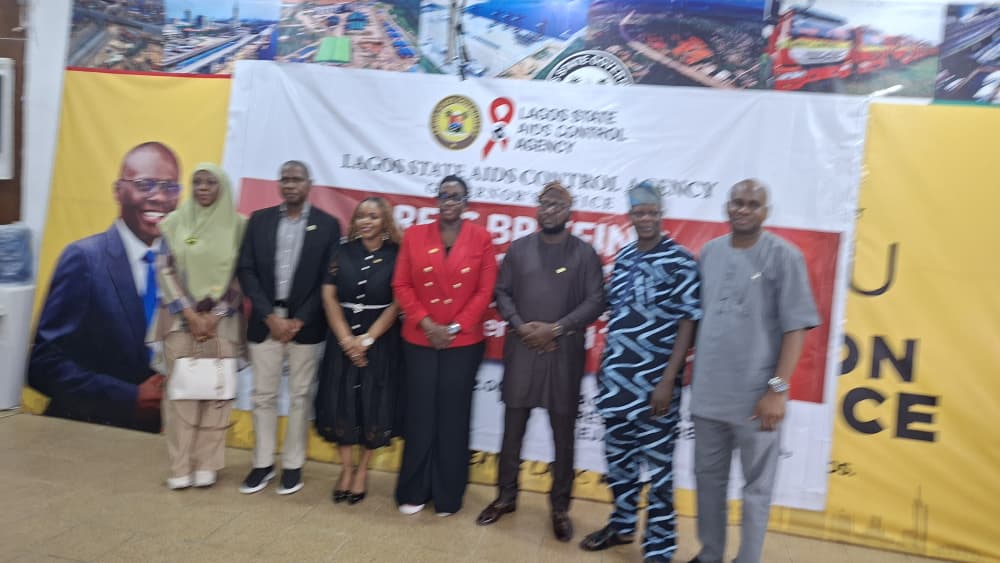
Addressing journalists at the Bagauda Kaltho Press Centre in Lagos, Chief Executive Officer of the Lagos State AIDS Control Agency, Dr. Folakemi Animashaun, said the reports had been widely misinterpreted and risked creating unnecessary panic among residents.
According to her, the 10,430 figure being circulated in the media reflects persons who tested positive within the reporting period, many of whom may have contracted the virus years earlier but only recently came forward for testing.
“The number widely reported refers to newly diagnosed HIV-positive cases, not necessarily new infections that occurred within the year. These are two very different public health indicators,” Animashaun said.
She explained that Lagos, as Nigeria’s most populous state and a major healthcare referral hub, naturally records high testing volumes and patient referrals from across the country, making its diagnosis figures significantly higher than most states.
“Stronger surveillance systems and wider access to healthcare services invariably result in higher case detection and should not be misconstrued as evidence of worsening epidemic control,” she added.
To underscore the state’s progress, Animashaun disclosed that Lagos conducted 504,800 HIV tests in 2025, identifying 11,940 positive cases, with a positivity rate of 2.4 per cent.
She said in the first quarter of 2026 alone, the state carried out 179,229 tests, detecting 3,390 HIV-positive cases, while the positivity rate dropped further to 1.9 per cent.
“The declining positivity rate despite expanded testing is a significant epidemiological indicator that reflects improving epidemic control,” she said.
She further revealed that 147,904 persons are currently receiving antiretroviral treatment in Lagos, with 97 per cent achieving viral suppression, describing it as one of the strongest HIV treatment outcomes in Nigeria.
On prevention of mother-to-child transmission, she said Lagos had recorded major gains, with Early Infant Diagnosis positivity declining from 5.1 per cent in 2020 to 1.5 per cent in 2025.
In a major policy shift aimed at strengthening sustainability, the LSACA boss announced that Lagos has commenced direct procurement of antiretroviral medicines to ensure uninterrupted access to treatment.
She said the first batch of state-funded ARVs is expected to arrive by the end of August 2026.
“This marks a historic milestone, making Lagos State the first sub-national government in Nigeria to independently procure antiretroviral medicines for people living with HIV,” she said.
Animashaun noted that the move was designed to reduce dependence on donor funding and secure long-term HIV commodity supply in the face of changing global health financing realities.
She added that the state is also exploring local production of HIV commodities in collaboration with Joint United Nations Programme on HIV/AIDS and drawing lessons from Kenya to strengthen supply chain resilience.
She urged Lagos residents not to panic but to continue accessing HIV testing, prevention and treatment services.
“There is no cause for panic. Know your HIV status, rely on verified public health information, and reject every form of stigma and discrimination,” she said.
Animashaun stressed that HIV remains preventable and manageable, insisting that with early diagnosis and sustained treatment, people living with HIV can live healthy and productive lives.
“Lagos is not defined by the number of people it tests. Lagos is defined by the strength of its response,” she said.
The post Lagos denies recording over 10,000 new HIV infections appeared first on Vanguard News.