

By Osundiji Sekinat
Africa’s Technology industry has continued to expand, with several homegrown brands emerging to produce or market mobile phones for consumers across the continent.
While major global brands such as Apple, Samsung and Chinese manufacturers dominate Africa’s smartphone market, a number Africa’s company have attempted to build local capacity in the production and assembly of mobile devices.
However, being an African phone brand does not necessarily that its devices are manufactured entirely in Africa. Some companies have established assembly plants on the continent, while others have their devices produced outside Africa using imported components.
Here are some African phone brands and what is known about their manufacturing or assembly operations.
Afrione (Nigeria)
Afrione is one of Nigeria’s notable attempts at developing a local mobile-device manufacturing industry.
Established in 2016, Afrione says it introduced a “Made in Nigeria” mobile and tablet brand and established a manufacturing and assembly plant in Lagos in 2017.
The company says it assembles smartphones, feature phones and tablets, alongside other technology products.
Afrione’s facility is located in the Ilupeju area of Lagos and the company says it has continued to develop its product range and provide repair and after-sales services.
However, the term “Made in Nigeria” should be understood in the context of assembly rather than suggesting that every component of the phones is manufactured locally. Earlier reports from the company’s factory launch stated that phones were assembled locally using imported components.
Mara Phones (Rwanda and South Africa)
Mara Phones became one of the continent’s most prominent smartphone projects after its launch under the Mara Group.
The company attracted international attention after establishing manufacturing facilities in Rwanda and South Africa, with the ambition of producing smartphones on the African continent.
Mara Phones was presented as an example of Africa’s attempt to participate in the global technology manufacturing value chain rather than simply importing finished devices.
However, its current production status should be distinguished from its earlier manufacturing projects, as the brand’s most prominent African manufacturing activities date back several years.
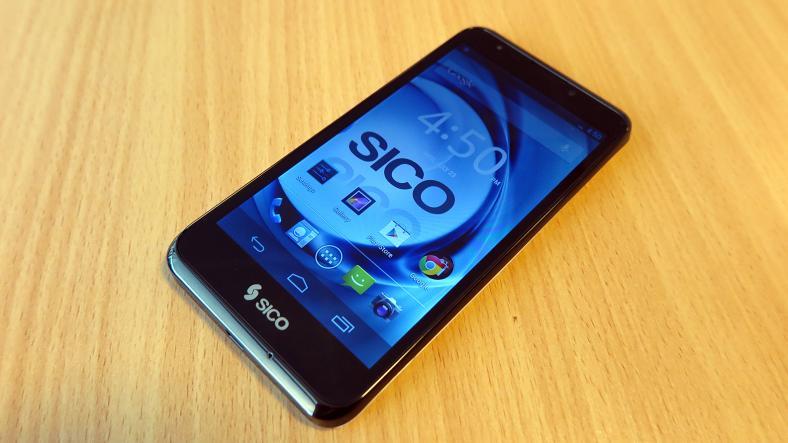
SICO (Egypt)
SICO Technology is an Egyptian electronics company that became known for its attempt to develop locally produced smartphones.
The company launched the Nile X smartphone in 2017 and established manufacturing operations in Egypt.
SICO’s story is notable because Egypt has continued to pursue a broader strategy of attracting electronics and mobile-phone manufacturing to the country.
The Egyptian market has also attracted international manufacturers, making the country one of the continent’s more developed locations for mobile-device production and assembly.
Condor (Algeria)
Algeria’s Condor is another African electronics brand with a long-standing presence in the mobile-phone market.
The company produces a range of consumer electronics and continues to market smartphones, including models in its 80 and NOVA series.
Condor’s current product catalogue shows that the company remains active in the smartphone market.
However, as with many phone manufacturers operating in Africa, the presence of an African brand or assembly operation does not mean that all the components used in its devices are produced locally.
Mobicel (South Africa)
Mobicel is a South African mobile-phone brand that has focused largely on affordable smartphones and feature phones.
The company has been part of South Africa’s local mobile-device ecosystem, particularly in the budget segment, where affordability remains an important factor for consumers.
Mobicel represents another example of an African brand competing in a market dominated by international manufacturers.
Mi-Fone (Mauritius)
Mi-Fone is an African mobile-phone brand associated with Mauritius.
Unlike companies with established local assembly operations, Mi-Fone’s African identity does not mean that its devices are necessarily manufactured on the continent.
The brand is therefore better described as an African phone brand rather than automatically categorised as an African-manufactured phone.
This distinction is important when discussing the continent’s mobile-phone industry because many African companies rely on overseas factories and imported components.
VMK (Republic of Congo)
VMK, founded in the Republic of Congo, is another pioneering African technology brand that entered the mobile-phone market.
The company developed devices aimed at African consumers and became known for its attempts to build an African technology brand.
However, its manufacturing history has involved production outside the continent, making VMK another example of the difference between an African-owned or African-designed brand and a phone physically manufactured in Africa.
RLG (Ghana)
RLG Communications is a Ghanaian technology company that became known for assembling mobile phones and computers in Ghana.
The company was once regarded as one of the continent’s notable attempts to develop local electronics manufacturing and create technology-related employment.
However, its historical manufacturing activities should not automatically be presented as evidence of large-scale current phone production in Ghana without updated confirmation.
What does “Made in Africa” really mean?
The emergence of African phone brands does not mean that the continent currently produces every component required to manufacture a modern smartphone.
Modern phones require components such as processors, memory chips, displays, cameras and batteries, many of which are manufactured in specialised factories outside Africa.
As a result, an African phone can involve several stages across different countries: an African company may design or brand the device, components may be manufactured in Asia, and final assembly may take place in an African factory.
This makes the distinction between African-owned, African-designed, assembled in Africa and manufactured in Africa important.
Vanguard News
The post List of phones made in African countries appeared first on Vanguard News.