

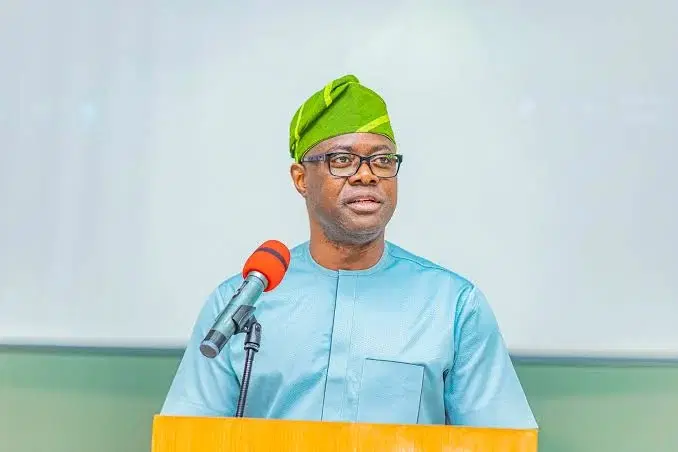
…Oyo governor says institutions have failed to deliver for majority
By Dapo Akinrefon
IBADAN — Oyo State Governor, Seyi Makinde, on Thursday called for a reset of Nigeria’s economy and political order, saying the country’s existing systems and institutions had failed to deliver meaningful improvements in the lives of the majority of Nigerians.
Makinde made the call in his latest newsletter titled, “The Business of Governance,” where he argued that Nigeria’s challenges went beyond the individuals occupying public offices at any given time.
According to him, successive governments have introduced new policies and promised fresh beginnings, yet millions of Nigerians remain trapped in poverty, insecurity and limited economic opportunities.
He said: “Over the years, we have changed governments, introduced new policies and promised ourselves new beginnings. Yet, for millions of Nigerians, the fundamental outcomes have remained largely the same.
“Too many of our people are still trapped in poverty. Too many families work hard without experiencing real progress. Too many young Nigerians are unable to see a clear path from education to opportunity.
“Insecurity continues to disrupt lives and livelihoods, while many of the institutions created to serve the people do not work as effectively as they should.”
Makinde said the situation showed that the country’s problems were rooted in systems, institutions and structures that continued to produce outcomes that did not serve the majority of Nigerians.
“This tells us that Nigeria’s challenge is bigger than the individuals occupying public office at any particular time. We must address the systems, institutions and structures that continue to reproduce outcomes that do not serve the majority of our people,” he said.
Using petroleum pricing as an example, the governor argued that the national debate had been framed around whether petroleum products should be subsidised or sold at full market prices.
He said the more important question should be what constitutes an appropriate petroleum pricing framework for an oil-producing country such as Nigeria.
According to him, Nigerians should have access to the assumptions used in determining pump prices, including crude oil price benchmarks, refining costs and margins, exchange rate, logistics and distribution costs, taxes and levies.
“These should be publicly accessible and sufficiently clear for Nigerians to interrogate the basis of the price they are paying and compare it with the alternatives,” he said.
Makinde also rejected the argument that Nigerians should pay higher petroleum prices to eliminate the price differential that makes smuggling into neighbouring countries profitable.
“Nigerians should not be made to bear the cost of government’s inability to secure its borders,” he said.
The governor said his proposed “Reset Nigeria” agenda would involve interrogating existing systems and determining whether they were structured to ensure that Nigerians derived fair benefits from the country’s natural resources.
“The petroleum question should therefore not simply be whether subsidy should return or remain removed. It should be whether the pricing system we are using is the right one for Nigeria and whether it allows Nigerians to derive a fair benefit from the natural resources they own,” he said.
Makinde said details of his alternative approach to petroleum pricing would be presented in the coming weeks for Nigerians to assess.
He described Reset Nigeria as “a national movement to rebuild Nigeria’s systems and institutions so that Nigeria works for every Nigerian.”
He stressed that a national reset would require both accountable leadership and active citizenship, adding that the process would not be an instant transformation or the responsibility of one individual.
“It must be a deliberate national effort supported by a clear roadmap, measurable priorities and the sustained participation of Nigerians at home and abroad,” he said.
Makinde said he would continue to outline his views on resetting Nigeria’s economy, security architecture, education system, institutions and social and political order.
He also said he would share lessons from his experience in public service and how they had shaped his vision for the country.
The governor urged Nigerians to participate in the conversation, asking: “If Nigeria is to work for every Nigerian, what do you believe we must reset first?”
“Let us begin the conversation,” he added.
The post Makinde calls for reset of Nigeria’s economy, political order appeared first on Vanguard News.