

By Adeola Badru
The Methodist Church Nigeria has called on the Federal Government to take more decisive measures to tackle worsening insecurity, economic hardship, unemployment, corruption and declining living standards, warning that increased government revenues and allocations have yet to translate into meaningful improvements in the welfare of ordinary Nigerians.
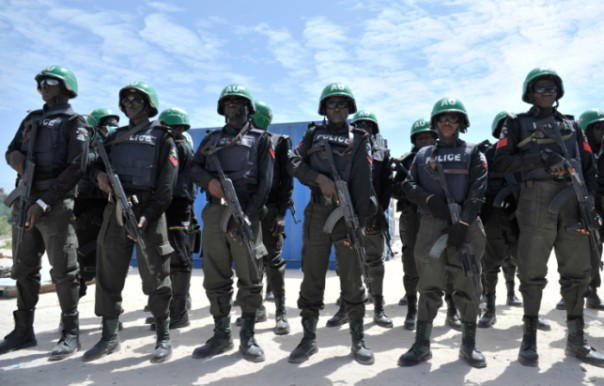
The church also threw its weight behind the establishment of State Police, describing it as a necessary component of comprehensive security reform capable of strengthening grassroots intelligence gathering and enabling faster responses to emerging security threats across the country.
The positions were contained in a communiqué issued at the end of the 50th/15th Biennial Conference of the Methodist Church Nigeria.
While reading the communiqué, the Prelate of the Methodist Church Nigeria, His Eminence, Dr Oliver Ali Aba, JP, during a press conference held at the Methodist Church Nigeria, Cathedral of Light, Agodi Gate, Ibadan, on Monday, said the Conference had prayerfully reflected on the condition of the church and the nation and reaffirmed its belief that, despite the difficulties confronting Nigeria, the country could overcome its challenges through faith, righteousness, justice and collective action.
The Conference declared that “despite Nigeria’s present challenges, God’s promise remains sure,” adding, “‘The Lord shall fight for you.’”
It therefore called on Nigerians “not to surrender to fear or despair, but to remain steadfast in faith, uphold righteousness, pursue justice, and work together for the peace and progress of the nation.”
On the state of the economy, the church acknowledged reform efforts by the government in some key sectors but expressed what it described as “deep concern over the worsening economic hardship, hunger, insecurity, unemployment, and declining living standards confronting millions of Nigerians.”
It identified “corruption, impunity, and the mismanagement of public resources as major impediments to national development”, stressing that the country’s economic difficulties required stronger accountability and leadership focused on the welfare of citizens.
The Conference observed that, “despite increased revenues to the Federal Government and higher allocations to states and local governments, the expected improvement in citizens’ welfare remains largely elusive.”
It further raised concerns over the implementation of constituency projects, noting that “substantial constituency project appropriations have often failed to produce visible grassroots development.”
The church consequently demanded “transparent, accountable, and people-centred leadership that confronts corruption decisively, safeguards public resources, promotes investment, food security, and job creation, and ensures that the benefits of economic reforms reach ordinary Nigerians, especially the poor and vulnerable.”
The Conference also expressed deep concern over persistent insecurity across the country, particularly recurring killings and violent attacks in Benue and Plateau States, as well as terrorism, banditry, kidnapping, communal conflicts and other forms of violent criminality threatening lives and national stability.
It, however, commended the successful rescue of pupils and teachers abducted in Oriire Local Government Area of Oyo State, alongside other abductees rescued from Ogun, Kwara and Niger States.
The church applauded the Federal Government, the affected state governments and security agencies for the successful operations, while honouring the memory of Nigerians who had lost their lives to insecurity.
It prayed for “the repose of their souls”, as well as “the comfort of the Holy Spirit, peace and grace of Christ” for those who had been bereaved, maimed, displaced or otherwise badly affected by insecurity.
The Methodist Church also pledged its support for efforts to end insecurity through “our prayers, our substance, and moral instructions”, while supporting the government’s resolution not to pay ransom to kidnappers.
The Conference further “reiterates its support for the establishment of State Police as part of comprehensive security reform to strengthen grassroots security, intelligence gathering, and rapid response to emerging threats.”
The church equally condemned recent xenophobic attacks and anti-immigrant protests in South Africa, describing them as “a grave affront to human dignity, African solidarity, and peaceful coexistence”.
It commended the Federal Government for evacuating affected Nigerians and urged the governments of Nigeria and South Africa to intensify diplomatic engagement to protect Nigerians, uphold justice and strengthen relations between both countries.
The Conference also reaffirmed the sanctity of human life and condemned sexual and gender-based violence, child abuse, human trafficking and all forms of exploitation of vulnerable persons.
It commended healthcare professionals for their sacrifices and welcomed the temporary truce between the Federal Government and the National Association of Resident Doctors, urging both sides to sustain dialogue, implement agreed measures promptly and guarantee uninterrupted healthcare services.
On democracy and governance, the Methodist Church welcomed the Federal Government’s reaffirmation of its commitment to democratic governance, respect for the independence of the Independent National Electoral Commission and its assurance that it neither sought nor supported a one-party state.
It called on political actors to uphold the rule of law and ensure that elections remained peaceful, free, fair and credible, while urging public office holders to exercise power with “integrity, humility, justice, accountability, and compassion.”
The church also called for stronger collaboration between government and faith-based organisations, particularly the Christian Association of Nigeria, the Christian Council of Nigeria and other faith communities whose contributions to education, healthcare, humanitarian services, peacebuilding and moral formation remained important to national development.
It, however, stressed that such engagement must produce concrete results, urging that consultations with faith-based organisations “produce tangible improvements in governance, security, economic recovery, and the welfare of the Nigerian people.”
Speaking on the church’s role in engaging government, Aba said the Methodist Church would continue to contribute to national development through prayer, constructive engagement and speaking the truth whenever necessary.
He described Nigeria as “a blessed nation”, saying God had “done everything meaningfully well for us to survive and to grow as a people.”
According to him, the church must remain “the conscience of the society, the voice of the restless” and should be prepared to partner with government in the interest of national development.
“Nobody has the monopoly of knowledge,” Aba said. “Our people at the government level, the government of mental leadership, we, they need us and we need them. So there must be partners in progress.”
He maintained that both government and the church had important responsibilities towards the country, stressing that “this is our fatherland and we all have to work together in order to grow this nation together.”
The Prelate further declared that the church would not hesitate to speak whenever necessary, saying, “If there is any vital opportunity for the church to speak, the church will speak nothing but the truth.”
He added, “We have to speak prophetically, prayerfully for them to answer, their failure is our failure.”
Aba consequently called for a harmonious relationship between the church and government, urging Nigerians to pray continually for those in authority.
“When it is well with the government, it is well with the society called church,” he said, adding that Nigeria was “the only nation we have and we can call our own.”
He urged Nigerians to “do everything right to make sure that this nation continue to move forward and not to be progressing.”
Addressing concerns over whether religious leaders could still speak truth to power without losing public confidence, the Prelate said any reaction from government to a critical intervention by the church could itself be evidence that the message had been heard.
“If the church speaks and there is reaction or response from the government, it’s a sign that truth has been spoken,” he said.
Reiterating that the church was “the conscience and the voice of the voiceless”, Aba said religious leaders had a divine responsibility to tell society the truth.
“We are at the crossroads if you fail to speak the truth to the church, to the society,” he declared.
He appealed to political leaders to listen to the counsel of faith leaders, noting that politicians regularly seek the support and prayers of religious leaders when pursuing political office.
“When they want to enter power, when they want to be voted into power, they never abandon church. They will look for the spiritual leaders of these churches. We pray for them,” he said.
Aba said the expectation of citizens after politicians secure electoral mandates was for them to provide tangible evidence of democracy.
“When the prayers are answered and they are elected and in governance, our prayer is that they should be able to deliver the evidence of democracy to ordinary Nigeria,” he said.
“We don’t ask for much, but let what is required, the constitutional provision for all citizens of a given nation to enjoy should be provided.”
He identified the protection of lives and property as a fundamental responsibility of government, saying citizens expected leaders to provide security and deliver the dividends of democracy.
“Security to life and property of our people is very ideal,” he said, appealing to political leaders to listen to prophetic interventions from religious leaders rather than dismissing them.
“I ask and pray that God will give all our leaders enabling grace to be patient and listen to the prophetic utterances that comes from all spiritual leaders that are existing in this nation Nigeria,” he said.
He argued that listening to prophetic counsel could benefit both political leaders and the wider country, stating that “if you listen to the voice of the prophet and do likewise, it will profit you and it will profit the nation at large.”
On the need to make the Methodist Church more attractive to young Nigerians, the Prelate acknowledged that the church had a responsibility to strengthen its doctrinal teaching and ensure that its leaders lived exemplary lives.
“The church has to do much,” he said, insisting that proper Christian teaching should begin “right from the kindergarten level of people, worshippers.”
He said the church must provide “the real doctrinal teachings” capable of shaping the lives of worshippers and directing them towards righteous living.
He said the credibility of the church would ultimately determine its ability to attract younger generations, noting, “The only thing that can attract our people is the standard of doing the will of God that they must have seen at one level or the other of the life of the church.”
Aba, therefore, urged church leaders to remain faithful to their calling and lead by example.
“We must be faithful to our calling and give our subjects the best. Live a special, impeccable life. Live a life above board.”
“Let the people know that yes, this man is God sent. This woman is God sent, is child of God. That is what people are expecting,” he said.
The Prelate observed that worshippers were increasingly interested in the personal conduct of religious leaders rather than merely their sermons.
“The era we are in is no longer much, people are not much interested in what is coming after the pulpit, but they are now looking at the life that spiritual leaders are living,” he said.
He added, “If you are living very well, if your life is not questionable, I want to assure you that people will come to this church.”
The Conference also congratulated Mrs Oyinkansola Badejo-Okusanya, SAN, a committed Methodist, on her election as the incoming President of the Nigerian Bar Association, praying that God would grant her “wisdom, strength, and grace” in the discharge of her national responsibility.
The Methodist Church expressed profound appreciation to the Oyo State Government and people for their hospitality and support towards the successful hosting of the biennial conference.
It particularly commended the state government and security agencies for providing a peaceful, safe and secure environment throughout the Conference and prayed that God would continue to bless Oyo State with “enduring peace, progress, and prosperity.”
The church called on Nigerians to reject fear, hopelessness and division, while urging leaders to govern with justice, accountability, compassion and the fear of God.
It also encouraged citizens to uphold righteousness, patriotism and peaceful coexistence, reaffirming the Methodist Church Nigeria’s commitment to prayer, moral leadership and constructive engagement with government and other stakeholders for the peace, unity and prosperity of the country.
The post Methodist Church demands urgent action on insecurity, hardship, corruption, backs state police appeared first on Vanguard News.